

The recent Journal article, “Local officials dispute study that says Pocatello is Idaho city hardest hit by extreme poverty;” challenges all of us to understand the poverty present in our city.
The article was developed as a response to an MSN Money report of July 12, regarding a study released by the Delaware-based online financial group 24/7 Wall St.
This study concluded that from 2010 to 2016, the Pocatello metro area experienced nearly a 16 percent increase among the share of Pocatello residents living in extreme, or concentrated, poverty. The calculations divulged that this amounts to more than 2,300 Pocatello residents.
Some summarily dismissed the results of this study by referencing a Glassdoor article from June of 2015.
That author used three factors: the percentage drop in the unemployment rate, the percentage change in total employment, and the percentage change in mean hourly wages since 2009 to make the assessment.
But embedded in that article is a statement that lends credibility to factors not considered. Included is the following disclaimer: “this measure doesn’t tell us everything about the economic well being of cities. For example, it doesn’t tell us whether inequality has grown, or whether sidelined workers have stopped looking for jobs and left the labor force.”
Factors listed in the study by 24/7 Wall St. can be discussed, but there is support for the conclusion that depicts an increase in poverty in Pocatello. Many who work with those that are struggling, see the encroachment of misery in people’s lives every day.
While some may choose to deny this reality, it cannot be ignored. If you are willing to range wide enough, you will see various levels in our economy and that we have many citizens who are struggling to survive.
It has been difficult to impress on some in our city the fact that another study, commissioned by the United Way across 18 states, arrived at similar conclusions. This report, labeled the ALICE Report, reviewed many factors to not only assess the poverty rate but also to identify those that are: Asset Limited, Income Constrained, Employed.
According to the national United Way website, “The United Way ALICE Report uses standardized measurements to quantify the cost of a basic household budget in each county in each state, and to show how many households are struggling to afford it.”
The initial 2015 release of information identified that the poverty rate in Bannock County was 16 percent of our households; while households classified in the ALICE category were listed at 22 percent. The combined rate of those struggling added up 38 percent of all Bannock County households.
The latest update for the report asserts that from 2014 to 2016 the county’s poverty rate is the same, but the ALICE group increased dramatically. Six percent more of the households in our county now qualify as struggling to meet the basic household income level. This report now lists 44 percent of our county’s people as fighting to gain the minimum level of financial stability.
Where facts converge, the truth is revealed. In this case, the conclusions of the 24/7 Wall St. study and the ALICE study, conducted by two divergent groups with different methodologies and for different purposes, converge. Together they demonstrate that there are significant economic challenges faced by a large portion of our community.
We can deny and ignore this reality. We also can seek to understand that together great challenges must be faced as we endeavor to make our community perform for all our residents.
To navigate it is essential first to identify the place from which you are starting to determine the route you will travel to your desired destination. Many of our people need us to arrive at a better economic destination.
Meanwhile, the levy rate for Pocatello has moved up steadily. Pocatello now has the highest accumulative property tax rate of the 10 largest cities in Idaho. Some taxpayers don’t mind this development as they are willing to pay more to maintain or increase services.
Others don’t want to spend more on taxes. Our city is the only one of the 10 to levy greater than 1 percent. This practice places business owners and rental property owners at a disadvantage.
They do not qualify to receive the Homestead exemption, which excludes one-half of a home’s value up to maximum amount of $100,000. Many renters are numbered among the poor in our community and are impacted by having to absorb every property tax increase as a rent increase.
The impact of increasing property taxes is burdensome on all but particularly troublesome for the poor. Additionally, many businesses will shop the property tax levels of the communities they consider for relocation.
It is vital for us to have levy rates that are competitive with other cities so that we can attract the investments that produce the jobs which impact all sectors of our community.
On Aug. 2, the city of Pocatello will hold a public hearing regarding the proposed budget for 2018-2019 as part of the regular council meeting at 6 p.m. At that meeting you will be able to address the current proposal to take the maximum amount of taxes allowed by Idaho law.
I encourage you to review the proposed budget and make your views known either by contacting the mayor and council with letters or emails or by making your views known during the three minutes you are granted to testify at the public hearing.
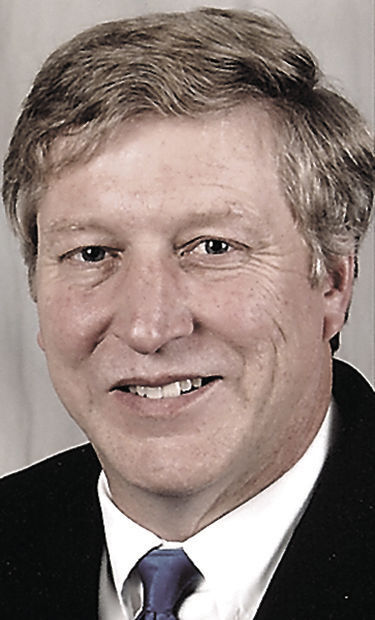
The Rev. Roger Bray was born and currently resides in Pocatello. He is the pastor of the Central Christian Church and is back on the Pocatello City Council serving in his third term.

(0) comments
Welcome to the discussion.
Log In