

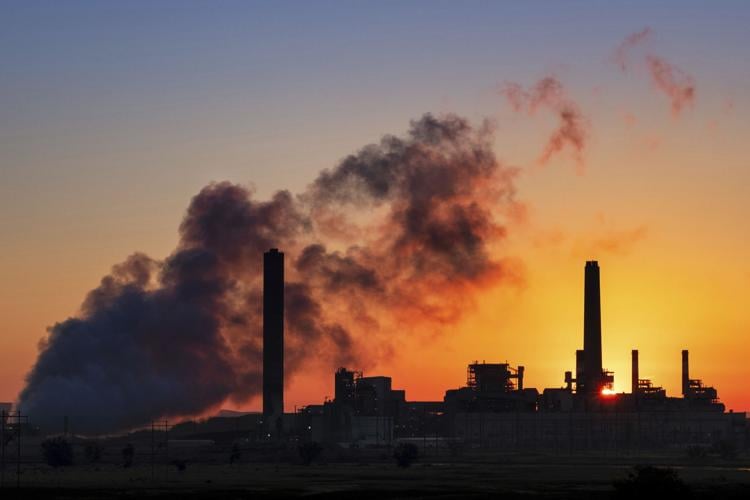

Energy from coal, oil, natural gas, falling water, solar, wind and more has millions of uses; most of them are beneficial. Everyone knows this, and we also know that the energy delivered for our use isn’t free.
Obviously, we pay for energy in the marketplace, but many forget there are other energy costs. For example, the market cost, or price, is what we pay to buy a ton of coal or kilowatts of electricity. Not as well known is that there are other costs of energy not included in the market price. These are called “non-market” costs. An example from coal energy is the damage done by the coal’s air and water pollution.
Damages from pollution can be mitigated by installing a device that takes the pollution out at the smokestack. Like the pollution itself such pollution capturing devices cost. However, the pollution control equipment changes the costs from being health effects and other physical impacts into monetary costs — a price shows up in the market, thus turning non-market costs into market costs.
Making polluters of all kinds pay for their non-market damages is lightly covered by the news media but is closely watched by interest groups. In the abstract, economists call it making businesses (and others) internalize their external costs. Groups with interests in the issue might call it life or death.
Making the polluter pay produces politics. Polluters don’t want to pay and often turn to the government for protection. So do those who have endured the pollution. Non-market costs just beg for government intervention as well as political resistance.
Who wins depends on the relative political power of the polluters versus those harmed.
Few folks love polluters, but those harmed are usually hard to get organized for political battle.
For example, coal comes from the mine and is burned to create steam to turn turbines at the power plant. Unintended by-products (non-market costs) of this are often sick, injured and dead coal miners, landowners damaged when their land starts sinking, acid water runoff from abandoned mines, air pollution and worldwide harm due to release of carbon dioxide into the atmosphere.
Using coal once more as an example, politics came when the coal miners organized into labor unions to get health care, mine safety, adequate mine ventilation and many other things. An example of the opposition response was, “Join that union, you rotten communist, and we’ll fire you!” Another was, “If you want a job in the mine, you just have to accept the risk of getting black lung disease.”
Politics also came when those with damaged land and water managed to get organized. Coal mine operators said they’d go out of business if they had to stabilize the strip mines. Ironically, and there is a lesson here, some coal miners who had suffered from the mines themselves still supported the coal companies against harmed landowners, an example of how hard it can be to form a winning coalition to force the payment of non-market costs.
Around almost every effort to deal with pollution there develops what we might call “an ecosystem of politics” — a system of many interest groups in conflict and cooperation over how or whether to deal with the pollution.
With non-market costs present, government regulation can become an addition to letting the marketplace make economic decisions. Government intervention can even be a replacement of the market.
The theory (ideology) of free enterprise capitalism purports to explain how the best possible economic outcomes automatically come about without any government intervention. It is claimed to happen entirely through the amazing power of economic competition to organize a free market. It has been said time and again that marketplace competition is just like an “invisible hand” automatically guiding the economy to produce the best outcome.
If this is so, we wouldn’t want to let some government muck it up, would we? In fact, we might want it because such an idealized free market system has never existed and never will. One reason is that the free market ideology assumes there are no non-market costs, but in the real world, these costs are abundant.
Real life capitalism has many situations where competition is not present and non-market costs are unmitigated and unpaid by their producers. Still, free market ideologists like to hold up the vision of the ideal free enterprise model and pretend reality is acceptably close it. Because free market economics as a valid theory has been disproved, it should be called an ideology — an ideology useful in preventing government regulation of non-market costs.
That the free market ideology is false and should be strongly discounted has been the dominant governing view since the 1930s. Our current governing philosophy says markets are to be regulated by governments to serve to contain, eliminate or remediate non-market costs. Noncompetitive businesses like monopolies are supposed to be broken apart, or sometimes legally declared to be public utilities whereby a monopoly will be allowed to continue but only under strict regulatory control, such as by a public utilities commission.
Beginning in the 1980s, there was a revival of political support for old-fashioned, widely discredited market economics. Those renewing the ideology were called neoliberals even though the bulk of its support came from Republicans. There was a lot of talk and some successful efforts to cut back on regulations.
The American public to some degree came to accept the idea that government regulations are (usually?) bad or inefficient. Nonetheless, there was no widespread repeal of regulations except for some critical ones in the financial sector. It is often argued that the repeal of these regulations led to the economic conditions that caused the Great Recession of 2007-2010.
President Donald Trump is not the kind of guy to know the history and rationale of regulations, but it’s clear he hates them. He doesn’t need to know intellectual reasons for attacking them, just that they have taken his time and sometimes prevented him from making money or real estate in ways he prefers.
He likes to say he has cut more regulations than any other president. There are three areas where his cuts are not likely to be widely popular and might well come back to hurt him — the environment, the financial industry and technology.
Most of his cuts have not really been cuts (yet), just a slowdown or cancellation of new regulations. It typically takes more than one term to make new regulations or to fully repeal old ones. Then, too, there are lots of points where groups that favor an existing regulation can use congressional politics or lawsuits to slow down a repeal.
His typical failure to pay close attention will also slow down repeals. Another factor is lack of people working on repeals. To do it properly takes personnel. He has kept his agencies very lightly staffed. Also, his administration has unprecedented fast turnover — lots of firing.
There will be lots of chances for Democrats to start to undo what he has done in 2021, but by eight years he might be able to make huge changes.
Dr. Ralph Maughan of Pocatello is a professor emeritus of political science at Idaho State University. He retired after teaching there for 36 years and specializing in elections and public opinion, congressional politics, and the politics of natural resources. He has written three backcountry outdoor guides, including “Hiking Idaho” with his wife Jackie Johnson Maughan. He has been president or chair of numerous conservation organizations.

(0) comments
Welcome to the discussion.
Log In