

EDITOR’S NOTE: This is part five in our series titled After the Fire: An in-depth look at life at Highland High School following the destructive 2023 blaze. This six-part Idaho State Journal series will conclude on April 13.
POCATELLO — Some of the most important aspects of running a school involve processes behind the scenes, the tireless hours worked to ensure the student body receives nutritious food and a clean space in which to learn.
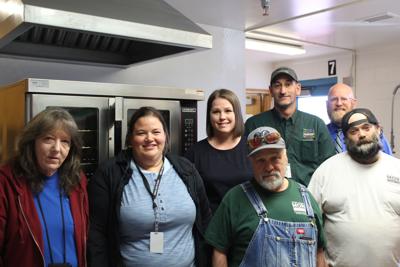
Highland High School’s custodians and food service workers do not often get the attention that other staff members at the school may receive but their work is still essential, though largely unseen.
There is a lot of preparatory work and planning on the part of the custodians and food service workers that goes into guaranteeing a quality experience for students and teachers at Highland. Through rain and shine, snow and sleet, these unsung heroes of Highland endure, taking pride in keeping their school clean and students and staff properly nourished.
But like everyone else at Highland, last April’s fire has made life more challenging for those who cook and clean at the school.
On the custodial side, the days of being able to focus on cleaning a particular section of the school while the students are busy elsewhere is no longer an option because the fire destroyed the school’s D Wing and large gym, meaning just about every bit of Highland’s space is being used by its 1,600-plus students during school hours.
Highland building technician Brad Johnson said, “Now we still have 1,600-plus kids, but we’ve got 75,000 less square feet in the building to put them in. It’s really made everything condensed. Scheduling (custodial work) has become more difficult. But we work through that and we try and deal with those things as they come up. That’s all we can do.”
The custodians lost nearly everything they used to do their jobs in the devastating blaze.
“As far as custodial, we lost everything except for minimal tools and equipment,” Highland custodial foreman Cindy McMichael said. “All our storage, office, everything (was lost in the fire) — the same as everybody else in D building. It’s been hard to find storage for everything that we need, to get the equipment and find a place for it and to stay out of everybody’s way with our shipments. We’re adapting day by day.”
One of the biggest casualties of the Highland fire was the school’s cafeteria, which was destroyed along with everything else in the D Wing.
During lunchtime at Highland, the students now eat in the commons area. On a typical school day that space is already packed tight as the students move from one class to the next, bustling shoulder to shoulder.
“We don’t have a cafeteria up here at Highland,” food service field supervisor Hilary Sanford said. “We are working out of the Gateway building which is behind Highland and we are transporting the food to and from Gateway to Highland to serve in the commons area.”
Food service coordinator Heather Canfield added, “Along with not having a cafeteria, there is much less storage space in the kitchen. We send (Highland) daily orders which we break down at our central warehouse and send them every day because they have really no place to store anything.”
In a forlorn corner of the Gateway building is where Highland’s small pop-up kitchen resides. The food preparation area shares the building with a motley mixture that includes a Highland health science classroom and the school’s displaced weight room. Formerly the Gateway building was used for business professional instruction.
“Usually, if we had our regular cafeteria, we would have things on hand, but if we find out we need (certain things) I got to run back... and get the stuff,” Sanford said. “It’s just different because we’re so used to having stuff on hand and now we have to figure it out as we go.”
The community’s response to Highland’s plight following the fire has been profound, even in terms of the offers to help the school’s food service workers provide meals.
“When the fire first happened, we had a lot of offers from people to let us use their food trucks or setting up food trucks here,” Canfield said. “Because of United States Department of Agriculture regulations, we couldn’t take them up on it unfortunately. We have nutritional guidelines that a lot of food trucks don’t meet. But just the outpouring of offers was really appreciated and was kind of amazing to see the community come together and just offer to help.”
The food service workers feel Highland’s parents have been incredibly supportive.
Sanford said, “Some of the parents got together and got the lunch ladies a Christmas gift and then they got us an Easter basket. That was really cool and it meant a lot to me and my girls, my crew.”
The dedication of Highland’s behind the scenes heroes has not gone unnoticed by the district’s leadership.
“I appreciate all the employees that are doing their best to take what they’ve been given and make it the best situation for not only themselves, their teams, but also the learners and the staff,” School District 25 Director of Business Operations Jonathan Balls said. “Definitely in food service (and) custodial, these individuals have definitely stepped up. What’s most impressive is that given the hard things (they must overcome), they still are doing a great job providing the services that Highland High School needs.”

(0) comments
Welcome to the discussion.
Log In