


FORT HALL — The rhythmic boom of a tribal drum echoes out into a conference room at the Shoshone-Bannock Hotel and Event Center on Thursday evening as native chants rise to meet the concussive beats.
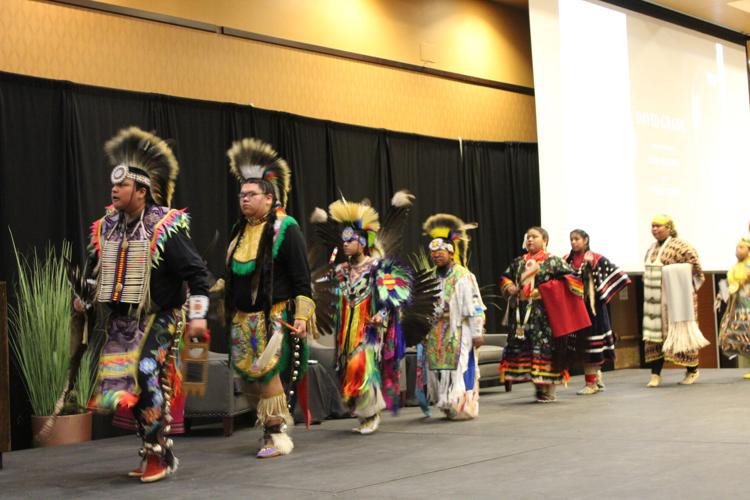
Young dancers from the Shoshone-Bannock Jr. and Sr. High School Dance Troupe adorned in colorful displays of traditional Native American attire sway and dance in sync with the steady drumbeats of the Fort Hall Ghost Canyon Singers.
The troupe dance collectively at first, ankle bells ringing in tandem with their footfalls, before they separate into two groups. The young men and women each showcase individual dances for the 600 audience members before reassembling and dancing down the aisles.
Nearby, watching intently with a broad smile across his face is David Grann, author of the book “Killers of the Flower Moon: The Osage Murders and the Birth of the FBI.”
Grann absorbed every intimate moment as the Idaho Humanities Council welcomed him to Fort Hall for a round table discussion with Native American leaders, discussing a range of topics affecting indigenous populations and shedding light on intricacies surrounding his book. The Idaho Humanities Council is a nonprofit organization that aims to provide opportunities to deepen public understanding of human experience by connecting people with ideas.
“I’m a huge believer in the humanities and the humanities council had me out here in Idaho before to talk about this history,” Grann said. “It was because of them I came back. Part of the mission of writing this book is not just to do the research, but to share the history. It’s events like these where you hopefully keep it going, keep it growing and keep knowledge growing.”

The Shoshone-Bannock Jr. and Sr. High School Dance Troupe welcomes “Killers of the Flower Moon” author David Grann to the Shoshone-Bannock Hotel and Event Center in Fort Hall with a dance exhibition Thursday evening.
Invited to first speak and then engage in a round table discussion, Grann gave a detailed recanting of the history behind his book and the tragic Osage Indian murders from the 1910s to the 1930s. Between 1918 and 1931, 60 Osage native deaths were confirmed, with further research indicating that number could be over 100.
The entire sordid affair was not only devastating to the Osage people as a whole through the exploitation and betrayal they experienced, but the murders also unmasked a vast conspiracy uncovered by the fledgling FBI, known then as the Bureau of Investigation, regarding the systemic killings of wealthy Osage tribal members.
The inspiration behind his desire to write about the topic was spurred from an intriguing photograph Grann discovered in a visit to the Osage Nation in 2012. While the large black-and-white photograph was seemingly benign at first, Grann noticed a portion of it was missing and asked the museum director about its exclusion. The director relayed that the picture included a figure so frightening she removed it. She then pointed to the empty panel and said, “the devil is standing right there.”
The book grew out of Grann’s attempt to understand who that haunting figure was and the “anguishing history he embodied,” Grann said. Upon further research, Grann came to realize the story was one of the most sinister crimes in American history.
“I did it partly to erase my own ignorance,” Grann said. “I was stunned when I learned about it, that I didn’t know anything about it and that I hadn’t been taught about it. When I learned that was true for so many others, that was really the motivation to hopefully fill in a little bit of that part of our memories that have been erased about this really important part of our history.”
It’s been seven years since Grann wrote the book detailing the Osage murders but the scars from that era are still felt by the Osage people and every Native American tribe that shared similar exploitation and death at the hands of greedy charlatans and violent oppressors.
Sharing a slideshow that detailed many of the real-life people that the book is based upon, Grann spent time exploring the history of the murders. He shared the stories of heroines like Mollie Kyle, who endured devastating heartbreak and stood firm despite all of the attempts to leave her dead and familial line in ruin. Grann continued through the slideshow, touching on all the key players involved in the Osage murders and even their modern-day counterparts that still live in the same neighborhoods from over a century ago.
“You spend so much time, you commune with documents, then you meet with the descendants and hear their stories,” Grann said. “What draws you in or what makes you obsessive is you are desperate to try to figure out every part of the history and lives of the people who were killed and their families — who they were and what they went through. Not just that they are names and dates, but that you understand what life was like for them, and to hopefully let you experience history the way it really unfolded for these people — that you can realize they had souls, that they were real breathing people and not just names and dates in a book.”
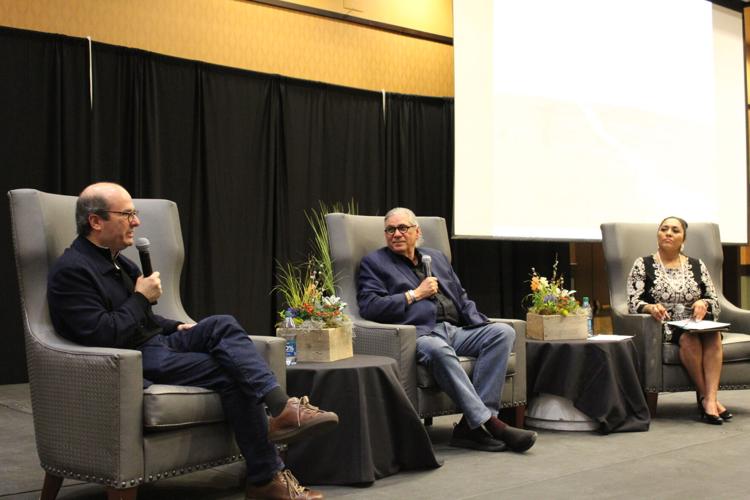
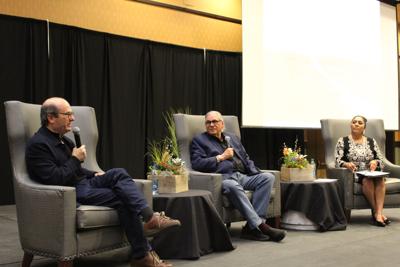
Grann spent the latter half of the evening in a round table discussion with Mark Trahant, editor-at-large for Indian Country Today and inductee into the Native American Indian Hall of Hall of Fame, along with Randy’l Teton, known for her contributions and work in tribal history, government, communications and museum curation. Teton also recently published her own graphic novel, “It’s Her Story: Sacajawea,” and she was also the model that was used for the creation of the golden dollar coin depicting the famous Native American woman.
During the round table, the group discussed difficult topics relating to the mistreatment of the Osage, their history, the details of the murders, the people involved and how much of the Osage’s hardship was similar to what the Shoshone-Bannock Tribes and others in the area faced only a few short generations ago.
The group also answered questions from the audience and discussed the similarities and differences of the movie adaptation directed by the legendary Martin Scorsese, which has spurred a renewed interest in the book and the grievous Osage murders.
“A book can reach so many people, but a movie can reach others,” Grann said. “It’s through all these different talents that our knowledge grows. There’s (the book), there’s the movie, but there are also some wonderful Osage writers that people should read. There’s so much Native American history that people should learn about, right here in Idaho, as we learned today.”
“Killers of the Flower Moon: The Osage Murders and the Birth of the FBI” has spent 100 weeks on The New York Times’ best-sellers list and has captivated the hearts and minds of many that have read the book. Grann was available after the event to sign books for interested attendees.
As Grann tours the United States, imparting wisdom and reflecting on the often-forgotten calamity of the Osage Indian murders, there is hope that a new generation will gain a more complete understanding of the plight of the Osage that they and so many Native American tribes experienced during that era in time.
“I’m always just so grateful to any readers who want to share in history, the passionate readers and passionate history lovers,” Grann said. “I think the most important thing I want to relay is especially with a subject like “Killers of the Flower Moon” that we learn about the past, that we study our past, and that by studying the past we figure out not just what happened before, but who we want to be. What is the future we want to make?”
Grann added, “There are so many more stories out there that I hope people tell.”

(0) comments
Welcome to the discussion.
Log In