

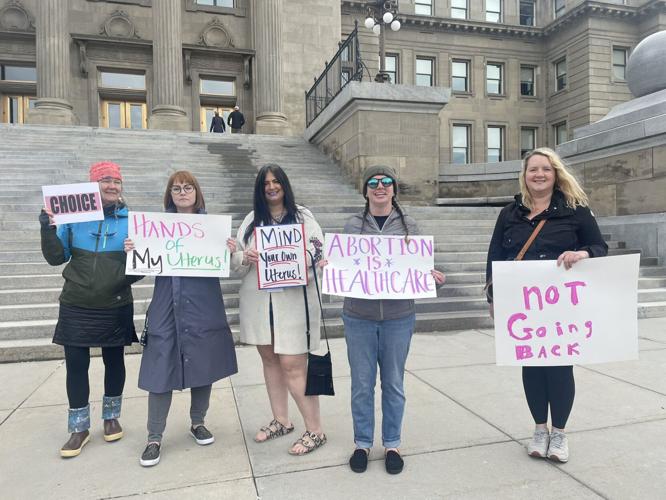






The leaked U.S. Supreme Court draft opinion to overturn Roe v. Wade is an unprecedented one, and legal experts in Idaho have mixed opinions on the court’s apparent ruling.
“If this draft holds, it will be the first time the Supreme Court has essentially repealed what it itself has called a fundamental right, reaffirmed several times by the court,” said David Adler, the president of the Alturas Institute in Idaho Falls. “That’s not the path toward stability and predictability in American Constitutional law.”
Adler is a constitutional scholar and author whose work has been quoted by the U.S. Supreme Court and lower federal courts.
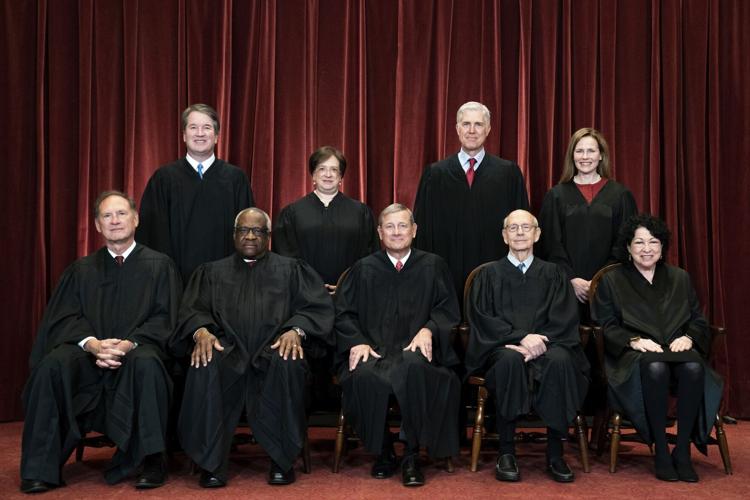
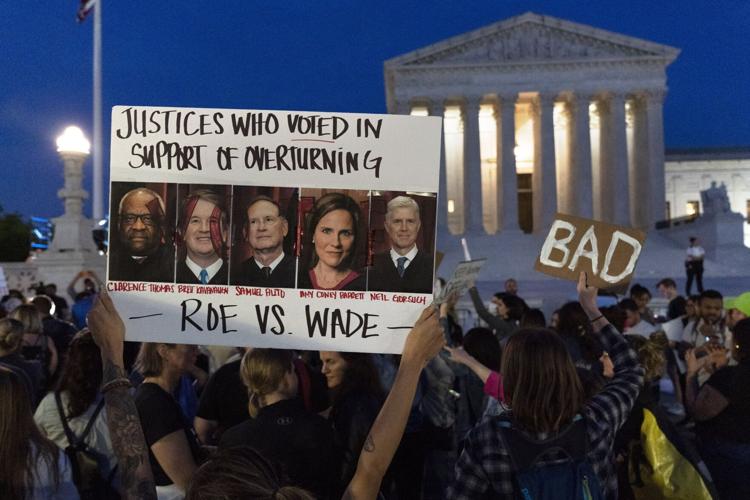
Politico published the leaked draft opinion from Justice Samuel Alito on Monday. The 5-4 ruling appears to show Justices Clarence Thomas, Neil Gorsuch, Brett Kavanaugh and Amy Coney Barrett holding the majority opinion to overturn Roe v. Wade.
When Roe v. Wade was decided in 1973, five conservative justices on the court ruled in favor of legalizing abortion practices across the U.S. Adler said the draft opinion indicates the court has shifted into a radical right-wing of politics that has shown its hand of operating as a partisan body.

David Adler, Ph.D.
“When Alito says in his opinion that Roe was egregious from the start, he couldn’t be more wrong and the fact is it’s a case that had been reaffirmed many times by justices who were appointed by Republicans, so he’s pointing a very offensive finger at those who were in fact nominated and confirmed by Republicans themselves,” Adler said.
Adler said he’s deeply concerned Alito ridicules the element of constitutional autonomy in the due process clause of the 14th Amendment in the draft opinion. The clause has protected rights to access contraception, interracial marriage and LGBTQ rights for sex and marriage.
Adler takes issue with Alito’s view on unenumerated rights — rights protected by the Constitution but not explicitly mentioned in it — needing to be strongly rooted in U.S. history and tradition. There are many unenumerated rights Americans have come to expect, including the ability to travel to other states, Adler said.
“Alito’s feeble attack on Roe because it’s not enumerated doesn’t get him anywhere,” Adler said. “There’s no historical basis for that assertion.”
Alito writes in the draft opinion that the court emphasizes the decision only concerns the constitutional right to an abortion and “Nothing in this opinion should be understood to cast doubt on precedents that do not concern abortion.”
Since the draft opinion was leaked, there has been widespread concern that this iteration of the Court also would overturn the right for same-sex couples to marry.
Richard Seamon, a professor of law at the University of Idaho, said he doesn’t believe the court will overturn other cases that relate to the due process clause. He said he believes the justices know overturning precedent is difficult and they overruled Roe v. Wade because the original decision was short on analysis that didn’t examine precedent or history thoroughly.

Seamon
“(Other unenumerated rights) have become such an embedded part of the way people live. It’s inconceivable that the court would backtrack on them,” Seamon said.
Alito and Justice Clarence Thomas indicated in a 2020 opinion that they favored overruling Obergefell v. Hodges, which declared that same-sex couples have a constitutional right to marry under the 14th Amendment guarantee to equal protection of the law.
Seamon said Roe v. Wade has continued to be a “lightning rod” among Americans and the court’s 1973 decision’s intended effect of settling the issue has not happened.
If the draft decision is held in the coming months, more than half of U.S. states including Idaho are expected to ban abortions, the Guttmacher Institute estimates.
Adler said along with women’s suffrage in the early 20th century, Roe v. Wade was one of the most influential gains for women’s rights and that abortion bans treat women as second-class citizens by taking away their reproductive autonomy to choose to go through a pregnancy.
Alito argues that abortion bans don’t reflect the subjugation of women because women have electoral or political power and women register to vote and cast ballots at a higher rate than men. Adler notes there is no limitation American men experience that is comparable to an abortion ban for women.
“In Alito’s world, the all-powerful state has the authority to order women to carry a pregnancy to term,” Adler said.
Seamon said the draft is meant to be an advocacy document within the court to sway the other judges. He said after reading Alito’s opinion, he believes Alito crafted it over many years and Alito was planning for edits and compromise from other judges.
“Alito meant it to be really strong and overdetermined to make it seem like there really is no room for anyone who has criticism of Roe v. Wade to do anything except say ‘yeah, overruling is really the right thing to do,’” Seamon said.
Seamon said it’s important for people to understand the opinion is a draft and will likely change before the court’s final ruling this summer. He compared Alito’s opinion to an opening bid and said he takes issue with leaking the opinion because of deliberative process privilege, which shields inter- or intra-departmental records that are pre-decisional and deliberative from Freedom of Information Act requests.
“People need to be able to work on those drafts without feeling like everything they write, every comment that they make, is going to see the light of day,” Seamon said.
The Associated Press reported abortion restrictions affect minority and low-income women the most because states with restrictive abortion laws often have limited access to health care and effective birth control. Schools in these states often have ineffective or inadequate sex education.
Studies from the World Health Organization have found evidence that countries with abortion restrictions don’t decrease the number of abortions women seek, but makes abortions unsafe and undignified, which leads to a higher rate of injuries and death.
Public support to overturn Roe v. Wade among U.S. residents is a minority opinion, according to several studies and polls. Gallup, a Washington-based analytics and advisory company, has surveyed adults aged 18 and over from all 50 states and the District of Columbia since 1989 about Roe v. Wade and the company has consistently found the majority of Americans oppose overturning the decision.
A 2021 Gallup survey found 58% of Americans opposed overturning Roe v. Wade and 32% of Americans were in favor of overturning the landmark case.
The Pew Research Center has found similar results in recent years and found about half of surveyed Republicans in 2019 didn’t support overturning Roe v. Wade.
Adler also pointed out more U.S. residents vote for Democrats during election cycles, and the support to uphold the right to an abortion is more popular among Democrats.
“This opinion disregards the health interests of women and it serves only the interests of a handful of people on the Supreme Court and it serves the interest of a majority of the people in the minority party of this country,” Adler said.
Another issue Adler raised that he said he believes would create further political chaos is an attempt by a Republican-controlled executive and legislative branch to federally prohibit abortions, and a Democrat response to overturn the law, creating a cycle of abortion-focused legislation every few years.
U.S. Rep. Mike Simpson told the Post Register Wednesday that while he supports overturning Roe v. Wade, he does not support a federal abortion ban.
“They took on a political decision (with Roe v. Wade) and decided to try and solve a political decision. That’s not the job of the Supreme Court,” Simpson said. “There are extremist views out there now saying ‘oh this will repeal (Griswald v. Connecticut) where a married couple can’t get birth control pills’ — that’s all just a bunch of bull and scare tactics. This is about returning the decision (of abortion) to your local elected officials.”


(0) comments
Welcome to the discussion.
Log In