



BOISE — A bill with the stated intention of curbing actions from individuals believing to be “above the law” passed the House with little debate on Friday. If signed into law, it would empower the Idaho Attorney General to pursue legal action to remove public officials and employees throughout state and local government when they violate prohibitions in the state.
House Bill 896, which is sponsored by House Speaker Mike Moyle, allows the Idaho Attorney General to function as the primary backstop in the event a public official, public employee or government entity violates law that lacks enforcement mechanisms, which commonly take the form of a fine or other defined penalty.
In any instance where an applicable person or entity acts in contradiction of Idaho prohibitions, the attorney general will be able to take them to court to either force compliance or, if that fails, remove them from their public position.
Significant exceptions are made to exclude the legislative and judicial branches and their respective officers, who, unlike other public entities in the state, are not to be subject to this method of legal action by the attorney general.
“This is a bill that shouldn’t be necessary — it really shouldn’t,” Rep. John Shirts, R-Weiser, who served as the bill’s floor sponsor, said. “But unfortunately we are in a place in our state where laws that we passed just are not being followed and this is a mechanism to ensure that they are.”

John Shirts
The bill states that the governor, president pro tempore of the Senate, the speaker of the House of Representatives and the chair of a board of county commissioners can make referrals to the attorney general’s office regarding potential violations of prohibitions in the state.
In the case of a chair of a board of county commissioners, a referral must be related to action taken within the county or action taken by a person residing in the county.
If the attorney general believes this violation is taking place, they will be required to notify the individual or government entity, who will be allowed 14 days to state intent to correct the violation or deny the violation was taking place. In instances where the violating behavior is not corrected, the attorney general will be able to make a court filing to enforce the law against the accused party, after which a court will decide whether this unlawful action was truly taking place.
Beyond being able to make a court filing for compliance, the attorney general is given full discretion under the bill to seek to disqualify individuals from public office or public employment who willfully violate state prohibitions, so long as they are not holding an elected position. If a court finds that a person willfully violated an Idaho prohibition, they would be barred from seeking public office or employment in the state for up to five years.
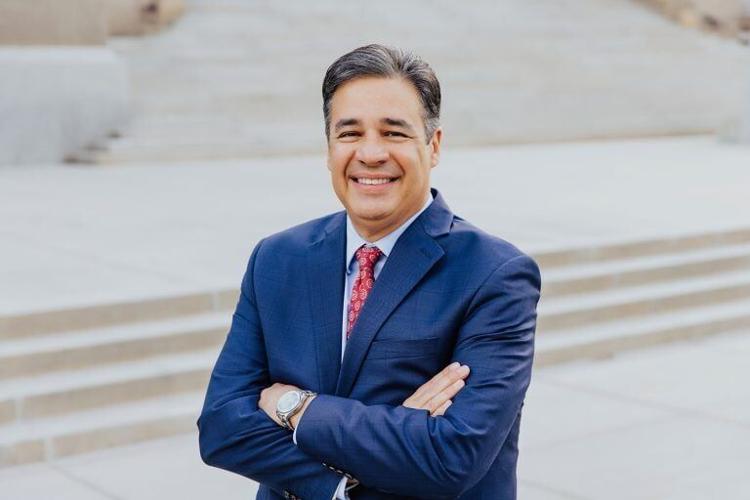
The bill arrives just shy of a year after a series of letters were publicly exchanged between Idaho Attorney General Raúl Labrador and Boise Mayor Lauren McLean after the city of Boise declined to lower its LGBTQ+ Pride flag and a flag honoring organ and tissue donors, action Labrador said needed to be taken to comply with Idaho’s 2025 law implementing flag restrictions on government entities.
At the time, Labrador described McLean’s actions as an act of defiance of the Idaho Legislature, while McLean, who underscored Idaho’s law lacked an enforcement mechanism, said it was a matter protecting the rights of the city’s citizenry, as was previously reported by the Idaho Press. Updated flag legislation with an enforcement mechanism has been brought forward this session and is currently in the process of being amended in the Senate after passing out of the House earlier this month.
Rep. John Gannon, D-Boise, was the sole legislator to offer debate for or against the legislation and voiced concern about Idaho’s legislative and judicial branches being exempted from the attorney general’s expanded authority. Due to the exemption for the judicial branch in the bill, Gannon noted this would mean a county commissioner could make a complaint about action taken by the governor, but “can’t complain that a judge hasn’t show up for work.”
Urging the bill to be redrafted instead of advanced in its current form, Gannon described the effort as a “selective” and “political” approach to a problem that can already be addressed in the legal system through injunctions and temporary restraining orders, which can pause a course of action until a court can render a decision on its legality.
Responding to concerns from Gannon and a query from Rep. Anne Henderson Haws, D-Boise, Shirts noted that under the Idaho Constitution, the legislature has the ability to impeach or remove an individual from office. Allowing the attorney general to pursue removal action in these instances would be providing duplicative authority, Shirts said.
In a 60-9, party-line vote, the House approved the bill expanding upon the attorney general’s authority, sending the matter to the Senate for deliberation. If ultimately signed by the governor, the bill would take effect immediately after its passage.



(2) comments
So a mayor who flies an unapproved flag is in the crosshairs but a legislator who commits rape is not?
Whatever happened to hey big brother don't tread on me?
Welcome to the discussion.
Log In