

EDITOR’S NOTE: This is the sixth and final part in our series titled After the Fire: An in-depth look at life at Highland High School following the destructive 2023 blaze. This six-part Idaho State Journal series has run in our Saturday editions since March 9.
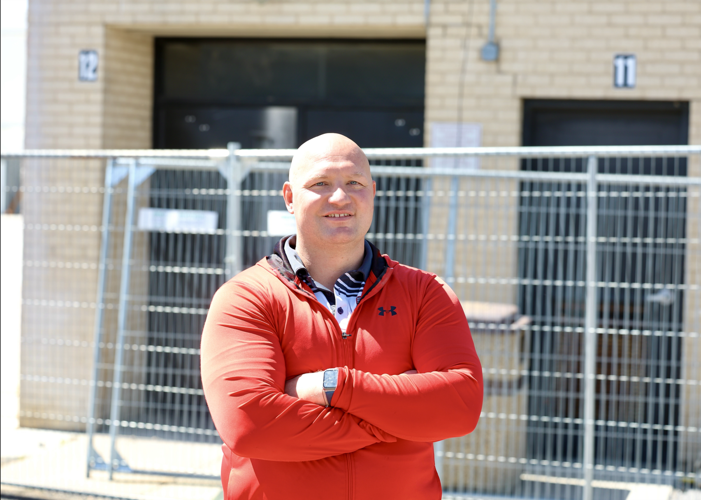
POCATELLO — Highland High School Principal Brad Wallace and others at the school are part of a new committee that will help with the Highland rebuilding process and provide a roadmap for the future.
It’s a future where now there’s certainty the fire-damaged school will not just be fully restored, but will likely be bigger and better than before the destructive blaze.
“It’s exciting because now the (school) board has already formed a committee that includes community members and parents, the architect, the general contractor, some administrators, teachers and coaches from Highland,” Wallace said. “So that’s exciting. That committee has hit the ground running.”
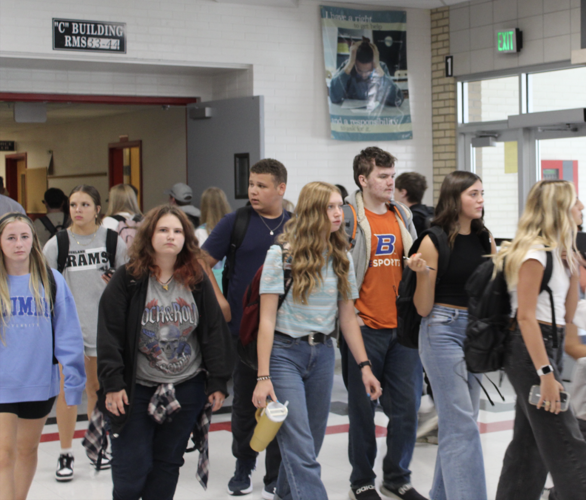
As the one-year anniversary of the April 21 fire that destroyed Highland’s D Wing inches closer, optimism has spread across the hearts and minds of the school’s faculty, students and parents.
On March 29, Gov. Brad Little signed House Bill 521 into law. The legislation will allocate $1.5 billion in new funding and redirect $500 million over 10 years for school facilities across the Gem State. The passage of the bill and subsequent statements from School District 25’s leadership provided the Highland community with the assurance it’s long sought that the school would be rebuilt and soon.
Previously, School District 25 was in limbo awaiting the possible passage of HB 521 and had even put a $33 million bond on the May 21 primary election ballot that if supported by a supermajority of voters would have funded the Highland rebuild.
But the fact a similar bond had failed to get the necessary voter support last November made those with a vested interest in Highland nervous about what the results at the primary polls would be.
Since HB 521 is now law and will provide the necessary money to restore Highland, District 25 has informed the public that it is no longer asking for the community to support the bond, which at this point cannot be removed from the primary election ballot.
With the school’s future looking once again bright, the Highland High School Rebuild and Design Committee that Wallace is a part of is touring 6A high schools such as Madison, Rigby and Thunder Ridge to conceptualize ideas, evaluate square footage and to find out the good and bad aspects of each school.
Using these other 6A high schools as a template, the committee and the designers within the team will be better equipped to make the best use of the incoming state dollars on Highland.
One potential new addition at Highland that was in discussions even before the fire is a modern performing arts center. The school’s current auditorium, while still intact, is outdated and doesn’t have the capacity to host many extracurricular activities or even provide seating for a large number of students.
“Highland’s performing arts center has been something we’ve been talking about for several years,” Wallace said. “The district has been involved and it’s been on a long-term plan to rebuild or renovate Highland’s (auditorium). Currently, we can’t even fit a full class of students in there. The stage is too small to host a choir concert (or) a band concert (because) they don’t fit on stage. We used to hold choir concerts and it didn’t seat enough. People were in the halls trying to listen and the choir didn’t even fit on the stage. They’d have some of them stand down on the floor.”
Wallace continued, “(We need) a performing arts center that meets the needs of our drama, our orchestra, our band, our choir and for general student meetings and assemblies.... This felt like the perfect time to address that major need that Highland has. We’re currently talking about building (a performing arts center) that seats anywhere from 600 to 1,000 people, which is more than double the size (the auditorium) is right now.”
The proposed Highland performing arts center would have a large stage and an orchestra pit, mimicking the Century High School auditorium, Wallace said.
Highland’s band and choir rooms that were destroyed during the fire would be part of the new performing arts center along with a room for the Highland drama department and perhaps even an area to build sets for the school’s theatrical performances, Wallace said.
For committee members like Highland parent Michelle Mitchell, who graciously helped contribute to the school’s teachers by updating their faculty lounge last December, it’s an honor to be part of the rebuilding project.
“I’m just elated about all of it, every section of it,” said Mitchell, who has two children attending Highland. “The designer broke it down into sections (this week) and they were like ‘Here is where this beautiful auditorium could go and then here’s your commons (area), your cafeteria and your concession area and then here’s your gym.’ When you look at all of it, in some way, shape or form this will benefit every student at Highland High School.”
Mitchell continued, “After seeing these 6A high schools, we have the potential to create something new and exciting for the kids and the community. I would like to see bigger community support in education in general, not just in the high school areas, but in elementary, middle school and high school.”
One of the largest hurdles that needed to be overcome at Highland this school year was the lack of gym space because the school’s large gym was destroyed in the fire. Highland’s sports teams often have to find off-campus locations to practice and compete because of the lack of athletic facilities at their fire-damaged school and this has caused scheduling and transportation difficulties.
Many of the 6A high schools visited by the committee had three gyms of various sizes and this would be ideal for Highland. There is now an opportunity to build a large gym to replace what was lost in the fire and also construct an additional practice gym, Wallace said.
Other essentials such as the cafeteria, commons area and additional modernized science classrooms have been at the forefront of discussions as the committee puts together the plans to rebuild Highland.
Through the use of HB 521 funding and the $20 million to $25 million in insurance money from the fire, Highland will be rebuilt without the need for a taxpayer-funded bond.
As it stands now, the fall 2027 timeline for final completion is still set and construction, in all likelihood, will begin in full force in the summer of 2025.
Highland’s administration and the committee are still working to make sure Highland’s students have a good experience over the next three years as their school is restored and improved.
“How do you support Highland over the next three years? Mitchell said. “The building process takes time. That’s my second goal outside of this committee: How do I continue to support the staff? Because for me, I always feel like teachers are underserved, under appreciated and underpaid.”
Mitchell continued, “I want to go above and beyond. I want to go over (to Highland) and make them feel special again. I got an email from a teacher that said she had taught for 14 years and this was the first year she’d ever felt truly seen and appreciated as a teacher. That made me really happy but also very sad at the same time that she had put in her time as an educator for that long and it took this long for her to feel seen and appreciated in what she does.”
Wallace said he too is dedicated to making Highland the best it can be while the school is rebuilt.
“It’s exciting to think that in just a few years, we’ll have a building built back for our students at Highland High School and that we will be able to provide our students with the total high school experience and all the educational resources that they need,” Wallace said. “It will be great for our Highland teachers. We’re going to make the best of what we have for the next three years. We’re talking about moving all our basketball games here to Highland. They’re putting up bleachers in the summer to be able to do that. We’re not just going to sit and accept where we’re at. We’re going to try and make it the best we can over the next three years for our students.”

(0) comments
Welcome to the discussion.
Log In