


BOISE — The House Judiciary and Rules Committee voted Tuesday to approve a bill requiring parental consent to provide health care, and requiring disclosure to parents of health records, despite a number of concerns. The legislation also creates a civil penalty for providers who violate it.
The bill may make Idaho one of the only states that doesn’t allow some young people to consent to treatment and testing for sexually transmitted diseases.
The committee voted along party lines to send SB 1329 to the floor, however, another motion to hold the bill in committee narrowly failed in a 7-9 vote.
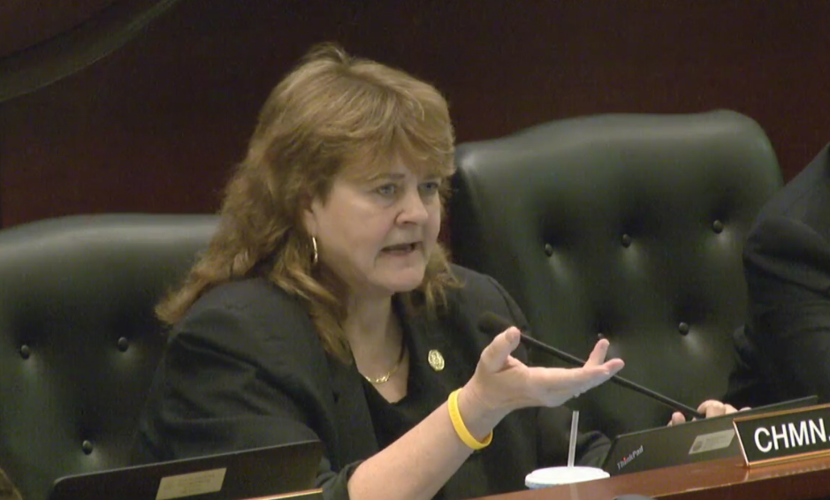
House sponsor Rep. Barbara Ehardt, R-Idaho Falls, said the bill furthered the state’s interest in protecting parents’ rights and strengthened previous legislation that recognized these rights.
“When it’s all said and done, parents are the ones who know and love their children the best,” Ehardt said.
She co-presented with Jordan Carpenter, legal counsel at Alliance Defending Freedom — a national legal organization that focuses on religious freedoms. Idaho Attorney General Raúl Labrador has worked with ADF on a number of legal cases, such as defending Idaho’s ban on transgender health care for minors in court, and Idaho’s abortion laws, which have been challenged for their lack of an exception to allow abortions to protect the health of the mother.
Carpenter during his bill presentation cited school district policies that prohibit school district employees from inadvertently disclosing a student’s transgender status without the student’s consent. The bill would prohibit any health care provider or government entity from withholding health information from the parent, unless the parent’s access is prohibited by a court order or they are the subject of an investigation into a crime against the child.
Those who opposed the bill cited concerns about young people in complicated or even dangerous family situations, and that the bill would contradict other areas of Idaho code without repealing those sections.
Those who supported it said parents shouldn’t be left out of their children’s medical care in any circumstances.
Michelle King, president of LC Valley Youth Resource Center, urged lawmakers to oppose the bill because of the impact it may have on the young people she serves.
The center provides overnight shelter and other services to young people who don’t have active parents or guardians in their life.
She highlighted access to mental health as a primary concern — currently young Idahoans age 14 and older can consent to their own inpatient mental health care. King said she’s had 43 instances of young people coming to the shelter with suicidal thoughts and the staff helping them access care.
“I don’t think we should pass any bills that would make it more difficult for people to access mental health care while we are in a suicide crisis with our youth,” King said.
Jennifer Arzola testified in support of the bill. She said that when her child was 17 she found out they identified as a transgender boy.
Arzola said she’d taken her teenager to a counselor to treat anxiety and depression but the counselor was “affirming her self-proclaimed gender identity without my knowledge.”
The teenager was able to receive a prescription for testosterone without Arzola’s knowledge.
Mistie DelliCarpini-Tolman, Idaho state director for Planned Parenthood Alliance Advocates, said that parental notification requirements can discourage young people from seeking care at all.
Rory Cole, an Idaho resident and medical student, said she had a close friend in high school with a “challenging” relationship with his parents who struggled with suicidal thoughts that he didn’t talk to his parents about. Cole was also representing the Idaho Coalition for Safe Health Care.
The friend was able to get mental health help on his own with his doctor, she said.
Cole said that while the bill may be well-intentioned, “it poses a significant risk to the health and safety of minors in our community”
She also had concerns about the penalties and how they may disincentivize medical providers from practicing in Idaho. Idaho’s abortion bans include felony and civil penalties, and they have been cited as a factor in many health care providers leaving the state.
Julianne Donnelly Tzul, with the ACLU of Idaho, underscored a number of areas of existing Idaho law that the bill would directly contradict. The language of SB 1329 does not repeal the contradictory law.
A law review completed by Stephen Adams, who at the time was staff attorney for Judge Lynn Norton, states that, in situations when a new bill contradicts existing law, typically either the most recent statute or the more specific statute would apply in cases where they are in direct conflict with each other.
Tzul additionally expressed concern about public health consequences and treatment of conditions that may not be an emergency in the moment but could have complications if left untreated long-term.
Kristi Hardy testified in support. She said when her son turned 14 and she found out he had to consent to sharing his medical records with her, she found the practice “appalling.”
“No one knows my child better than me,” Hardy said, “I gave him life.”
A 2023 Guttmacher Institute overview of consent to reproductive health by young people found that all states and the District of Columbia allow young people to consent to treatment for sexually transmitted infections. It also found that 27 states and D.C. allow contraceptive services for specified ages of teenagers.
Many committee members said they worried about implications for mental health care specifically.
Rep. Dan Garner, R-Clifton, said he appreciated the intention behind the bill but worried it would undermine some mental health providers.
“I know that those counselors work hard to gain a trust with their clients, and there are just some things that the kids don’t want their parents to know,” Garner said.

Kenny Wroten
Rep. Kenny Wroten, R-Nampa, said he opposed the bill’s civil cause of action, which would allow parents to sue providers. He said this could particularly become an issue if there’s a threat of a lawsuit when there’s potential disagreement over what an emergency is and if the exemption would apply.
He also worried the bill would have a chilling effect on young people getting the care they need.
“They’ll stop asking for help if they think they’re going to get in trouble at home,” Wroten said.
Rep. Marco Erickson, R-Idaho Falls, is a social worker who works with teenagers, and he said he’s encountered young people with parents who won’t engage with their kids. He said he’s had a young suicidal person come to him whose parents didn’t believe in seeking mental health care.
Erickson made a motion to hold the bill in the committee.
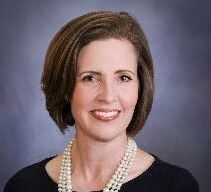
Julianne Young
Rep. Julianne Young, R-Blackfoot, strongly supported the bill.
“As a parent, how dare you take my parental rights away just because you think some other parent is not a good enough parent,” Young said, her voice shaking.
She argued children who are suicidal would still be able to be treated under the emergency exemption.
Rep. Mark Sauter, R-Sandpoint, said because of the concerns over conflicting statutes and others, he’d like to see it amended. He made a motion to send SB 1329 to “general orders,” in which it goes to the floor and House members may propose amendments.
In a voice vote on Sauter’s motion, in which every member said “aye” or “nay,” the motion died with the “nay” votes being a little louder.
The committee then voted 7-9 on the motion to hold the bill, which would have killed it.
Eventually, the committee voted 13-3, with the three Democrats voting against it.
SB 1329 has already passed the Senate and now goes to the full House.


(0) comments
Welcome to the discussion.
Log In