



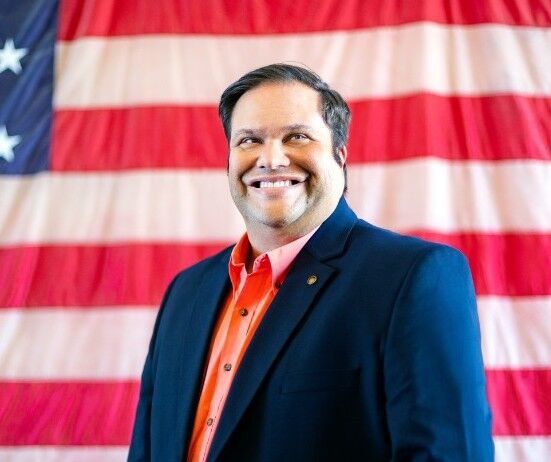



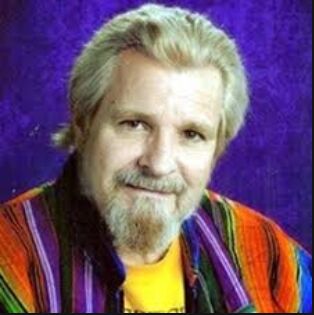
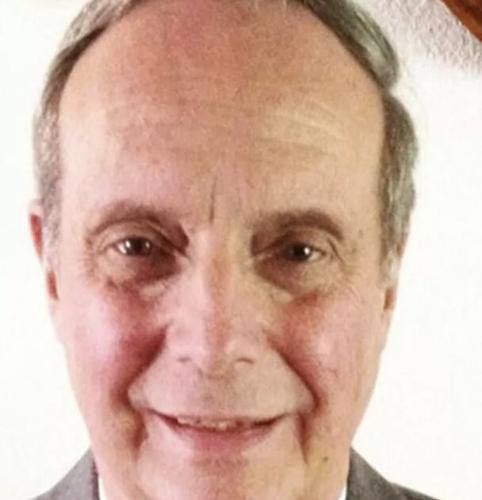

BOISE — Idaho Sen. Mike Crapo has held elected office since 1984, serving first in the state Senate, then the U.S. House, and now as Idaho’s senior U.S. senator, seeking a fifth six-year term.
If he’s reelected and completes that term, he’ll be the second-longest serving Idaho senator ever. Crapo, a Harvard-trained lawyer from Idaho Falls who was first elected to the U.S. Senate in 1998, chaired the Senate Banking Committee for four years and is currently the ranking Republican on the Senate Finance Committee, which he could chair if Republicans win the Senate. He faces four challengers on the November ballot: Democrat David Roth of Idaho Falls; independent Scott “Oh” Cleveland of Eagle; Libertarian “Idaho Sierra Law” of Pocatello; and Constitution Party candidate Ray Writz of Coeur d’Alene.
Crapo’s campaign war chest – he had $5.6 million in cash on hand as of June 30 – vastly exceeds those of all of his challengers, and he’s the only one of the pack with campaign commercials up statewide on TV. “I have been in the battle for our future and freedoms and want to stay in this fight,” Crapo told the Idaho Press.
But some of Crapo’s recent votes – including against the “CHIPS and Science” bill whose passage prompted Micron Technology to announce a $15 billion investment in Boise; the PACT Act, the biggest health care and benefit expansion in Veterans Administration history; and the Inflation Reduction Act, which among other provisions capped prescription drug costs for seniors on Medicare – haven’t been popular at home. Crapo’s challengers consider his long tenure in Congress a liability, and promise to bring something new.
Roth, executive director of a drug-free youth program in eastern Idaho, said, “My race is a really unique race. I am the first openly gay man Idaho has ever nominated to a statewide race, and only the second openly gay man ever nominated to the U.S. Senate by a major party. And we did that in Idaho.”
Cleveland, whose campaign slogan is “Cleveland NOT Crapo,” says, “My personal belief is that it is high time voters start putting their country before their party. Just because someone has an ‘R’ or a ‘D’ beside their name does not make them the best candidate for office.”
On his campaign website, Cleveland, who says he was a “lifelong Republican” until 2020, says Crapo “has a long history of being embedded in the D.C. swamp.”
Law, who in the past has used names including Idaho Sierra Law, Idaho Lorax, Sierra Carta, and Carta Reale Sierra, is a frequent candidate for local and state office from Pocatello who says he wants to stop the “poisoning of America” by radiation from uranium.
Writz, who has run for office a half-dozen times including a previous U.S. Senate bid in 2016 on the Constitution Party ticket, is a 71-year-old from Coeur d’Alene who didn’t respond to a reporter’s request for information about his campaign this time around. He’s a semi-retired janitorial service owner.
Here’s a look at the candidates on the November ballot:
MIKE CRAPO
Crapo, 71, is a fourth-generation Idahoan from Idaho Falls who earned a bachelor’s degree in political science from Brigham Young University and a law degree from Harvard. He clerked for Judge James Carter on the U.S. Court of Appeals for the 9th Circuit, then returned to practice law with his brother, Terry, in Idaho Falls.
He rose to Senate president pro tem, the top leadership post, while serving in the Idaho Senate; and currently serves as chief deputy whip among U.S. Senate Republicans. He ranks 13th in overall seniority in the 100-member Senate.
In his current reelection bid, he lists his top three issues as bringing inflation under control, including “reining in federal spending” and also “promoting pro-growth tax and energy policies; securing borders “from the alarming, record-breaking influx of illegal immigrants;” and protecting “our Constitution and the values and freedoms which it guarantees every American.”
“My record of public service and commitment to conservative principles and values held by Idahoans is proven and solid and sets me apart,” he said, noting his 91% lifetime rating from the American Conservative Union; 100% rating from National Right to Life; and A+ rating from the National Rifle Association.
In the past six years, he cites as his top accomplishments successful legislation on nuclear energy, veterans, financial regulation, and national security, including sponsoring measures in April revoking Russia’s “most favored nation” status for trade and codifying a presidential executive order banning imports of Russian oil, which passed the Senate unanimously.
“Inflation, border security with the fentanyl crisis, the IRS expansion and China’s assault on the West are but a few examples of the many threats to our security, liberty and safety,” Crapo said. “All of these threats and more require Idaho’s United States senators to be aggressive and effective advocates for policies that reflect Idaho’s principles and values. That is why I am running to be re-elected to the United States Senate.”
DAVID ROTH
Roth, 41, is also from Idaho Falls, where he grew up and started a computer company while still in school at Idaho Falls High School. He then moved to Utah, where he earned a bachelor’s degree in marketing from the University of Phoenix and held a series of marketing and administration positions at public and private colleges, including Western Governors University. That was followed by two-year stints as a database marketing manager for a mortgage company and a real estate agent, before a volunteer job in a group home turned into first a part-time job, and then being a foster parent.
He was in the process of adopting two young brothers he fostered when he and the boys went back to Idaho Falls for his grandmother’s 100th birthday, and his sister unexpectedly passed away at age 39, at the same time his mom had been diagnosed with cancer. Roth ended up moving back to Idaho Falls with the boys and caring for both his mom and grandmother for a year, then worked as director of Hope Lutheran School, a small private school he’d attended as a child, for another two years. He also began work on a master’s degree in educational leadership from Concordia University-Wisconsin that he’s one semester short of completing.
He currently serves as executive director of the Bonneville Youth Development Council, and also serves on the boards of the Community Coalitions of Idaho, Habitat for Humanity Idaho Falls, and the Idaho Falls Soup Kitchen. He ran unsuccessfully for the state House in 2020 against current Rep. Marco Erickson, R-Idaho Falls. Then, former Idaho Democratic Congressman Richard Stallings asked him to consider running for the U.S. Senate seat this year.
“As Democrats in the state, we don’t have a really deep bench,” said Roth. “I really had to think about it, and think, if not me, who? … So I made that decision. I’m really glad I did. I think we have the best shot we’ve had in years.”
He lists his top three issues as all involving “fundamental freedoms,” starting with abortion rights and contraception. “I’m also really worried about LGBT issues, as far as being a member of that community and seeing how it’s been targeted,” he said. “I’m very concerned that we’re going to start taking some steps back there. And then I’m really concerned about our voting rights,” including proposals that could “make it more difficult to vote in the future.”
“Mike Crapo has been in office since I was 3 years old,” said Roth. “I just feel he’s disconnected from everything that’s actually happening in Idaho. He talks about how great everything is in Idaho, how Republican policies have led to this really strong economy and everything is really great, with low unemployment.”
Roth said he hopes he appeals to voters as “someone who’s down here on the ground, in the middle class trying to make it work. I’m raising kids, I’m in the communities, I work with the affordable housing issues, I work with people who are patrons of the soup kitchen and the food bank. I really understand what’s happening here on the ground.”
He said his experience working with nonprofits involves “navigating actually trying to solve issues for people and constituents. So I think that has really given me … insight into solutions that are already working on a small scale that could certainly be scaled so they could help even larger groups of people.”
SCOTT ‘OH’ CLEVELAND
Cleveland, 61, is a New Mexico native who is a licensed investment advisor and has built a career in the financial services industry. After high school, he worked in construction, then in manufactured housing, then started his own transportation business. Then, he said, he went to work for New York Life and NYLife Securities, accepting an offer in 2006 to move from New Mexico to Idaho in 2006 to become managing partner in the firm’s Boise office.
In 2014, he launched his “boutique investment and brokerage firm” in Eagle, now called 4C Financial Group. Cleveland said he and wife Kathy live in Garden City, but remain very involved in the Eagle community, where he has been treasurer for the Eagle Chamber of Commerce and active with the Eagle Kiwanis Club. He founded the Treasure Valley Council of Patriots.
Cleveland says he adopted the nickname “Oh” after noticing that whenever he shared his ideas and plans with friends, family or co-workers, they tended to respond with “Oh, yeah!” “Oh, no!” “Oh, boy!” or other such phrases.
“I have been a trusted leader all my life,” he said. “At age 61, I have no interest in serving a 30-year career in Washington, D.C. It is not that difficult to evaluate a complex situation and then do what is best for the American people, including the good citizens of Idaho. We must break the hold that lobbyists and special interest groups have on our elected officials.”
Cleveland lists his top three issues as national security, including concern that “our country is being deliberately invaded on a daily basis by illegal foreigners;” inflation and energy independence, an issue he blames on the Biden administration; and “reckless spending,” saying, “Sadly, the fiscally irresponsible people in Washington D.C., including Sen. Crapo, are guilty of bankrupting our future prosperity.’
IDAHO SIERRA LAW
Law, who didn’t give his age, said, “My name is Mr. Idaho Law,” and describes himself variously as a “publisher, investigative reporter, multi-discipline educator and scientist,” along with a string of other descriptions, including “videographer” and “environmentalist.”
When he was running for both the Pocatello City Council and the local school board in 2012, Law, then running as “Idaho Lorax,” regularly showed up at council meetings in a full haz-mat suit or in a T-shirt with the logo “Mothers Against Death.” He decried the use of slag from a nearby FMC plant as the base for roads, alleys and school playgrounds in Pocatello.
He lists his top three issues as “saving lives, saving children,” which he said includes “the arrest and prosecution of criminal politicians and corporate entities;” supporting “universal health care;” and to “stop the poisoning of America via radioactive fertilizer use and the storage of immense reserves of uranium materials.”
RAY WRITZ
Writz, 71, has run for both the state House and Senate as well as the U.S. Senate. In 2016, he received 6% of the vote in a three-way contest against Crapo.
His campaign website is headed, “Ray J. Writz running for U.S. State Senate (Idaho) 2020.” A November 2019 post on his site says he opposes the USMCA, the U.S.-Mexico-Canada Agreement on trade that replaced NAFTA on July 1, 2020, writing that his “opposition is to reject the ideology of globalism.”

(0) comments
Welcome to the discussion.
Log In