



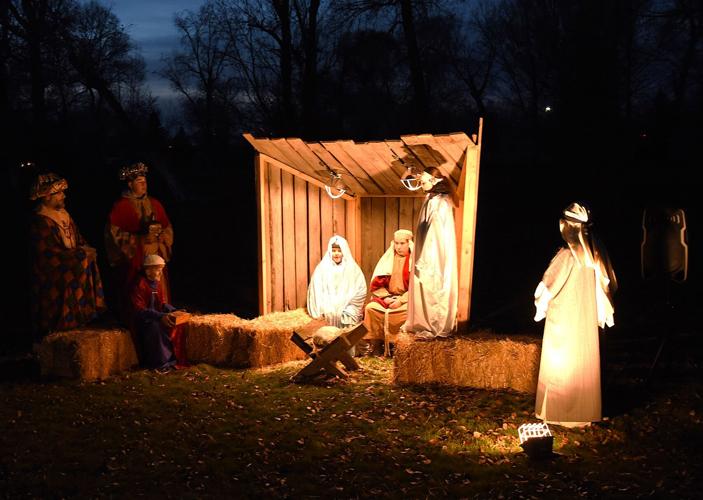
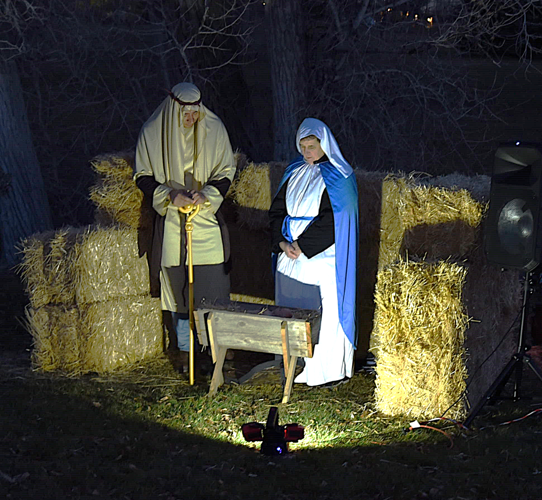
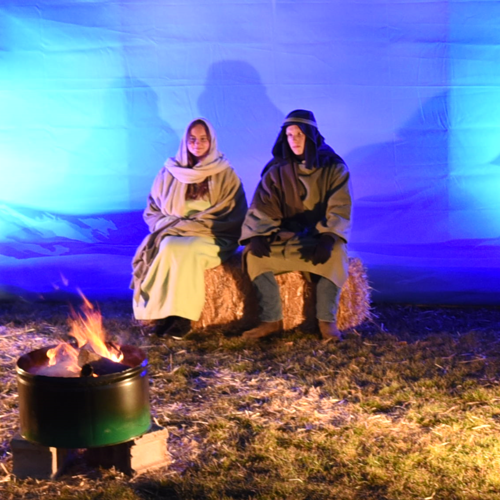
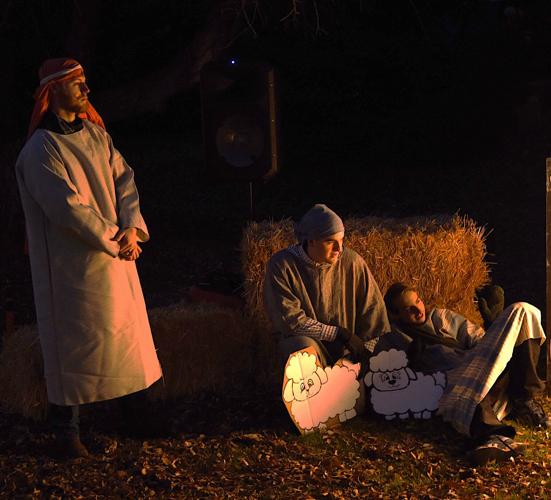
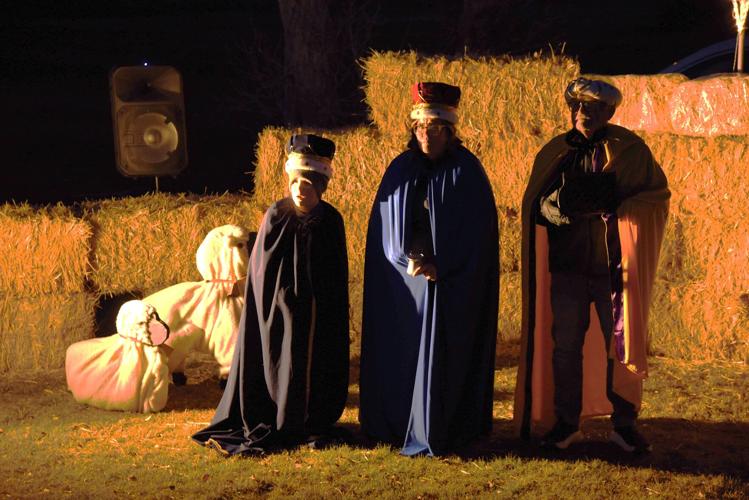
While people filled horse-drawn wagons and were driven past vignettes of the birth of Jesus at Jensen Grove, across town others enacted the Mexican traditional journey of Mary and Joseph looking for a place to stay.
Both cultures brought the sacred message of Christmas to Blackfoot in two different participatory ways.
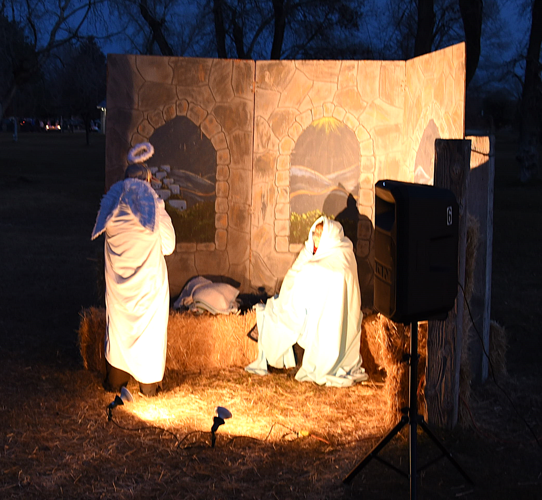
Thousands of people rode wagons around the park’s southwest loop to see the story of Jesus’ birth enacted by local people. The people in the wagons were not necessarily locals. I shared a wagon with a family from Pocatello and recently I heard a story of how some friends stood in line with a family that had been traveling to Montana and from the highway saw the wagons. They took the next exit, doubled back, came to investigate and ended up staying for the wagon ride and Christmas reminder.
At each scene a scripture was broadcast or an applicable Christmas song was played. Those stages are depicted in my photos, as best as one could take on a jostling wagon.
As one who has given birth, the wagon ride did give a new awareness to the journey Mary took when she was “great with child.”
La Posada, a Mexican tradition, is an enactment of Mary and Joseph searching for a place to stay in Bethlehem. Traditions may vary in how La Posada is celebrated.
Years ago, in Ashton I joined the Catholic community as they stood outside a home singing a request for lodging. They did so at different homes every night of the weeklong Posada celebration. They did not have a local church to center their celebrations around.
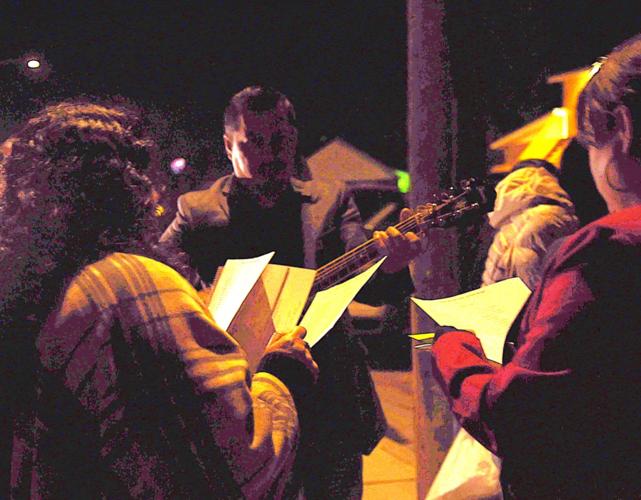
In Blackfoot, every night from Dec. 16 to Dec. 23, St. Bernard’s Church held a mass in the church, followed by enacting La Posada from the church’s front doors to the church hall next door.
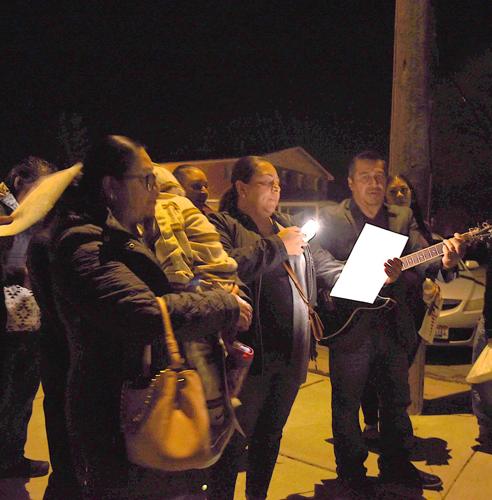
The congregants were roughly divided into two groups — ones that were asking for a place to stay and ones that were saying there is no room for them in the home. These requests and denials were all done in song, in Spanish, accompanied by the church’s guitar player.
The outside group sang their request at the church doors, followed by the inside group denying their request. Then the groups repeated the requests/denials on the sidewalk between the buildings.
The final request was made at the doors of the church hall, but this time the weary “Mary and Joseph” crowd were welcomed in and given lodging, or in this case a feast and fellowship.
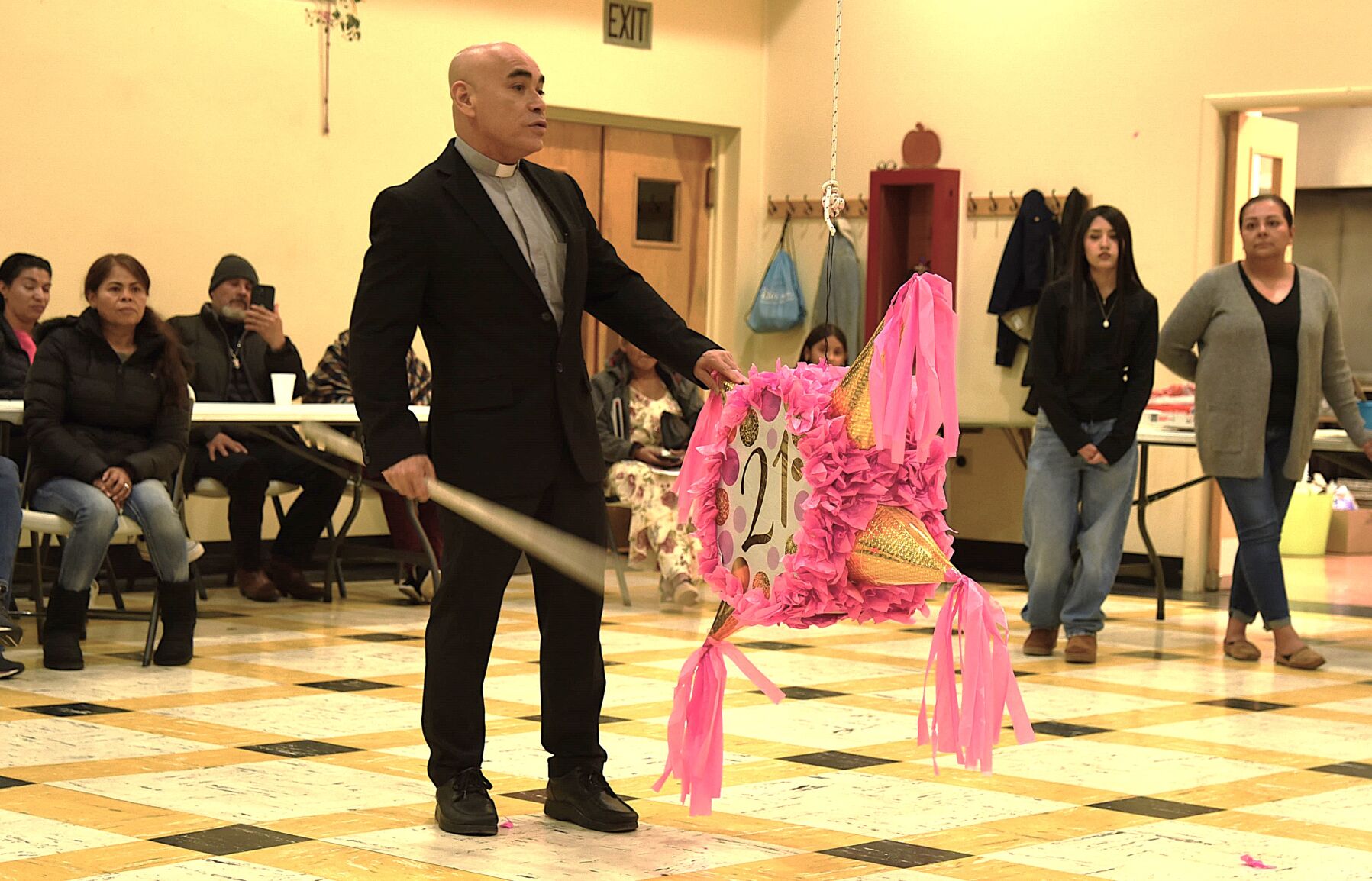
After the meal, a pinata was strung up and kids of all ages lined up for a chance to break it open. The youngest went first and weren’t blindfolded, but the older ones were hitting with their eyes covered while the pinata was always just out of reach, thanks to the men hoisting and lowering it from behind.
Before much damage was done, Father Adrian Vazquez paused the frenzy to talk of the symbolism of a pinata. He said that hidden within the pinata are delicious, wonderful things, and breaking the outer shell is like breaking down the personal barriers we all have and letting the beauty inside each of us come out and shine.
Eventually the pinata was broken and the candy showered down, concluding the evening’s Posada.
For me, both of these ways of celebrating the birth of Jesus Christ added a depth and richness to Christmas this year.



(0) comments
Welcome to the discussion.
Log In