

The sneak attack of the Japanese Imperial Navy on the U.S. Naval Base at Pearl Harbor in Hawaii, happened 70 years ago and more than 2500 miles away. But families all over Idaho, including Pocatello, felt the effects of the attack.
On December 7th, 1941, Pearl Harbor was attacked by 353 Japanese fighter planes, which damaged eight U.S. Navy’s battleships, damaged or sunk numerous other ships, destroyed 188 U.S. aircraft, and killed 2,459 Americans. The attack came as a profound shock to America, and by the following day, the United States declared war on the Empire of Japan, and the United States forced entered the conflict in both the European and Pacific theatres.
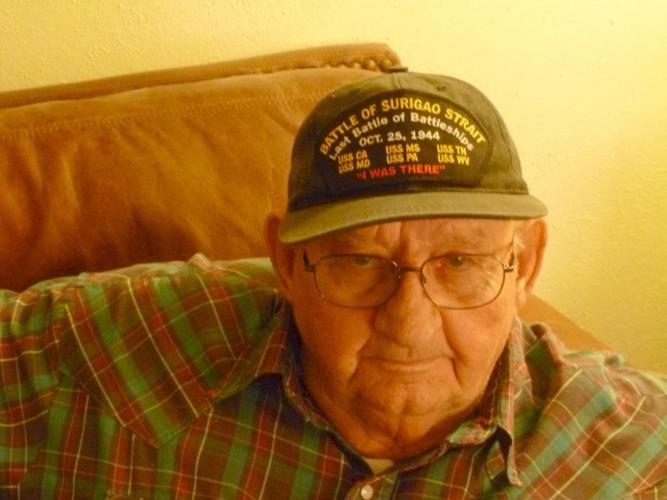
The attack also had a direct impact on the Karas family of Pocatello. Pete Karas was a 16 year-old student at Pocatello High School when the Navy was attacked at Pearl Harbor. He is now an 85-year-old veteran of the most notable battles of the South Pacific.
Karas completed his service with the Navy in late 1946, then returned to Pocatello and civilian life. He married, and raised his family in Pocatello, while working at the Naval Ordinance Plant, and later working as a tool and die maker. Karas was widowed two years ago, after 63 years of marriage.
But the events at Pearl Harbor 70 years ago changed his life forever. In much the same way as the 9/11 attacks, the Pearl Harbor attack prompted a passionate reaction, motivating many to come to the defense of their country. Karas enlisted at 17 years of age, determined to serve his country in the aftermath of Pearl Harbor.
“The day I turned 17, I talked to my parents because I wanted to enlist,” he said. “They were upset about the attack, but they didn’t want me to go because I already had two brothers in the service.” But Karas felt so strongly about serving his country and retaliating for the attack, that his parents finally relented, and allowed him to enlist. “I hadn’t finished high school yet, but I thought this was more important.”
“My two brothers were in the Reserves and were called back into service because of Pearl Harbor,” Karas recalled. Karas’ oldest brother George served in the U.S. Air Force, and was stationed in England, while another brother, Jim, joined an anti-tank unit in the European theatre. “Everybody was irate,” Karas said about local reaction to the infamous attack. “I was too. Of course, my brothers could hardly wait to get over there. They were glad they were called back in.”
Karas entered the Navy in 1943 and went to boot camp at Farragut Naval Station, near Athol, Idaho. From there, Karas joined the crew of the Battleship USS West Virginia, and became a part of the history of the storied ship that was severely damaged in the Pearl Harbor attack, but was refitted to participate in the invasion of the Philippines. The West Virginia made its mark in the battles all over the South Pacific, from Surigao Strait, Iwo Jima, Luzon, Okinawa, to the Japanese surrender and the occupation of Tokyo.
“As a young man, I was excited to be there because we wanted to fight back,” Karas said. But after the realities of war hit, Karas and his fellow sailors began to comprehend the seriousness of their endeavors. “You get more concerned, and you get more protective of yourself,” he explained. “You realize what war is all about when you see people die.”
Karas served as a Seaman First Class on board the USS West Virginia, and during battles worked one of the ship’s 16-inch guns, providing communications between the gun and the central control station on the bridge. “I had never been out the state of Idaho,” he recalled. “They put me on the ship on dry dock, and I was stupefied that something that big could float in the water,” Karas said. “It felt very strange, and it was pretty near unbelievable that I could be where I was.”
In August of 1945, the USS West Virginia sailed for Tokyo Bay and was present for the formal surrender of the Japanese forces on September 2, 1945. Karas recalled that trip, as the West Virginia participated in support of the occupation of Japan. “When the war was over we went into Tokyo Bay. To me it was a wonderful thing,” he said. “ We finally beat them, but the people were humble and seemed a little scared. You’d walk down the streets of Tokyo, and they would get out of your way. They knew they had been conquered.”
Perhaps the best duty that a Seaman First Class could have is to help bring his comrades home after a long war. On board the West Virginia, Karas made several trips from Pearl Harbor to Long Beach, California, returning seamen back to the mainland. “We did the ‘Magic Carpet Line,’” Karas said.
So Karas came full circle, from enlisting in the Navy as a response to the Pearl Harbor attack, to bringing victorious sailors back from Pearl Harbor at the close of the war. “We were lucky,” he said. “All three brothers in my family got home safe and sound.”
By Eniko Jordan for the Idaho State Journal.

(0) comments
Welcome to the discussion.
Log In