

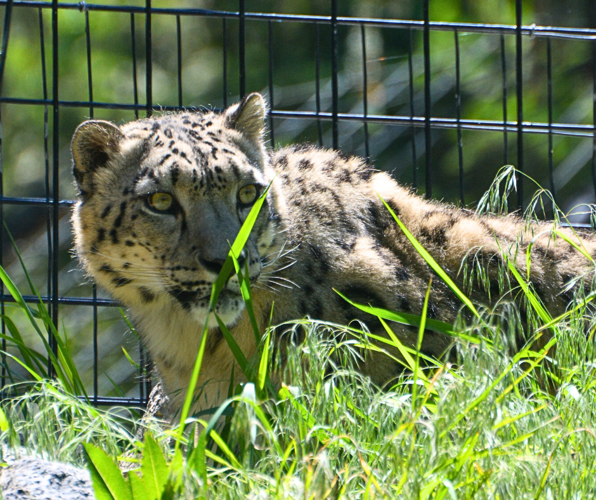
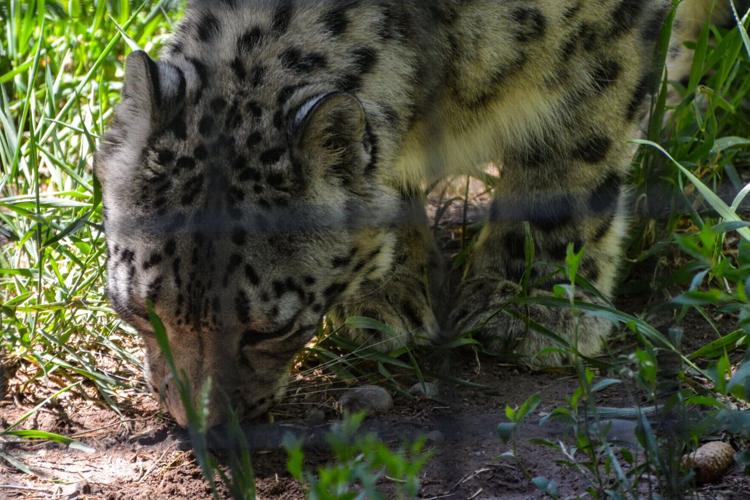
IDAHO FALLS — The Idaho Falls Zoo introduced its newest resident, a male snow leopard named Lenny, on Wednesday.
Lenny is now settling into his new home alongside Pandora, the zoo’s female snow leopard.
Visitors can see Lenny exploring his habitat as he adjusts to his new surroundings and becomes acquainted with Pandora. While introductions between the two cats will happen gradually, zoo staff are optimistic about their future together.
Lenny’s arrival is more than just an exciting addition for zoo guests. It is also part of the Association of Zoos and Aquariums’ (AZA) Species Survival Plan. It’s a collaborative conservation program that helps AZA-accredited zoos maintain healthy, genetically diverse populations of endangered and threatened species.
As an AZA-accredited zoo, the Idaho Falls Zoo is part of a network of institutions that meet rigorous standards for animal care, conservation, education and scientific management. Through the SSP program, zoos across North America work together to make science-based decisions about animal populations in human care, helping ensure species remain healthy and sustainable for future generations.
“Lenny’s arrival is exciting for both our staff and visitors,” said David Pennock, zoo director. “Snow leopards are an incredible species facing significant challenges in the wild. Through the Species Survival Plan, accredited zoos work together to support conservation efforts while providing exceptional care for the animals entrusted to us.”
The SSP program evaluates a wide range of factors before recommending animal transfers or breeding pairs, including genetics, family lineage, age, health, behavior and each participating facility’s ability to care for the animals and any future offspring. Recommendations are developed by experts who oversee each species’ managed population across the AZA network.
Based on those recommendations, Lenny was paired with Pandora and transferred to the Idaho Falls Zoo. Zoo staff are hopeful the two snow leopards will become a successful breeding pair and contribute to the long-term health of the managed snow leopard population.
Native to the rugged mountain ranges of Central and South Asia, snow leopards face growing challenges in the wild. Habitat loss, climate change, human-wildlife conflict, poaching and declining prey populations have all contributed to population declines, making conservation efforts increasingly important.
While Species Survival Plans are best known for coordinating breeding recommendations, they also serve a broader conservation purpose. By maintaining genetically diverse populations of animals in AZA-accredited zoos, SSP programs help safeguard species against future population declines while supporting research, public education and conservation partnerships that benefit wildlife both in human care and in the wild.
Several species have benefited from conservation breeding and management programs coordinated through AZA-accredited institutions. The California condor and golden lion tamarin are among the most recognized examples. Both species once faced the threat of extinction and have experienced significant recoveries through collaborative conservation efforts involving zoos, wildlife agencies, researchers and conservation organizations.
For many visitors, seeing animals like snow leopards up close creates a personal connection to wildlife and conservation that cannot be replicated through books or screens alone. That connection helps inspire future generations to care about protecting species and the habitats they depend on.
Visitors are encouraged to stop by the snow leopard habitat during regular zoo hours to meet Lenny and learn more about the conservation work taking place at the zoo. While Lenny and Pandora continue to adjust to one another, zoo staff will closely monitor their introduction and provide the specialized care needed to support their health and well-being.
To learn more about the Association of Zoos and Aquariums accreditation, visit www.aza.org.
For more information about the Idaho Falls Zoo and its conservation programs, visit https://www.idahofallsidaho.gov/1736/Zoo.

(0) comments
Welcome to the discussion.
Log In