

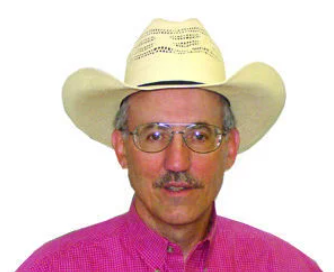

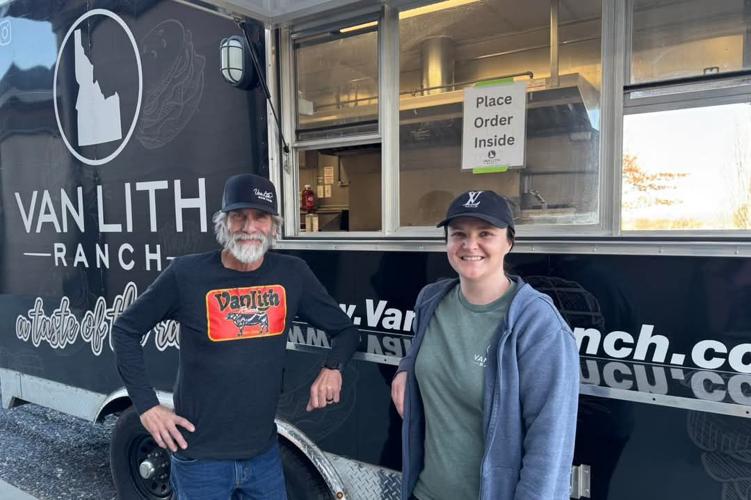
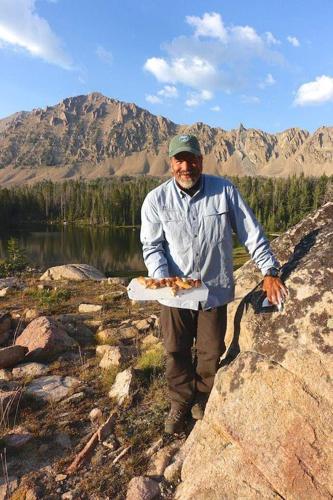
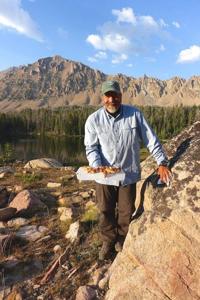
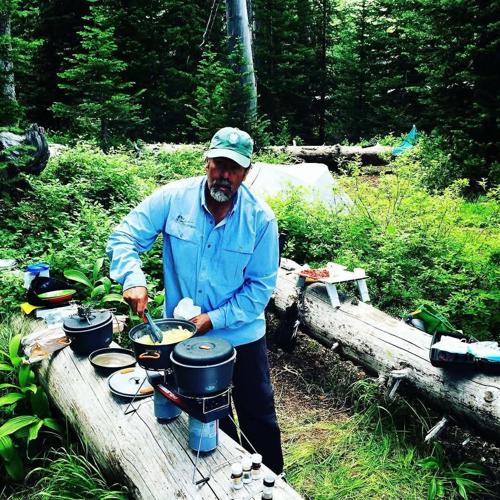
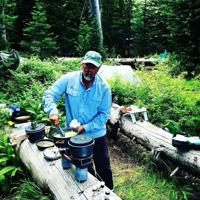
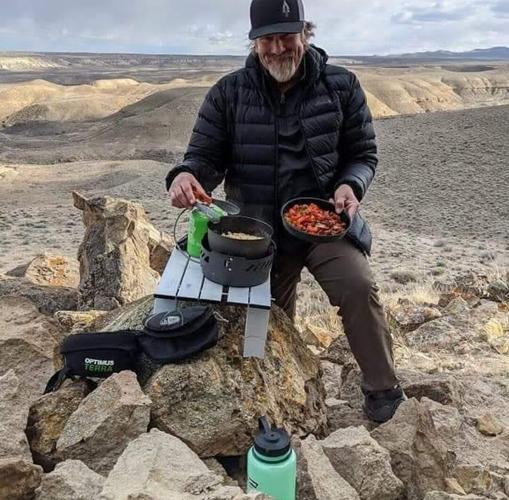
The other day I wrote an article on cooking while backpacking. Right after writing it I was at the July 4th Fireman’s Breakfast in Middleton and saw Steve Weston who is a really good chef and backcountry cook. I won’t do his credentials justice but mountain climbing groups have taken him to Pakistan to do their cooking etc. I met Steve years ago when we were both conducting seminars at various events. I quickly learned to have my station next to his so I could enjoy his dishes while he was doing his demos.
I told Steve I’d like to do a follow up Backpacking Cooking article (On a higher level) if he’d help me out. He graciously agreed. So without further ado, let’s get started with what Steve had to say. I will list out his tips in no particular order.
-Always bring enough food to spend an extra night/day out in the backcountry in case you get lost or stranded. Having extra food will buy you some additional time.
-Consider bringing some foods that do not need to be cooked in case you run out of fuel for your burner. Snack bars, nuts, dried foods with nearly infinite shelf lives.
-Most backpackers don’t carry canned food because of the extra weight or other strong-smelling foods which may attract bears/other undesired wildlife. In bear country take extra precautions when preparing/storing food.
-I’m going to rehash the old “Weight versus taste” argument. Do you take whole food or dehydrate? Many rock climbers will lean towards the freeze dried due to weight and a backpacker tends to go with the more whole food option. Calories are literally energy and that’s all they are. A calorie isn‘t a mineral and has no nutritional content.
-if I sound biased it’s because I wrote a cookbook ‘In the Wild Chef’ that addresses what food we can bring backpacking. On my journey as a backcountry chef I’ve met some really great people, one of which is Christine Connors, the co-author of ‘Lip Smacking Backpacking.’ Her and her husband compiled a book on cooking and dehydrating gourmet food for the trail
One difference in the two books is I propose that many ingredients around your house that can go with you. Freeze them in a 1-gallon freezer bag and simply thaw it out at your destination. Additionally, freeze dried food has not enjoyed a great reputation in the past for “fueling” you up on the trail. It boils down to calorie units. A calorie is a unit of energy used when talking about food.
In the past I was not a proponent of freeze dried or dehydrated food for many reasons but I’ve since changed my mind. I’ve found that there are a few acceptable freeze-dried food options which include dehydrating your own food. I’m an advocate of any freeze-dried application if it is lacking the chemical that we don’t want and it has good amounts of calories,
I personally add extra fresh ingredients to Alpine Aire Foods meals, they are incredible, organic and void of added chemicals. I recently learned of a high-end chef turned dehydrated food manufacturer-Good to Go out of Kittery Maine. Another fairly good alternative is Mary Jane Farms Organic Backcountry Food.
In closing, I want to throw in a plug for Steve’s book ‘In the Wild Chef.’ It offers a plethora of good recipes. And his desserts are to die for. Well thanks for the tips Steve and I think to verify your credentials once more you better go on a backpacking trip with me the end of August!

(0) comments
Welcome to the discussion.
Log In