

It has been four long days since the events of Charlottesville, Virginia, stampeded into our lives. Most of us knew in our hearts and souls that the posturing of a group of people as superior to all other people was wrong. Many of us were even capable of going so far to condemn such efforts as rooted in evil and selfishness.
We hoped that there would be some leaders speak up and to articulate what we felt. But the responses were slow, some were muted, and some displayed insensitivity to the gravity of the situation
Four days later, we have heard from several people, representing both parties, most who decried the white supremacists for their racism, hatred, bigotry, and violence. They condemned their motivations and actions unequivocally. Others have vacillated. Others have been obnoxiously silent.
We need to decide if our concerns have been addressed adequately and effectively, or if we’re content to be ill informed and impotent.
We often kid ourselves into believing that racism, bigotry, hatred, and evil are issues far removed from us. By road, Charlottesville is 2,140 miles away from Pocatello. At first glance, the events there seem to be peripheral to us. In reality, the events are often duplicated at some level in Pocatello, in Idaho, and in most of the communities in our land.
According to the Southern Poverty Law Center, there are 12 hate groups based in Idaho, two of them are White Supremacist groups. Our per-capita ratio of population to these groups ranks us to have the second highest incidence in the nation, outranking the South in the number of active hate groups.
For all practical purposes, we have decisions that we need to make proactively right here in Pocatello and in Idaho. You see we have incidents that we often look past. We have latent degrees of racism, hatred, and bigotry that pop up with regularity. Many of us are not aware of it because we ignore it.
Others of us are passive in addressing these societal ills because we just don’t want to make waves. Often the victims are silent because they are afraid that if they call attention to what has happened to them then the perpetrators will focus more intently on them.
As I recall, some of the most glaring incidents in the last 20 years were: the clashes with Arab students attending ISU, racial slurs painted on houses, bigoted attacks on people while in their own front yard, and white supremacist literature left at homes and on windshields. Levels of this intolerance were vocalized during the initial planning and at the public hearing for the Muslim Mosque.
Elements of hate and bigotry were noticed around the fringes of our civil discussion regarding the development of our nondiscrimination ordinance and the effort to repeal it. I am also aware of occasions when people were taunted for their race, worked in hostile verbally abusive environments, or were subjected to illegal actions.
Few if any of these incidents were reported because the victims were fearful of amplifying their experience, further encumbering their financial security, or imperiling their physical safety.
Our decisions first need to be made in the context of our own lives. What people are you devaluating because you tolerate them rather than accept them as fellow human beings? What intolerable behaviors do you tolerate because you are not the target?
Our religions are clear about learning how to love, honor, value, and respect others. For example, Christianity tells us that we should love our enemies and that God shows no partiality. From my friends in other religions, I hear similar beliefs at the core of their religious systems. My humanist, agnostic, and atheist friends and acquaintances express parallel values for those with whom they journey through life.
The more focused we are on how we value, care for, and respect others; the less susceptible our community will be to brazen efforts like those that festered and exploded in Charlottesville.
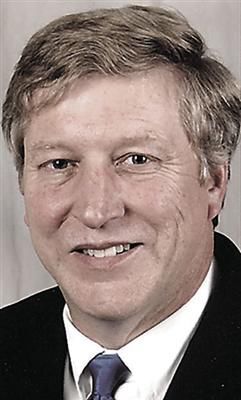
The Rev. Roger Bray is a native of Pocatello. He is the pastor of the Central Christian Church and is back on the Pocatello City Council serving in his third term. He attended Northwest Christian University and the University of Oregon for his undergraduate degree, and received a Master of Divinity from Texas Christian University. During his more than 25 years of ministry in Pocatello he has been consistently engaged with agencies addressing the less fortunate in our community.

(0) comments
Welcome to the discussion.
Log In