

A familiar home to most local residents on South Bannock Highway is about to become just a memory, giving way to the expansion of the Riverside Greens Subdivision. Most local residents are familiar with the home and probably more so with pond on Bannock Highway near the Pocatello Riverside Golf Course. The pond over the years has been a favorite resting place to countless water fowl and a source of enjoyment to those who stopped to observe them.
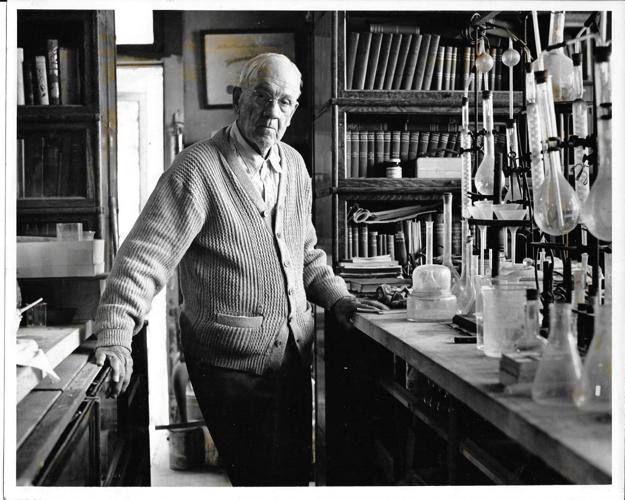
The home was built about 1940 by Eugene O. Leonard, who served as dean of the College of Pharmacy at University at Idaho Southern Branch — Idaho State College from 1918 to 1948. Leonard was born in Milan, Michigan, in 1884 and moved to Pocatello in 1893 with his widowed mother to live with his aunt Sarah Cook, who was a pharmacist and the widow of Dr. A.L. Cook. She owned the Cook building and operated Cook Drug.
Leonard was well educated. He attended Weiser College and Academy (now College of Idaho), and at Whitman College he received a B.S. degree. He acquired degrees in pharmacy and pharmaceutical chemistry (Ph.G. and Ph.C.) from Northwestern University, and a degree in assaying studies from the Chicago College of Chemistry. After graduating from college in 1908, Leonard returned to Pocatello to manage Cook Drug Store until 1918. He worked as Pocatello city chemist and set up the College of Pharmacy at Idaho State College, where he also taught and served as dean, retiring in 1948, but continued doing research at the university until 1954. Leonard was appointed the College of Pharmacy’s first dean and teacher in 1918. In the 1930s, Leonard obtained an M.S. degree from Utah State Agriculture College and Ph.D from Utah State University, plus several hours of credit in both medical school and engineering. In his early years, he briefly taught high school-level chemistry at Pocatello High School while working as a chemist for the city of Pocatello.
He worked tirelessly to build the reputation of the College of Pharmacy and is responsible for numerous accreditations and the structuring and growth of the program. In recognition of his tireless efforts setting up and guiding the College of Pharmacy, ISU’s Leonard Hall, the pharmacy building, was dedicated to him in 1951. He single-handily is responsible for the success of the college. He wrote proposal after proposal, sought funds from the Idaho Legislature and producing marketing campaigns.
While serving as dean of the College of Pharmacy he purchased a 40-acre farm on South Bannock Highway. Using his engineering skills, he designed and built a home for him, his wife Georgia Meyer and their family. Leonard enjoyed farming the ground, operating his tractor and farm equipment, and raising chickens. He had a science lab on his farm where he continued to work as a chemist after his retirement, doing research, assaying,and experiments. He also built a large still where he distilled peppermint. His lab was the destination of several Boy Scout troops and youth groups where he enjoyed giving tours and enlightening them in the wonders of science and chemistry. It was of interest to note that his private library had a collection of more than 6,000 books relating to the sciences at the time of his retirement.
Possibly encouraged by his early years with his collector aunt, Sarah Cook, Leonard had a keen interest in Native Americans. He established a collection of Indian material culture objects and documentations, including artifacts and photographs, based on his interest in the Shoshoni and Bannock Indians. The collection includes photographs documenting the people and culture of the Pocatello-Fort Hall area, agency employees and missionaries. Included in the collection are images of encampments, Sun Dance ceremonies, the Fort Hall Agency, Indian schools and churches, the Run for Fort Hall Lands on June 17, 1902, the War Bonnet Roundup at Idaho Falls, Shoshone Falls and other natural features and landscapes, a large number of street and aerial views of Pocatello, A. L. Cook’s drug store in Pocatello, and members of the Cook family. Many of photographs were taken by early Pocatello photographer Benedicte Wrensted. Leonard’s extensive collection was donated to the Smithsonian Museum.
Leonard and his wife had four children, two boys and two girls. Both his sons and one daughter became pharmacists, and his other daughter became a mathematics teacher.
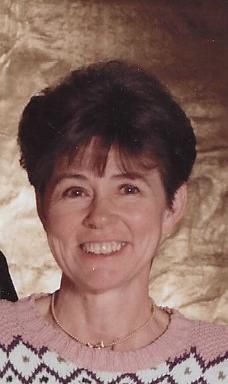
On Leonard’s passing, the home and the farm was acquired by his daughter and her husband, Harriet and Ken Lundburg, who stayed in the home until their deaths.

(0) comments
Welcome to the discussion.
Log In