






BOISE — After months of examining the state of Idaho’s child custody system, the Child Custody and Domestic Relations Task Force presented drafts of legislation that seeks to make adjustments to law that legislators said had gone without update for decades.
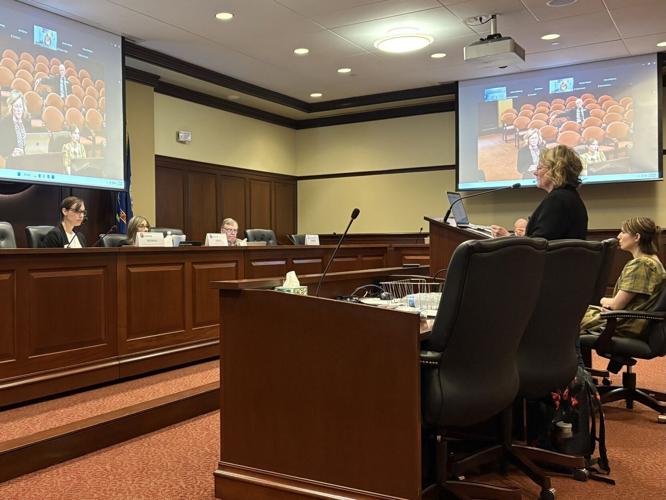
The interim task force held its final meeting Wednesday at the Capitol and provided a look into several draft proposals that are expected to be finalized before being recommended onto the Idaho Legislature, once the body is back in session.
After months of hearing from parents, child advocates and a variety of personnel that make up Idaho’s family court system, Mila Wood, a task force assistant, said the main takeaway was that Idaho’s custody system was in need of systemic improvements.
According to an Idaho Family court survey, the top two systemic issues reported by respondents were bias and advocacy from the bench — meaning judge —(16%) and evidence being dismissed without due process (14.4%).
Citing a task force survey of 197 respondents, Wood said 82% reported having temporary orders lasting for months or years without a hearing, 63% reported supervised visits being imposed without admissible evidence and 58% reported their parental rights were being restricted based on allegations that were later unsubstantiated.
”One of the things that we’ve heard over and over again from law enforcement and court adjacent folks, is that the Legislature has failed parents for relief, and it has failed law enforcement for guidance,” Wood said.
Now having taken this testimony into account, the committee has assembled a white paper detailing the key concerns individuals voiced, whether it be identified shortcomings in Idaho law or problems arising during their personal experience in court or with law enforcement.
Wood said this testimony revealed that Ada County purportedly had the “most systematic, significant irregularities” that took the form of temporary orders extending for years at a time or cases being sealed off without a finding of fact, meaning that parents would be left unsure of how a custody decision was arrived at by a judge.
Speaking to issues found in Kootenai County, Wood said there were instances of “evaluator dominance,” meaning court-appointed evaluators — such as psychologists or social workers — were driving custody outcomes through a “quasi-judicial authority.” Put simply, this resulted in court orders being changed without judicial oversight, Wood said.
Wood said testimony received by the task force also revealed a series of statewide deficiencies, including Child Protective Services (CPS) records being “inconsistent with law enforcement evidence,” years-long temporary orders functioning as long-term custody arrangements and a wide lack of training on domestic violence, which has often led to the issue being reframed as “mutual conflict” once the matter is in court.
As for the legislative areas of focus for the coming year, attention remained Wednesday on the issue of financial equity in the court system, an issue that has been highlighted in previous committee meetings.
Rep. John Gannon, D-Boise, said he will be looking to introduce legislation to address the financial disparity among parents early in the family court process.

John Gannon
As part of this effort, Gannon said he would be looking to advise both parties at the start of the custody or divorce litigation process that the one with better financial resources will have to pay a reasonable amount of attorney fees for the other in order to have equal representation.
According to a draft white paper from the committee, some litigants have reported spending as much as $250,000 to maintain their parental rights. Gannon said that regulations that prevent one party from taking advantage of another could play a role in incentivizing faster resolutions, in turn driving down court costs.
He acknowledged, however, that these changes would not address “pro se” cases where two individuals are representing themselves and neither have assets available to afford representation.
Court proceedings for those with limited assets have been hampered by changes to the responsibilities of public defenders in the state, and Wood noted recent legislation has made it “so people are no longer able to get a public defender if they can’t afford it.”
Her statement was in reference to a bill passed this year that eliminated the right to legal representation for indigent parents facing a permanent termination of parental rights, as previously reported by the Idaho Press.
Adding to the challenge of representing oneself in court is Idaho’s not giving deference to pro se litigants. While judges in other states will provide some level of procedural leniency, Idaho is one of few states that holds those representing themselves to the same standards as attorneys in the courtroom — adding further difficulty to the process, Wood said.
The committee has also continued to voice concerns about the enforcement mechanisms in place, or the lack thereof, that result in law enforcement being uncertain on whether they can intervene in the realm of enforcing custody orders.
To remedy this, the committee has put forward amendments to Idaho’s child custody interference statute, which occurs when children are withheld from their lawful custodian.
The proposed changes include making explicit that law enforcement officers shall complete an offense report and file reports as criminal complaints when pertaining to custody interference, conduct immediate welfare checks to verify the child’s safety and provide an offense report number to the reporting party.
Additional changes to the interference statute have been proposed that Wood said would align with Idaho’s existing language around criminal trespass. Under a proposed penalty structure, first offenses start at an infraction with a $50 fine and escalate to a fourth or subsequent offense within 36 months carrying a misdemeanor fine of up to $2,000 and may include up to eight weekends in jail, the draft bill said.
Several other changes to the family court system have been proposed as part of a singular piece of draft legislation looking to address myriad issues including:
{ul}{li class=”li1”}Prohibiting child support orders until paternity is confirmed {/li}{li class=”li1”}Adding definitions for coercive control and strengthening domestic violence protections{/li}{li class=”li1”}Adding a process for having a child’s wishes heard{/li}{li class=”li1”}Adding a presumption of 50-50 custody{/li}{/ul}
Rep. Heather Scott, R-Blanchard, who co-chairs the committee, said the variety of changes proposed as part of a single bill were representative of code that generally has gone without an update since the 1990s. The intent of many of these changes will be to add clear definitions to area of code that have left both courts and law enforcement without the guidance necessary to make consistent decisions when it comes to child custody disputes.

Heather Scott
“How can we expect to look at our judges honestly and say they’re not doing a good job or they are if we are not clear in our law?” Scott said, “So if we can fix the law part, maybe there is a bad judge that needs addressed, maybe there’s not — we don’t know that if we are not clear on what we’re telling them to do in these cases.”
Both Gannon and Rep. Joe Alfieri, R-Coeur d’Alene, expressed concern about the size of this legislative proposal, however, worrying that the number of issues broached in the overhaul would result in an arduous review process that would require multiple family court-related issues to be addressed at once.
“I can’t imagine the committee hearings when people come to testify for and against what we’re attempting to do here and how we’re going to accomplish this,” Alfieri said. “… How do you eat an elephant? A little bit at a time, and we’re trying to eat the whole thing all at once.”

Joe Alfieri
Whether or not this proposal ends up broken into separate pieces remains to be seen. Wood said finalized versions of the committee’s draft legislation proposals were expected within the next week. Though the committee is not a rule-making body, their proposals will be provided to state legislators once the session begins in January.

(0) comments
Welcome to the discussion.
Log In