

POCATELLO — Elementary school students throughout Pocatello-Chubbuck School District 25 have the opportunity to participate in the global Hour of Code Initiative that helps them learn more about computer coding.
Janelle Arvas, one of the tech specialists in the district, said this initiative is a way to help teachers incorporate technology into their instruction so their learners can feel more confidant around technology.
"This is a global initiative to introduce all students to computer science and programming," Arvas said. "We kicked off this event on (Dec. 9)."
Arvas planned to visit every elementary school student in the district by the end of the week. Her hope is to give these students an hour-long introductory class.
"Some of our students have attended some professional development and already have done coding," Arvas said. "This is the initial kickoff to introduce it to all students."
There are 13 elementary schools in the district, and all of them have at least one teacher who is participating in the initiative. Arvas had visited six elementary schools so far.
"Teachers are also sending me pictures of their students doing it," Arvas said.
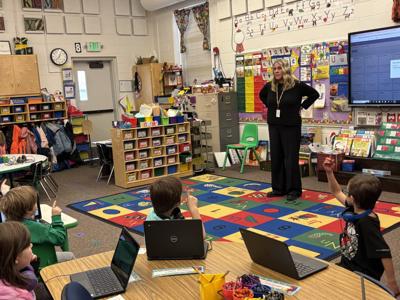
The initiative is for students from kindergarten to fifth grade, but Arvas said anyone can take part. She visited a kindergarten class at Syringa Elementary School on Dec. 11.
"This is the first time they've ever seen coding," Arvas said. "Some of my other kindergarten teachers have done it, but this is the first for this class."
Arvas said teaching this kind of skill to students is empowering and that it will be beneficial to them throughout their lives. She said if she helps students find an interest in computers now, they might be able to have a successful career later.
"In our day and age, we need to make sure students are aware of how computers work and how programmers make things happen," Arvas said. "It's just such an exciting career to be a part of."
Many people mistakenly believe that computers are smart and that they are capable of doing anything their user wants. This initiative helps students learn to use computers more effectively.
"We think computers are so smart, but really they don't do anything until a person with a brain programs them to do what they want it to do," Arvas said. "Every time they click a button it does something because it's been programed or coded to do such."
The initiative is meant to help students look at the bigger picture and see that programers are the ones who make everything computers can do possible.
"There's a bigger piece than just thinking our computers can do everything," Arvas said.
Arvas encouraged everyone who is interested in coding to give it a try. It is a beneficial skill to have in the modern world where computers are an important tool for everyday life.
"It's something that seems intimidating, but once you get in there you can see that it's really not," Arvas said. "It sparks curiosity and helps students with problem solving and collaboration and perseverance."

(0) comments
Welcome to the discussion.
Log In