

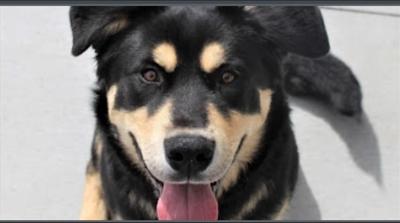

POCATELLO — The Pocatello Animal Services director says the department will work to review its policies and procedures after an adopted dog was recently euthanized after catching parvovirus.
Pocatello Animal Services director Chris Abbott says he is working on developing an alternative adoption payment process at the Pocatello Animal Shelter after a Pocatello man, Kamden Been, paid all the fees and completed all the necessary paperwork to adopt Oso, listed as a German shepherd mixed male dog, on March 29, but could not take Oso home from the shelter until April 14 because he was not yet neutered.
After Been paid the $130 fee to adopt Oso on March 29, the dog tested positive for the canine parvovirus infection, commonly known as parvo, on April 3 and was euthanized.
“There have been some concerns with our process regarding how dogs at the Pocatello Animal Shelter are adopted out,” Abbott said. “The issue is that local veterinarians are bottlenecked with spays and neuters and so we sometimes end up in situations where a person has paid to adopt a dog but it’s not technically their animal until it’s been spayed or neutered and so we are left with this gray area.”
The situation involving Oso is tragic, both according to Been and to Kelly Boodry, the director of Friends of the Pocatello Animal Shelter, a local animal advocacy group.
Been said the process of deciding to adopt a dog from the Pocatello Animal Shelter began on March 28 when he and a friend went to the shelter and interacted with two different dogs, Oso and another, Been told the Idaho State Journal on Monday.
“I bonded almost immediately with Oso and so I went in the next day to see how he was and to make sure that he was a good fit for me,” Been said. “He was definitely the dog that I wanted, so I paid all the fees and completed all the necessary paperwork to adopt him that same day.”
Though Been had paid for the adoption of Oso, it is the policy of the Pocatello Animal Shelter to keep an adopted animal in its possession until the animal has been spayed and neutered. Been said the earliest he could take Oso home was on April 14.
Abbott said that on April 3, however, a staff member at the animal shelter who cares for the animals there during the weekends noticed the stools from Oso indicated that he might be sick with parvo. Oso was tested at the shelter and was positive for parvo, said Abbott, adding that Oso tested positive again with the on-call veterinarian, resulting in his euthanization.
Been on April 4 went to the animal shelter to visit Oso and learned from staff that the dog had been euthanized, something he said was an utter shock and left him feeling concerned that he was not contacted or informed about the decision.
The euthanization occurred on a day in which only kennel workers were at the animal shelter and not any of the staff members who oversee adoptions, said Abbott, adding that staff had the intention of notifying Been on Monday but he had arrived at the shelter in person about 15 minutes after the facility opened for the day.
According to the American Society for the Prevention of Cruelty to Animals, or ASPCA, parvo is a highly transmissible virus that typically spreads via direct contact with infected animals or its excretions. The virus can even spread via the aerosolization during cleanup and is highly resistant, persisting in some cases on untreated surfaces for up to one year.
The American Kennel Club says parvo is a potentially fatal disease, though the survival rate for dogs with parvo that receive veterinary treatment is between 68 and 92 percent. Parvo is not curable and although treatable, the process can become very expensive and typically involves a dog receiving intense treatment at a veterinary clinic for up to two weeks.
Because of the risks associated with a parvo-positive dog infecting others, the Pocatello Animal Services Department has a policy to euthanize all dogs admitted to the shelter that test positive for parvo, which was something Been said he struggled to understand.
“I got in contact with a local animal rescue group, Sadie’s Safe House Chihuahua Rescue, that has a great history of helping dogs with parvo to recover. She told me that out of 15 dogs with parvo there was only one that they had to put down and that wasn’t even for parvo but because the dogs organs were failing,” Been said. “The woman who runs that rescue has tried to talk to the Pocatello Animal Shelter about treating dogs with parvo but has never heard back from them.”
Abbott said the department’s euthanization policy is there to prevent parvo from spreading within the shelter.
“If we don’t euthanize a parvo-positive dog then it will cause cross-contamination at the shelter and unfortunately I will end up euthanizing more animals than just the one,” he said.
Boodry recently met with Been about the situation involving Oso, commending him for his level-headedness amid a very emotionally taxing situation. After his conversation with Been, Boodry said he was left with three nagging questions: Why wasn’t Oso tested for parvo when he was initially surrendered to the shelter? Why wasn’t Oso tested for parvo when he was set to become adopted? Once Oso tested positive for parvo, why wasn’t Been allowed to have a say in what should happen to the dog?
When presented with the Boodry’s three questions, Abbott said there are some nuances to this situation that make it more difficult to have a clear-cut answer. Firstly, Abbott said that when Oso was surrendered, the person relinquishing their right to the dog said that he was about four years old and that Oso had lived with him for about the past three years. As it turned out, Oso was actually around the age of between six months and one year. Abbott said it is the department’s policy to test all puppies or young dogs for parvo upon admittance, but not every dog that enters the shelter.
Christine Stevens, a member of the Pocatello City Council and member of the board of directors for Friends of the Pocatello Animal Shelter, told the Journal on Monday afternoon that she spoke to Abbott Monday morning and learned that the cost for the Pocatello Animal Shelter to administer a parvo test is approximately $15 and about 1,200 dogs go through the shelter every year, which would result in an additional cost to the shelter of about $18,000 annually to test every dog for parvo.
Additionally, Abbott said Animal Services does not have a policy to test dogs for parvo that are being adopted because the tests are administered to the dogs that need to be tested at admission.
With regards to the question about Been having a say in what should have happened to Oso, Abbott said that although Been had paid for the adoption services, the dog was still within the care and custody of the animal shelter and therefore the shelter was obligated to follow it’s euthanaisa policy. This, Abbott said, is another reason why he would like the adoption payment policy to change.
Moving forward, Abbott said he would like to consider a process that involves prospective adopters paying an adoption deposit rather than the entire adoption fee. This, he said, could help to alleviate scenarios like the one involving Oso from happening again in the future because a person who pays the deposit will know that while they have indicated they intend to adopt the animal it does not yet become theirs until the animal has been spayed or neutered and the entire adoption fee has been paid.
“Right now people pay the entire fee and it can create a misconception that at that moment the animal is now theirs,” Abbott said. “I am going to start working on a policy where we take a deposit so that people can understand that the animal must remain in our care and custody until the final payment for adoption is made. A new policy like this may add another day to the adoption process because right now people can pick up their animal directly from the veterinarian after the spay or neuter procedure and this new process would require the animal coming back to the shelter so that the adopter can pay the final fees.”
Abbott said that, although against department policy, he refunded Been for the $130 adoption fee because of the extenuating circumstances surrounding this situation. Been said, however, that he was offered in-store credit for up to 90 days in which he could use the money he already paid to adopt a different dog in the future.
Been said he is mostly upset about about the lack of communication, adding that he felt like the animal shelter cared more about justifying the euthanasia than clarifying what actually led up to that event. Been is unsure of what he plans to do next, but is hopeful nobody ever has to share his experience.
Abbott expressed sympathy over the situation, adding that moments like this are difficult for everyone involved.
“This was a very unfortunate scenario,” Abbott said. “I feel bad for (Been) and for Oso, too, because he was such a great dog. Situations like this are not just hard for (Been) or the public, but it’s hard on us at the shelter, too.”

(0) comments
Welcome to the discussion.
Log In