

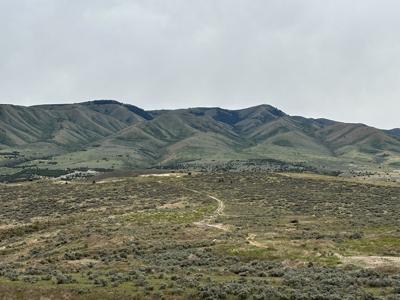
East Idaho's mountains are nearly bare of snow, its snowpack is the worst ever recorded and weather officials say a brutal summer of water shortages, agricultural stress and elevated wildfire danger lies ahead — with no meaningful relief in sight.
A federal report released May 14 by the National Integrated Drought Information System found that April 1 snowpack in Idaho was the lowest on record, and the only winter warmer than 2025-2026 was during 1933-1934. A drought information statement issued Wednesday by the National Weather Service office in Pocatello reinforces that grim picture, confirming that moderate to exceptional drought now exists across most of south central and eastern Idaho.
For East Idaho specifically, snowpack is currently running between just 16 percent and 35 percent of normal, according to federal snowpack maps. Snowpack peaks and melt-out occurred two to four weeks earlier than normal across the region.
The consequences are cascading throughout East Idaho. River levels are very low, and all water supply forecasts are less than 75 percent of normal. The NWS Pocatello office statement reports that April through September runoff volume forecasts are below normal for every basin in southern and eastern Idaho, with forecasts particularly dire for the Bear River, Little Wood River and Willow Creek, all below 50 percent of normal.
Forecasts for the Snake River are generally 50 percent to 70 percent of normal, with East Idaho storage reservoirs being drawn down much earlier than normal, meaning the region's water supply could run critically low by midsummer.
Current streamflows are well below normal, particularly in low elevation basins including Goose and Willow Creeks and the Raft, Malad, Portneuf, Bear and Blackfoot Rivers.
The drought's footprint across the region is profound. According to the NWS Pocatello office statement, nearly all of East Idaho is currently designated as being under exceptional, extreme or severe drought.
The drought has worsened in recent weeks across the Big and Little Lost River Basins, Eastern Magic Valley and Upper Snake River Plain, and southeastern parts of the region including portions of Caribou, Bannock, Power, Oneida, Franklin and Bear Lake counties. Thirty-day precipitation has generally been 50 percent of normal or lower across the region, with particularly low totals in Cassia, Custer and Fremont counties. Temperatures for much of May have been well above normal — eight degrees or more — for the entire region.
The wildfire threat is accelerating. Fuel moisture for light fuels is well below average and approaching critical levels several weeks earlier than normal. The NWS Pocatello office outlook for East Idaho calls for above-normal significant wildland fire potential in July and August — a warning that aligns with the federal drought report's concern about an early start to fire season across the West.
On April 13, Gov. Brad Little and the Idaho Department of Water Resources declared a statewide drought emergency for all 44 counties due to record-breaking warmth, historic snowpack deficit and projected water shortages. The last statewide drought emergency was issued in 2001.
Compounding the immediate crisis is a long-term pattern. Six of the past 10 years have seen county drought emergencies in parts of Idaho. Some parts of the state have been in drought since 2019.
The long-range outlook offers no comfort. The NWS Pocatello office statement says drought conditions are expected to persist and develop throughout much of the western United States, including all of southern Idaho. The summer outlook for East Idaho is calling for below-normal precipitation and above-normal temperatures for the entire region. The federal drought report warned that conditions can be expected to deteriorate further and that impacts will become more pronounced as the summer progresses.
The NWS Pocatello office will issue an updated drought statement in mid-June if conditions change significantly.


(0) comments
Welcome to the discussion.
Log In