

Persistent drought has stressed popular fisheries in southeastern and eastern Idaho, setting up tougher trout fishing in 2026. Despite adequate high-elevation snowpack last winter, warm valley temperatures limited lower-elevation accumulation. Spring and summer brought little additional moisture, and prolonged heat deepened drought conditions. Reservoir levels across the Southeast Region dropped sharply, prompting Idaho Fish and Game to order fish salvages at Glendale, Foster, and Johnson reservoirs. American Falls Reservoir was drawn down to just 3% of capacity.
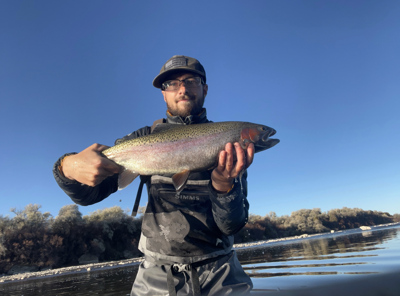
What anglers should expectWith water levels low and water quality degraded, anglers should anticipate fewer and smaller trout at American Falls Reservoir in 2026 until conditions improve. Under normal water levels, hatchery rainbow trout grow quickly in American Falls and have produced trophy-class fish, including a 34.75-inch (41.13-lb.) rainbow/cutthroat hybrid in 2011 and a 31.25-inch rainbow trout (caught and released) in 2020. When reservoir volume falls, temperatures rise and dissolved oxygen declines, pushing trout to move in search of better water—often up or down river—where survival is less certain.
Flow changes and downstream effectsAs reservoir water is released, many trout take a one-way trip through the dam, which is risky business for a trout where some are lost to turbine strikes; others bolster the fishery below the dam. To refill the reservoir, winter flows on the Snake River (December–January) drop to less than 10% of typical summer (June–August) flows. This fall, flows are about 2% of the 2025 peak to accommodate repair work at Minidoka Dam. Winter is already the hardest season for trout survival; reduced discharge can further limit habitat overwinter and may also impact fisheries in Walcott Reservoir.
How Fish and Game is respondingFish and Game is taking steps to rebuild trout populations.
Stocking: Later this month, Fish and Game will stock approximately 250,000 fingerlings and 42,000 catchable-sized rainbow trout into American Falls Reservoir. Additionally, Idaho Power will provide approximately 9,000 catchables.
Tagging and research: Fish and Game has tagged hundreds of hatchery rainbow trout to evaluate how survival varies by release timing and location. Angler tag reports reveal fish movements, including entrainment from American Falls into the Snake River or emigration to Walcott Reservoir.
Surveys: Fish and Game plans late-November electrofishing on the Snake River between American Falls Dam and the Pipeline Access to tag additional fish and assess population status.
Improvement in fishing quality will depend largely on water availability and conditions over the coming months.
Help the science: report tagsAnglers who catch tagged fish are encouraged to report tag numbers and capture details through Fish and Game’s Tag You’re It! | Idaho Fish and Game. These reports directly inform stocking strategies and help Fish and Game get the most value from the fish stocked.
Fish and Game appreciates the patience and cooperation of the angling community while managers work to restore these important fisheries. For more information about fisheries management in the Southeast Region, please contact Regional Fisheries Manager Patrick Kennedy at 208-236-1262 or pat.kennedy@idfg.idaho.gov.

(0) comments
Welcome to the discussion.
Log In