

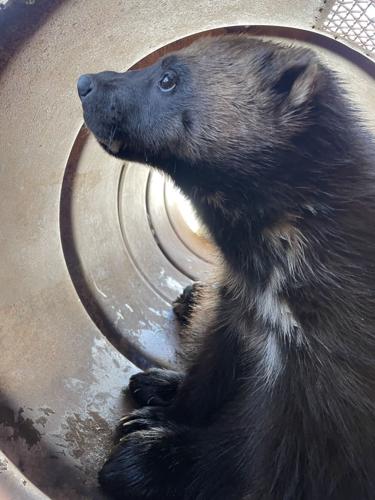
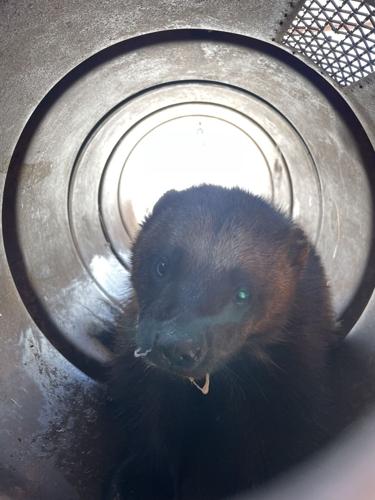
Utah Division of Wildlife Resources biologists — with the help of sheepherders and other agencies — captured, collared and released a depredating wolverine in Rich County earlier this month.
The wolverine was said to have attacked several sheep west of Randolph, Utah, according to a news release from the Utah Division of Wildlife Resources. The animal is now being GPS tracked in the Uinta Mountains.
It’s the first wolverine captured by DWR biologists and the eighth confirmed sighting of a wolverine in the state since 1979, according to DWR spokesperson Faith Heaton Jolley.
On March 10, according to the news release, USDA-Wildlife Services personnel piloting a fixed-wing aircraft in the area noticed an animal feeding on a dead sheep. After flying a bit closer, they identified the animal as a wolverine.
Sheepherders indicated the wolverine had killed or wounded 18 sheep in the area that morning.
After being contacted by USDA-Wildlife Services, according to the news release, DWR biologists utilized two barrel traps to capture the animal. All the dead sheep were removed from the area to increase the chances of successfully trapping the animal. Sheep hindquarters — one in each trap — were cut out and used as bait in the traps.
“There was so much activity in the area that morning, I thought the wolverine would be long gone and we wouldn’t be able to catch it,” said DWR Northern Region Wildlife Manager Jim Christensen in the release.
But by mid-morning on March 11, a sheepherder found a door of one trap had been deployed and a wolverine was captured inside. DWR biologists and a conservation officer retrieved the traps and transported the wolverine to Ogden where it was sedated and examined.
“It’s amazing to get a chance to see a wolverine in the wild, let alone catch one,” Christensen said in the release. “This was a once-in-a-lifetime experience.”
Blood and hair samples were retrieved and a series of measurements were recorded, according to the release. The tale of the biologist’s tape indicated the male wolverine was between three and four years old, weighed 28 pounds and was 41 inches long from tip to tail.
The wolverine’s heart rate and breathing were monitored while its temperature was controlled through the application of “alcohol and ice to its armpits and stomach to keep it cool.”
“The animal had good, sharp teeth,” Christensen said. “It was in really good condition.”
Before completing the examination and setting it free, a GPS collar was affixed to the wolverine’s neck. The news release states the GPS data will be “invaluable” to biologists — showing where the wolverine lives, when it travels, and the type of habitats it uses during the specific time’s of the year.
One wolverine was sighted in May of 2021 on Antelope Island. At the time, the DWR reported the rarely seen wolverines can have a home range of 350 miles and it was unclear if there was an established population in Utah.
“Having a collar on this wolverine will teach us things about wolverines in Utah that would be impossible to learn any other way,” Christensen said. “Four different wolverine sightings were confirmed in Utah in 2021. Were we seeing the same animal or different animals? Having a collar on this animal will help us solve that riddle.”

(0) comments
Welcome to the discussion.
Log In