

A letter written on behalf of Joint Finance-Appropriations Committee leadership was sent to state agencies earlier this week, requesting agency directors to report back on what cuts of up to 2 percent would mean to them in this fiscal year and the next.
For several agencies that already issued their response, such reductions were framed as costs expected to be felt by a broad swath of Idahoans, or outright refused.
The request from JFAC’s leadership comes less than two weeks after Gov. Brad Little’s revenue projections were characterized as ”overly-pessimistic” and JFAC, anticipating strength in the Idaho economy, arrived at revenue projections $152 million higher than the governor predicted for this fiscal year and $137 million higher than Little predicted for the next.
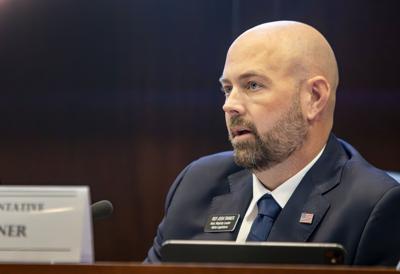
Now needing to grapple with the $155 million cost of implementing the tax cuts within the One Big Beautiful Bill, Rep. Josh Tanner, R-Eagle, who serves as co-chair for JFAC, told the Idaho Press earlier this week the improved revenue picture came with a higher projected surplus for the state before it was known the Legislature would seek to retroactively implement these cuts for the 2025 tax year.
With this cost cutting into the state’s bottom line, the Legislative Services Office, on behalf of JFAC co-chairs Tanner and Sen. C. Scott Grow, R-Eagle, directed the agencies to determine what cuts of 1 percent or 2 percent would require.
Division of Financial Management Administrator Lori Wolff said the cuts proposed by JFAC leadership are expected to require agencies to take more drastic action compared to what was required to implement Gov. Brad Little’s 3 percent holdback order in the fall. Before Little’s holdback order was finalized, she noted state agencies were requested to provide 2 percent, 4 percent and 6 percent reduction plans to gauge what course of action was optimal with the tighter budget picture.
“There’s a reason we landed at three,” Wolff said. “When we started getting into those deeper cuts, it started touching programs and requiring layoffs and furloughs that we did not want to hit.”
With half of the fiscal year now passed, Wolff said, agencies have less flexibility to alter their spending plans, making additional budget cuts shift from operating expenditures to personnel. Implementing an additional 2 percent cut beyond those ordered by Little would likely result in “either layoffs or furloughs,” Wolff said.
Letters from several state agencies to the Legislative Services Office indicated this would be the case, with impacts ranging from a broad decline in the public safety of Idahoans to worsened educational outcomes for current and future students across all levels of the educational ladder.
Idaho State Police The Idaho State Police responded that 1 percent or 2 percent cuts would compound staffing shortages already faced by the agency and “directly impact public safety.”
If 1 percent reductions were in place for this fiscal year, reduction measures would include eliminating six Capitol Protective Services positions and the furlough of all commission personnel for 50 hours each. The letter states these reductions would “directly affect security operations at the State Capitol” including the agency’s ability to manage protests or public gatherings.
When looking at the impact of 2 percent reductions, ISP would need to increase its furloughs to 95 hours per trooper and eliminate 11 of the Capitol Protective Services positions, reductions that would “increase response times to crashes, crimes, and emergencies statewide.”
The impacts only increase in fiscal year 2027. With either 1 percent or 2 percent spending cuts, the agency would lose a forensic laboratory position, and further reduce Capitol staffing. ISP would also lose access to the federal 1033 equipment program, which allows the agency to request excess Department of Defense equipment and only pay the cost of shipping. At a 2 percent reduction, ISP would be forced to add to these cuts the elimination of its SWAT team.
If enacted, “assistance to local law enforcement, both daily and during major incidents, would be limited,” the letter read.
Idaho Department of Correction A letter from the Idaho Department of Correction stated outright that implementing cuts of 1-2 percent brings furloughs and staffing reductions, changes that would both “compromise safety” of it operations and “increase legal and fiscal risks for the State.”
The department already indicated earlier in the week that, had it been required to implement the full 3 percent holdbacks as ordered by Little in the fall, the department would have needed to furlough its entire staff for a minimum of five days, as previously reported by the Idaho Press.
Since further cuts would require this action to be taken, state prisons would need to operate under a “modified-secure” status, requiring inmates to remain locked in their cells or sleeping barracks without rehabilitative programming that is required by statute.
This mode of operation can bring “unnecessary frustration among the population and can lead to increased violence, riots, assaults on staff and lawsuits,” the letter said.
For IDOC prison staff, furloughs would force many to take on a second job, introducing fatigue and exhaustion that erodes the safety of state prisons. For parole officers, workforce reductions would increase their parole caseloads from an average of 75 cases per officer to an average of 100.

(1) comment
JFAC badly screwed up its last revenue projection and we are supposed to trust this projection. They could walk back the big tax cut for rich people and corporations, but the rich people and corporations might object and we can't rile them up.
Welcome to the discussion.
Log In