








BOISE — Boise State University was announced as the lead regional institution of the Pacific-Intermountain Network for Education in Semiconductors on Wednesday, part of a national education program aimed at bolstering the semiconductor workforce across the country.
As Idaho’s semiconductor industry continues to grow within what has historically been, and continues to be, an agrarian-focused state, the educational investment is “acknowledging the incredible change that’s taking place in our economy,” Gov. Brad Little said.

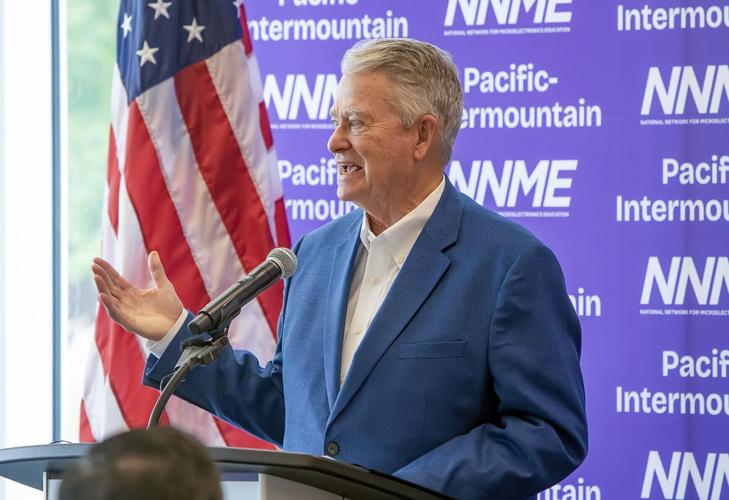
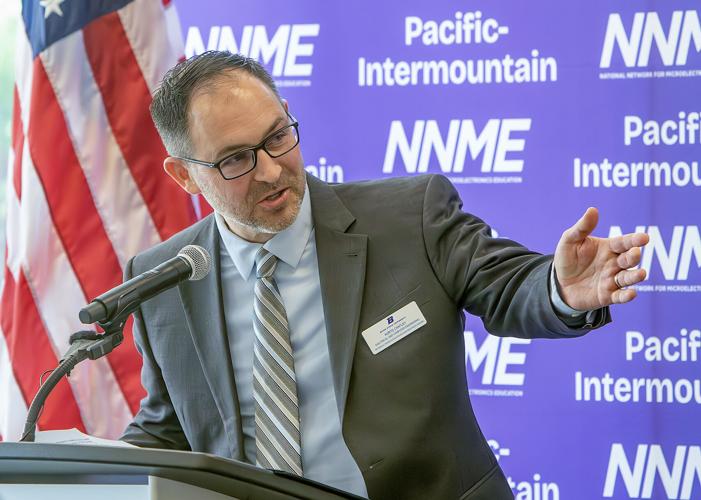
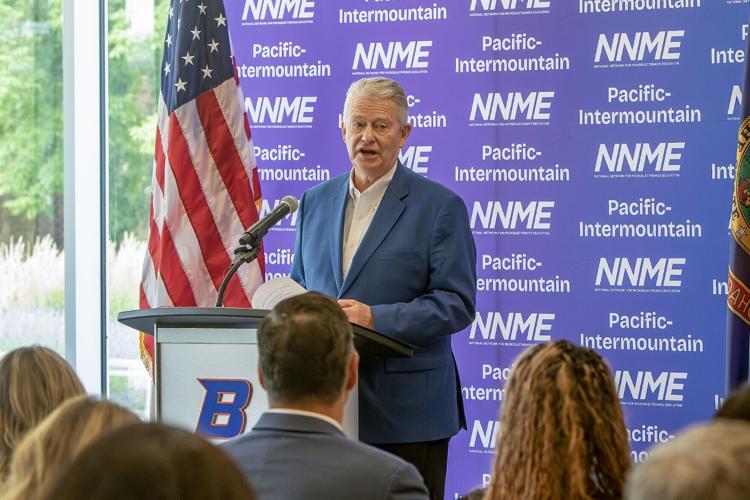
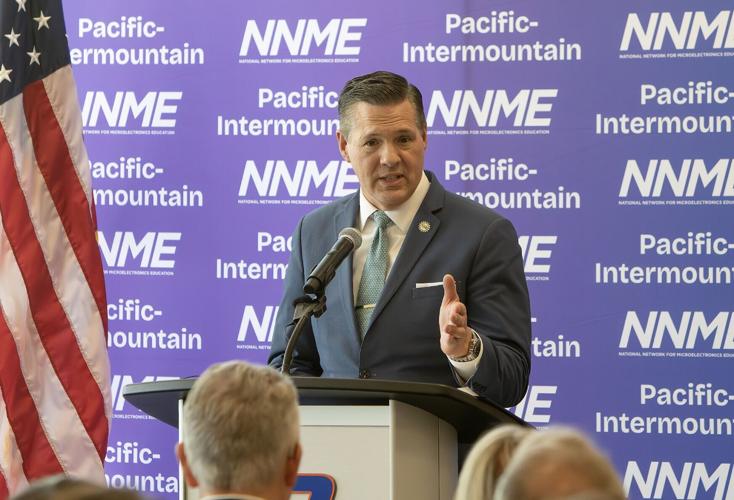
Gov. Brad Little delivers remarks during a press event announcing the launch of the NNME Pacific-Intermountain Regional Node at the Micron Center for Materials Research on the campus of Boise State University, Wednesday, June 3, 2026.
This change is not limited to Idaho, however, and is fueling significant specialized workforce demands nationwide. BSU’s Dean of the College of Engineering Amy Fleischer said there is an anticipated shortfall of more than 150,000 workers in the semiconductor and microelectronics industries by 2030, as was noted in a study from McKinsey, a consultancy firm.
“This is a defining technological and economic challenge of our generation, but with this new investment,” Fleischer said, “our Pacific-Intermountain node is built to turn that challenge into a massive engine of opportunity.”
Seeking to address this need, national, state and university leadership gathered at Boise State’s Micron Center for Materials Research to commemorate the regional partnership — one of four that have been formed through the National Network for Microelectronics Education (NNME), the initiative leading the broad workforce training effort.
The NNME Pacific-Intermountain region encompasses nine Western states, including Hawaii, and will see up to $20 million in funding committed from the U.S. National Science Foundation over the next five years, Brian Stone, the organization’s chief of staff who is serving as acting director, said.

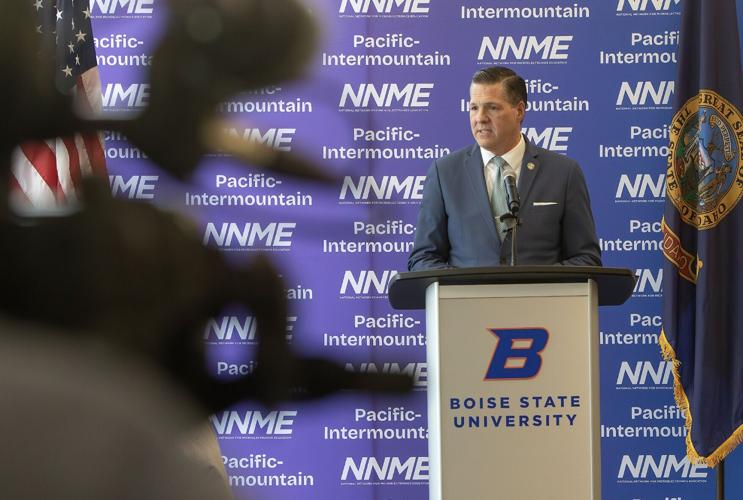
Brian Stone, chief of staff for the National Science Foundation, makes comments during a press event announcing the launch of the NNME Pacific-Intermountain Regional Node at the Micron Center for Materials Research on the campus of Boise State University, Wednesday, June 3, 2026.
Stone said the program — which was itself facilitated through federal investment from the 2022 CHIPS and Science Act — would be centered around three priorities: expanding K-12 recruitment and outreach, advancing curriculum that aligns with industry demands and growing internships, apprenticeships and other hands-on experiences.
With close proximity to a major player in the industry in Micron, this engine will be centered around Boise State University, which has brought forward Kurtis Cantley, professor in the department of electrical and computer engineering, among the key academic leaders.
As Boise State takes on this central role, Cantley said the engineering college will have dedicated staff to support work across the region, but each academic and private-sector institution that is part of the program will be administering its own respective activities tuned to nearby employer demands.

Kurtis Cantley, Boise State University professor, speaks during a press event announcing the launch of the NNME Pacific-Intermountain Regional Node at the Micron Center for Materials Research on the campus of Boise State University, Wednesday, June 3, 2026.
The intention of the regional arrangement is to allow students at other institutions to engage in opportunities and instruction that may not be available at their respective college or university, but is available at a partner institution. Providing an improved level of integration is “ultimately what it’s all about,” Cantley said.
As for the program’s expected reach, Cantley said the first-year target is to facilitate 570 associate’s and bachelor’s degrees, 225 academic certificates and 600 badges or certificates of completion.
In terms of direct workforce placements, by May 2027 the regional NNME program aims to place 350 students into full-time positions within the semiconductor industry as well as 400 students placed within apprenticeships or internships with partner companies, which include Micron, Microsoft, Nvidia and Qualcomm, among others.
Cantley said the work will go beyond industry placement by including regular follow-ups with the individuals that get placed into careers to fill gaps in knowledge and work to ensure they are generally happy with their career and advancing in the industry ladder.
The aim is for participation to increase with each year of the program to meet industry needs, Cantley said.
Denise Temple, president and CEO of the Idaho Technology Council, highlighted the regional arrangement comes alongside Idaho’s existing relationship with Taiwan in the agricultural and semiconductor sectors.
Temple said in the last month, Idaho institutions signed several memorandums of understanding with Taiwanese partners at the recent “From Potato Chips to Microchips” summit at the state Capitol — further reinforcing the relationship with the global leader in semiconductor manufacturing.
April Arnzen, chief people officer at Micron, described the partnership as the region “stepping forward” to have a role in shaping the future of semiconductor manufacturing in the U.S. “That matters because semiconductors are powering nearly every part of modern life, from phones to tablets to PCs … and of course to AI.”

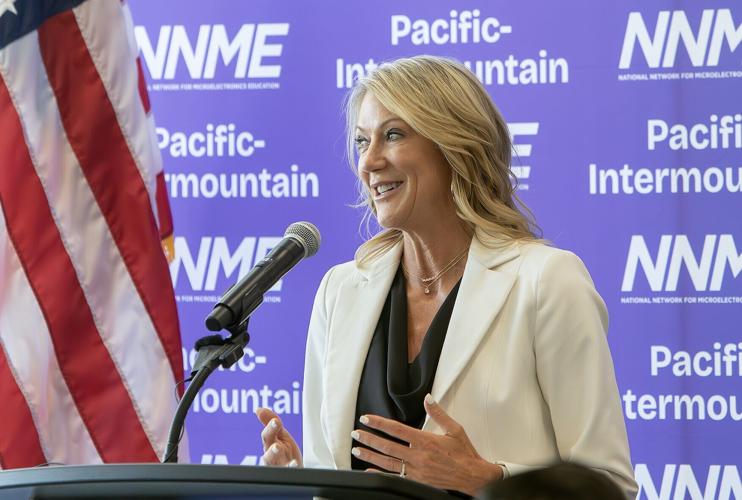
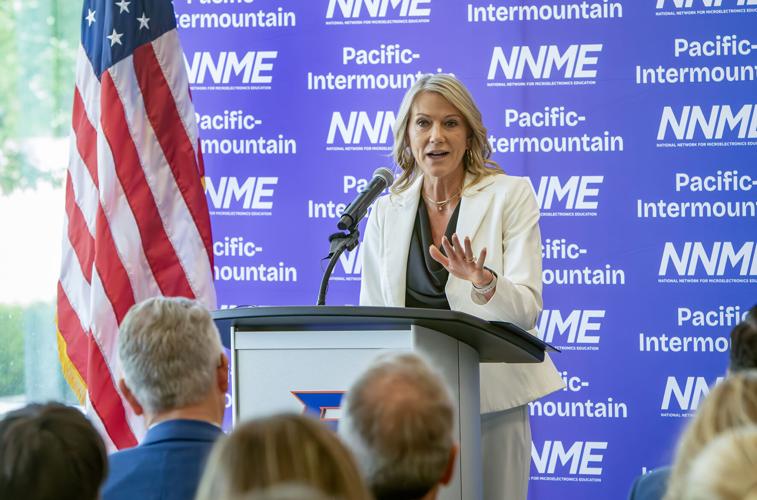
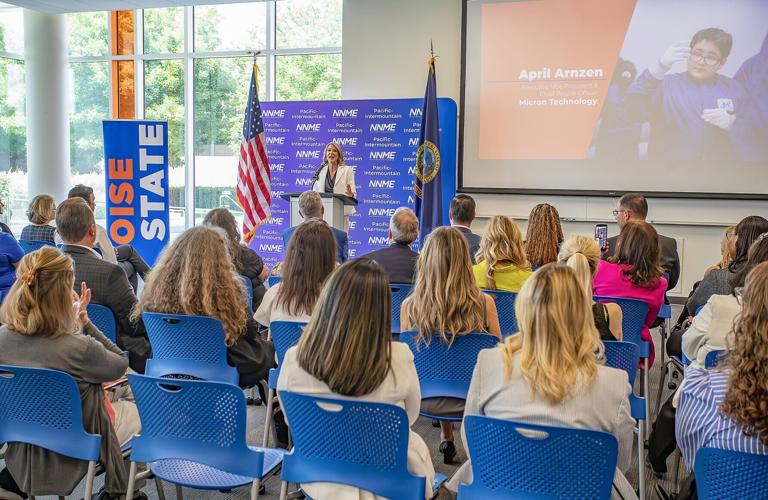
April Arnzen, executive VP at Micron Technology, delivers comments during a press event announcing the launch of the NNME Pacific-Intermountain Regional Node at the Micron Center for Materials Research on the campus of Boise State University, Wednesday, June 3, 2026.
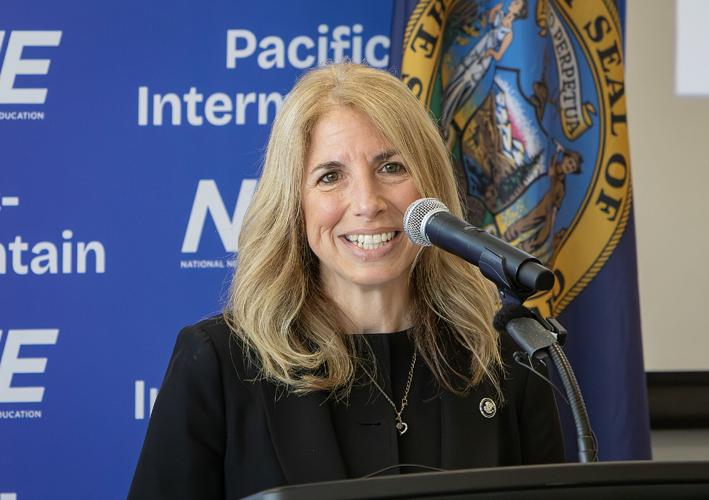
Though the role this industry has in our day-to-day lives is only becoming more pervasive, Shari Liss, the vice president of global workforce development and initiates at SEMI, a global electronics manufacturing association, underscored a key aim is to simply spread awareness about this reality early on in a student’s educational journey.
“Kids are carrying chips every single day, they know what’s on all of their devices,” Liss said, “but they don’t know what’s in them, so our industry is pretty invisible.”

(0) comments
Welcome to the discussion.
Log In