

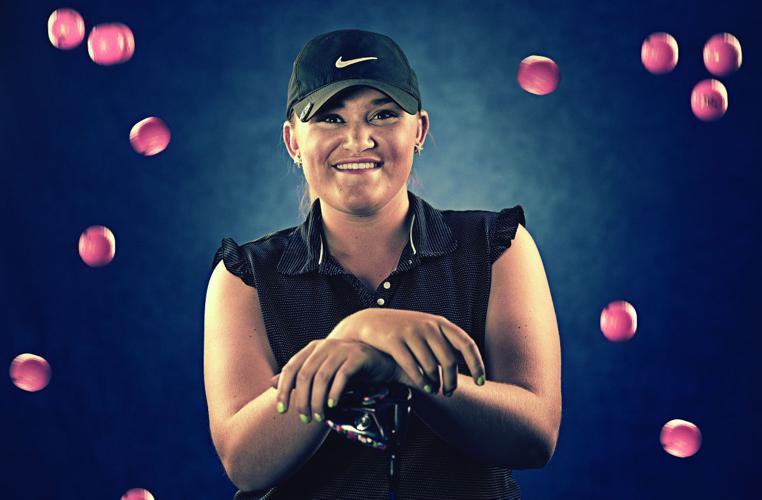


At age 9, Payton Fehringer’s life changed forever.
She was in Blackfoot for a regional Elks Hoop Shoot competition. Normally a deadeye, Fehringer wasn’t herself. Her mom estimated she made 3 of 30 free throws and Fehringer kept having to hurry to the restroom throughout the day.
A week later, at her aunt’s house, Fehringer didn’t feel well. Her aunt, a pharmacist and the wife of a Type 1 diabetic, suggested Payton test her blood sugar. It was soaring.
Soon after, Fehringer was diagnosed with Type 1 diabetes.
She was in the honeymoon phase, when beta cells function enough for the body to produce its own insulin despite an irregular pancreas right after diagnosis. Fehringer spent more than two months in and out of doctors’ offices, adjusting to life with regular insulin injections and constant bodily fluctuations triggered by heat and stress.
The Centers for Disease Control and Prevention web site estimates that 18,436 Americans under the age of 20 were diagnosed with Type 1 diabetes in 2009, the same year as Fehringer.
At the time, Fehringer was in love with basketball. It was her passion. But the physicality of the game forced her to transition to something less demanding and disruptive to her insulin pump.
So she took up golf. It provided the same rush as basketball and adequately facilitated her needs to constantly monitor her blood sugar and ingest the necessary proteins and liquids at her convenience. Fehringer said the transition was difficult at first, but eventually she developed a new love.
“After a while it was just way easier and I loved it,” she said. “We just clicked.”
Fehringer quickly turned serious about golf. Her parents helped further her newfound passion by escorting her to tournaments all over the region. Fehringer began home schooling with her mother in American Falls to better cater to her blossoming golf career.
Fehringer won her first state championship less than a year after being diagnosed. She’s competed at the Callaway Junior World Golf Championships in San Diego, the North American Junior Amateur in Arizona and the Teen World Golf Championships at Pinehurst. In May, during her freshman year of high school, Fehringer finished a stroke short of a 5A state title and led the Rams to their first girls golf championship in school history.
Besides her education and being a hand on her parents’ farm, Fehringer’s focus is golf. There’s opportunity to get college paid for — hundreds of golf scholarships go unused every year — and she cares about the game too much to not give 100 percent.
“She’s got an incredible work ethic,” said Highland golf coach Ty Pearson. “If you’re gonna be good at something, you have to love it.”
But her success doesn’t come simply. Fehringer’s disease doesn’t take time off.
Fehringer has to check her blood sugar every fourth hole during tournaments. She plans ahead before each event with snacks and low-calorie Gatorade. With a high blood sugar, Fehringer can get stubborn and ornery. At low levels, she weakens.
“She was 12 feet from the hole down in Arizona. We were watching her and she hit and (the ball) went clear off the green,” said Payton’s mother, Shawna Fehringer. “We’re like, what the heck is going on? Her blood sugar was like 30.”
Diabetes is in no way a death sentence for an athlete’s sports career. Sporting legends Jackie Robinson and Arthur Ashe both lived with Type 2 diabetes and Hall of Fame third baseman Ron Santo was a Type 1 diabetic.
But the disease is life threatening. It can lead to amputations, heart disease and blindness.
Fehringer, 15, is getting used to the requirements that go with diabetes. She’s a self-described perfectionist and harps on her mental game more than anything. She’s battled adversity and has been contacted by Division I golf coaches since she was an eighth grader.
“She’s a fighter,” Pearson said. “I’ve learned a ton from her, seeing how planned out she has to be.”
Pearson can’t imagine Fehringer not playing golf at the Division I level. She has that same vision.
People may want to get used to seeing the girl with the insulin pump strapped to her hip.

(0) comments
Welcome to the discussion.
Log In