

The issue: Bittersweet nightshade
Bittersweet nightshade (Solanum dulcamara) is a climbing perennial vine native to Eurasia. It was probably introduced into the U.S. for medicinal and ornamental purposes. Care should be taken when handling this plant as all parts of the plant are toxic to humans, pets and livestock. It invades roadsides, thickets, fence rows and other moist disturbed sites.
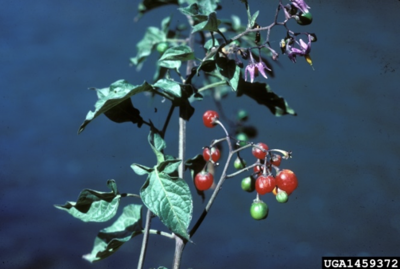
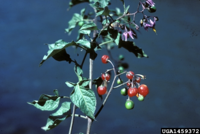
Bittersweet nightshade can grow up to 10 feet in length as it climbs other plants, trees or structures. It has simple alternate leaves that are approximately 2-4 inches in length, with a broad ovate shape, and it often has lobes at the base. Leaves are dark green on the top and lighter green on the bottom. Stems and leaves produce an unpleasant odor when bruised or crushed. Flowers are bright purple with yellow anthers (have a similar appearance to tomato or potato flowers). After flowers are pollinated, small green fruits develop. As they ripen, they turn bright red. Bittersweet nightshade can reproduce by seed and by rhizomes (underground stems). Some birds and mammals can eat the fruit without getting sick. Seeds are dispersed as they pass through the digestive system.
Integrated pest management options:
Prevention: Learn to identify this weed. Do not transport unknown plant material or seed.
Mechanical: Hand pulling individual plants can be effective but take care to wear protective clothing as this weed can cause skin irritation. Mowing can also be effective, but it may require multiple treatments. Perform mechanical treatments prior to seed production.
Cultural: Establish a healthy stand of beneficial plants that can compete with weed seedlings.
Chemical: Effective post-emergent herbicide active ingredients include Glyphosate, Triclopyr or Imazapyr. Be especially careful when applying herbicides, as herbicides can damage or kill non-target vegetation. Always read and follow herbicide label directions!

(0) comments
Welcome to the discussion.
Log In