

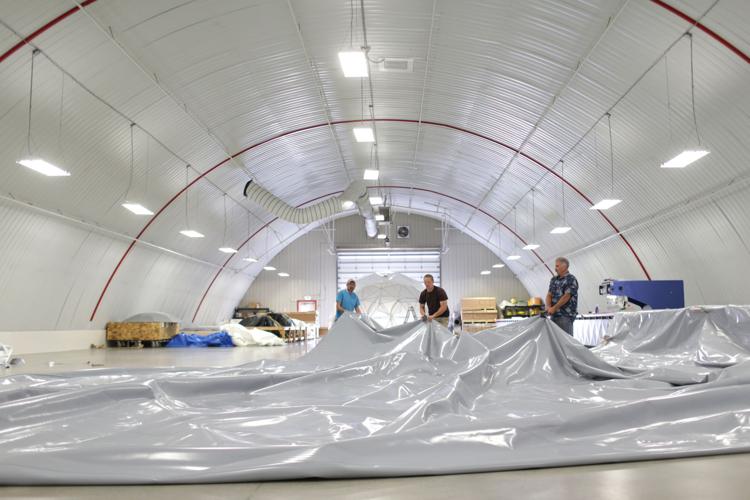
In a nondescript white building off U.S. Highway 26 in Idaho Falls, a small group of engineers are building massive domes. Passersby wouldn’t know it from the outside because these engineers don’t use rebar or wood to build their structures — they use air.
FabricSpan is a dome roofing and dome fabrication company, composed of fewer than a dozen employees. At their shop in Idaho Falls, these engineers and technicians manufacture fabric domes, sometimes hundreds of feet tall and sometimes tent-sized.
FabricSpan’s domes — usually made of vinyl — are inflated and used for agricultural or industrial storage, they’re used as biogas containers for waste management, and they can even become temporary shade structures for outdoor events.
One FabricSpan dome is inflated over a soccer field in Detroit, allowing teams to play through harsh winter weather.
FabricSpan was founded in 2007 as a partner-contractor for Dome Technology, another local company that’s been constructing storage domes for nearly four decades.
At the time, Dome Technology’s engineers devised a way to inflate FabricSpan’s fabric dome (known as an airform) and build a concrete dome inside it by spraying shotcrete and laying concrete layer by layer on the inside walls of the fabric dome.
While that contracting partnership still exists and airforms are still a big part of FabricSpan’s business, the company is branching out and taking on more varied dome projects.
Luke Heiner, CEO at FabricSpan and resident of Lincoln, said the company is a contract manufacturer for anybody that needs structural textiles.
“We do everything from air-inflated buildings, to air supported buildings, to frame-supported buildings, to tensile structures,” Heiner said. “We’ve done agricultural projects. We’ve done municipal projects. We’ve shipped all over the world.”
Evoqua Water Technologies, a water and wastewater treatment company based in Pittsburgh, works with FabricSpan on biogas domes. Evoqua has been one of FabricSpan’s most frequent customers for the past couple years.
“They supply and manufacture a large fabric cover that’s used to store gas at a wastewater treatment plant,” said Matthew Bronk, a product engineer at Evoqua.
Evoqua treats wastewater for both municipalities and industrial companies. FabricSpan is contracted to manufacture the air-supported domes to hold biogas extracted from wastewater.
Many of the projects FabricSpan takes on are in the Midwestern and Western United States, but the company also works on international projects.
The largest project that FabricSpan has ever done was in South Korea. FabricSpan manufactured three dome airforms — each 187 feet in diameter and 197 feet tall.
“That’s a pretty large structure,” Heiner said. “We built it all in one piece that weighed about 45,000 pounds when it was all rolled up and put into containers to ship overseas.”
While building larger domes, like those in South Korea, takes some heavy lifting, it’s the smaller structures that are more challenging to construct, according to Heiner.
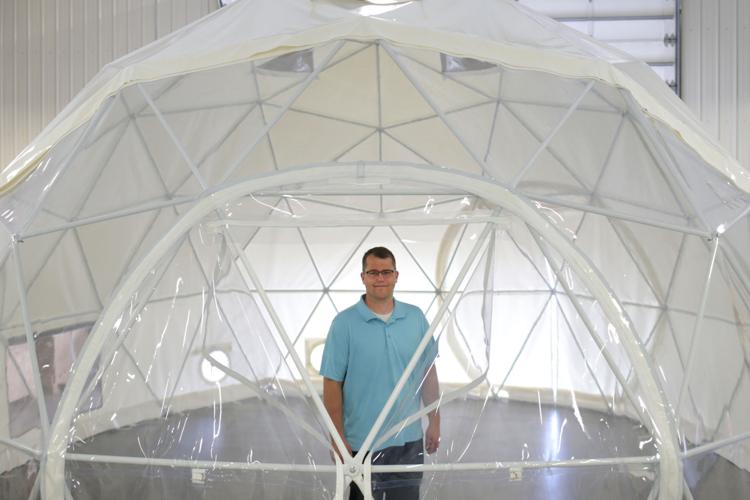
The company is currently working on a small geodesic dome. It’s more like a spherical tent with a honeycomb-style skeleton.
“Interestingly enough, it’s the small projects like this that have faceted surfaces,” which are the most challenging, Heiner said. “You have to make sure that everything fits correctly.”
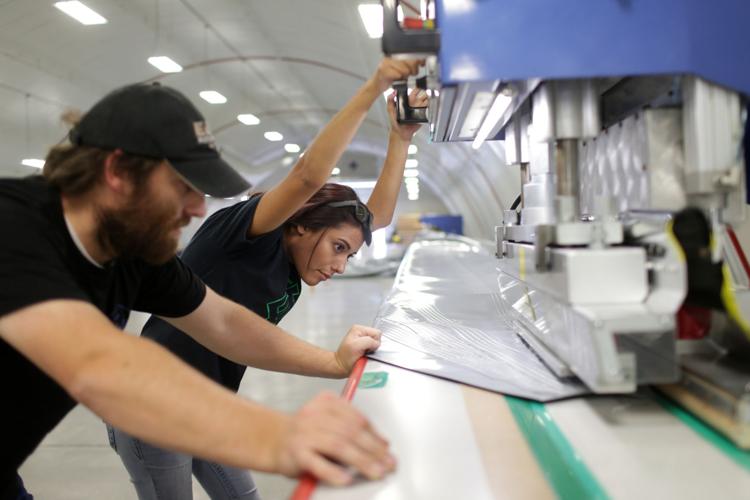
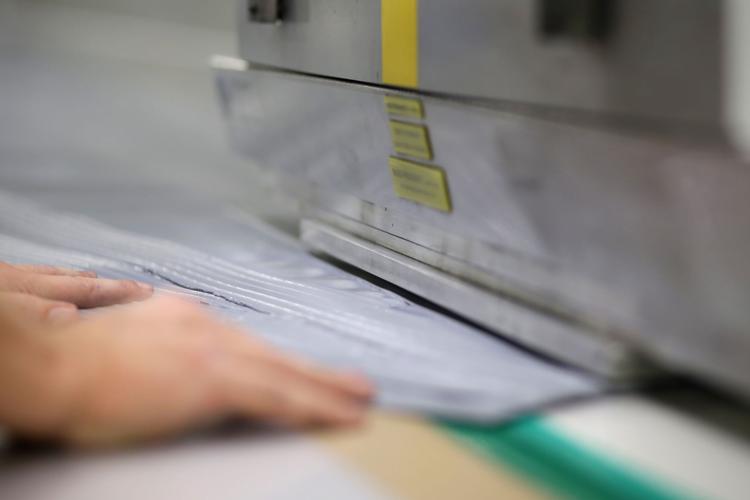
The geodesic dome is one of the few projects small enough to be inflated and tested in the shop. For the most part, engineers and technicians have to measure, cut and sew dome fabrics to the proper dimensions and expect that when it’s inflated on site it will work.
“They’re good at what they do, the technicians here,” Heiner said. “They’re craftsmen and they know how things come together and how they should look.”
Heiner is an engineer in his own right. After growing up on a dairy farm in Star Valley, Wyoming, and working summer construction jobs in Jackson and Teton Village in his home state, he studied civil engineering at Brigham Young University. Now, he spends about 80 percent of his time running the business and the other 20 percent designing.
FabricSpan’s location in Idaho Falls is beneficial, considering its competitors — which number less than a dozen, according to Heiner — are mostly based on the East Coast of the U.S.
The East Coast is “a little more densely populated in structures, but those are starting to move west,” Heiner said. “We can be a closer manufacturer to serve the West. And that’s come to our advantage at times.”
While the company doesn’t currently have any local customers, Heiner said he hopes to do more work in the region.
In a nondescript white building off U.S. Highway 26 in Idaho Falls a small group of engineers are building massive domes. Passersby wouldn’t know it from the outside because these engineers don’t use rebar or wood to build their structures — they use air.
FabricSpan is a dome roofing and dome fabrication company, comprised of less than a dozen employees. At their shop in Idaho Falls, these engineers and technicians manufacture fabric domes, sometimes hundreds of feet tall and sometimes tent-sized.
FabricSpan’s domes — usually made of vinyl — are inflated and used for agricultural or industrial storage, they’re used as biogas containers for waste management and they can even become temporary shade structures for outdoor events.
One FabricSpan dome is inflated over a soccer field in Detroit, allowing teams to play through harsh winter weather.
FabricSpan was founded in 2007 as a partner-contractor for Dome Technology, another local company that’s been constructing storage domes for nearly four decades.
At the time, Dome Technology’s engineers devised a way to inflate FabricSpan’s fabric dome (known as an airform) and build a concrete dome inside it by spraying shotcrete and laying concrete layer by layer on the inside walls of the fabric dome.
While that contracting partnership still exists and airforms are still a big part of FabricSpan’s business, the company is branching out and taking on more varied dome projects.
Luke Heiner, CEO at FabricSpan and resident of Lincoln, said the company is a contract manufacturer for anybody that needs structural textiles.
“We do everything from air inflated buildings, to air supported buildings, to frame supported buildings, to tensile structures,” Heiner said. “We've done agricultural projects, we've done municipal projects, we've shipped all over the world.”
Evoqua Water Technologies, a water and wastewater treatment company based in Pittsburgh, works with FabricSpan on biogas domes. Evoqua has been one of FabricSpan’s most frequent customers for the past couple years.
“They supply and manufacture a large fabric cover that's used to store gas at a wastewater treatment plant,” said Matthew Bronk, a product engineer at Evoqua.
Evoqua treats wastewater for both municipalities and industrial companies. FabricSpan is contracted to manufacture the air-supported domes to hold biogas extracted from wastewater.
Much of the projects FabricSpan takes on are in the Midwestern and Western United States, but the company also works on international projects.
The largest project that FabricSpan has ever done was in South Korea. FabricSpan manufactured three dome airforms — each 187 feet in diameter and 197 feet tall.
“That’s a pretty large structure,” Heiner said. “We built it all in one piece that weighed about 45,000 pounds when it was all rolled up and put into containers to ship overseas.”
While building larger domes, like those in South Korea, takes some heavy lifting, it’s the smaller structures that are more challenging to construct, according to Heiner.
The company is currently working on a small geodesic dome. It’s more like a spherical tent with a honeycomb-style skeleton.
“Interestingly enough, it’s the small projects like this that has faceted surfaces,” which are the most challenging, Heiner said. “You have to make sure that everything fits correctly.”
The geodesic dome is one of the few projects small enough to be inflated and tested in the shop. For the most part, engineers and technicians have to measure, cut and sew dome fabrics to the proper dimensions and expect that when it’s inflated on site it will work.
“They’re good at what they do, the technicians here,” Heiner said. “They’re craftsman and they know how things come together and how they should look.”
Heiner is an engineer in his own right. After growing up on a dairy farm in Star Valley, Wyoming, and working summer construction jobs in Jackson and Teton Village in his home state, he studied civil engineering at Brigham Young University. Now, he spends about 80 percent of his time running the business and the other 20 percent designing.
FabricSpan’s location in Idaho Falls is beneficial, considering its competitors — which number less than a dozen, according to Heiner — are mostly based on the East Coast of the United States.
The East Coast is “a little more densely populated in structures, but those are starting to move west,” Heiner said. “We can be a closer manufacturer to serve the West. And that’s come to our advantage at times.”
While the company doesn’t currently have any local customers, Heiner said he hopes to do more work in the region.

(0) comments
Welcome to the discussion.
Log In