


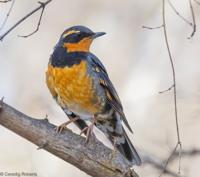
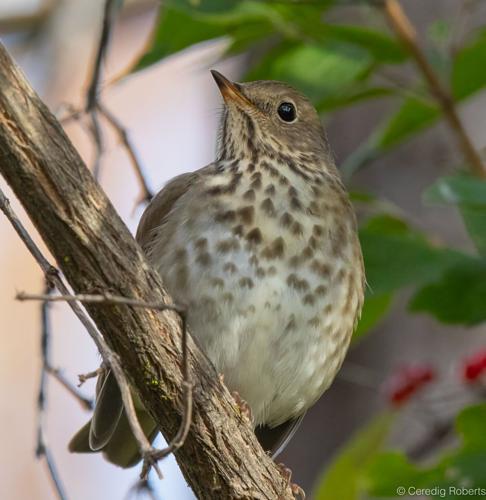
The National Audubon Society’s 125th Christmas Bird Count will be held from Dec. 14, 2024, to Jan. 5, 2025. This is one of the longest-running citizen science projects on Earth. The count was begun on Christmas Day in 1900 by Frank M. Chapman, one of the early leaders in the then-new National Audubon Society. Chapman and others were dismayed by the traditional American Christmas competition of teams going out and shooting as many birds and other animals as they could. Even then, 120 years ago, there was a growing sense that killing wildlife for no reason is a bad idea.
Twenty-five Christmas Bird Counts (CBCs) were carried out that day, mostly in the eastern U.S. This Christmas season, over 2,500 counts will be conducted all over the world. More than 80,000 people are expected to participate. You can find many more details at audubon.org/community-science/christmas-bird-count.
There are typically six CBCs in our area — Boise, Garden Valley, Cascade, Nampa, McCall and Bruneau. Dates and details for where to meet and how to prepare can be found on the Golden Eagle Audubon Society’s website (goldeneagleaudubon.org/) under “Calendar.”
The goal of the CBC is to count all the birds seen over a 24-hour period within a Count Circle 15 miles in diameter. The circles are permanently defined so that counts can be compared from one year to the next and from one place to another. This is one way for conservationists to determine which species are increasing, decreasing, stable or unknown. Species with declines become candidates for research into causes and conservation actions to reverse declines.
The CBC is a great way to get started in birding. Participants include every sort of birder, from beginner to expert, and all ages. You can choose where to go within the count circle, how long you want to stay out, and who you go with. If you are just getting started, or don’t even know if birds are for you, it’s a great opportunity to learn. If you don’t have a pair of binoculars, you can typically borrow some.
Most of us go birding for a variety of reasons — just being outside and enjoying nature is a main goal for me. But there is definitely some competition in these counts. The first bit is the desire to find as many species as possible, to beat the count for the previous year, and to have the all-time high count for a given CBC circle.
To do this, some individuals will scout the count circle for days before the actual count to find rare species that they can return to on count day. We joke about tying those birds down so they can’t leave the area before we return.
There’s a larger-scale competition within which most CBCs can’t compete — the largest count on Earth. Local counts in 2023-2024 were Boise (108 species), Nampa (105), Bruneau (100), Garden Valley (52), McCall (51) and Cascade (56).
In the U.S., the largest counts are on the coast of Texas or California in most years. Species tallies well over 100 are typical. But even those don’t begin to compete with sites in the Neotropics. The CBC with the most species ever recorded was the Cosanga-Narupa count in Ecuador on Dec. 21, 2013, with 531 species.
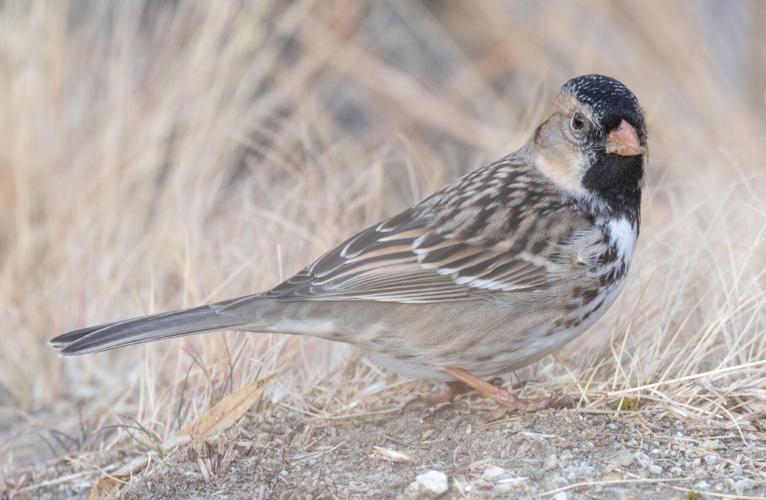
Another challenge is to find something rare. Last winter, on the Boise count, only a single bird was found for Eurasian wigeon, ruffed grouse, orange-crowned warbler, Cassin’s finch and a few others. On the Nampa count, single birds included canvasback, cattle egret, canyon wren and common yellowthroat. There are two Harris’s sparrows in Hulls Gulch as I write this. We hope at least one of those sticks around for the count.
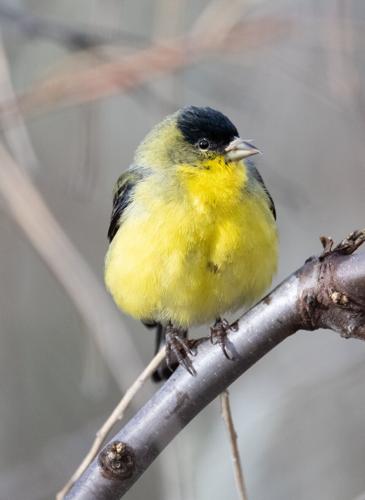
But it’s not just about high counts and rare birds. We now have 124 years of data on many common species — mallards, red-tailed hawks, house finches, American goldfinches and many more. In addition to looking at long-term population trends, we can examine how abundance varies across Idaho, the West, North America or other regions of interest. Patterns may reflect changes in land use, human population impacts, climate change, fires and other large-scale factors. All kinds of hypotheses can be tested with these data.
One fun comparison is to look at what we see in our yards vs what’s seen on the CBC. This is a long list because most species don’t show up in our yards, no matter how nice we’ve made them for birds and other wildlife.
Let’s first look at relatively common species on last year’s CBC for the Boise count that do not come to feeders. If you live on the Boise River or a pond, you might see any of the following waterfowl in your “yard.” But for most people, these are not on your list. Species that numbered in the thousands included Canada goose, mallard and ring-billed gull.
Those numbering in the hundreds were California gull, American wigeon, common goldeneye, rock pigeon, wood duck, common merganser, common raven and ring-necked duck.
Those that numbered in the dozens included a few that might be seen during a FeederWatch episode, especially if you live on the edge of a pasture or other large, open area. These were American coot, hooded merganser, American kestrel, red-tailed hawk, great blue heron, belted kingfisher, golden-crowned kinglet, wild turkey and bald eagle.
One CBC tradition in our family has been to pack slices of homemade fruitcake, covered with slabs of cold butter, fill at least one thermos with strong, black coffee, and go forth. It’s been more difficult to find fruitcake ingredients these days in Boise than it was in the 1960s in Wisconsin. So, I don’t know if it’s the times or the region. I can find dates and brandy, but the hard parts are citron, candied cherries, candied pineapple and “moist” mincemeat.
Most grocery store workers I ask have no idea what I’m talking about when I say “mincemeat. Here’s a recipe from 15th century England:
“Pyes of mutton or beif must be fyne mynced & seasoned with pepper and salte and a lytel saffron to colour it. Suet or marrow a good quantitie. A lytell vynegre. Pruynes. Great reasons and dates. Take the fattest of the broath of powdred beefe. And if you will have paest royall, take butter and yolkes of egges & so to temper the floure to make the paest.”
Saffron and marrow are not in my mom’s recipe. Back to the store. I can imagine the grocery workers looking at me with fresh puzzlement. “Can you spell that?”



(0) comments
Welcome to the discussion.
Log In