

Now that we’ve figured out some ways to deter rats from our yard (see column of Sept. 21, 2026), I’ve put the bird feeders back out. We have three feeders with sunflower seeds, one with thistle seeds, one with suet and a tray for peanuts.
We’ll be relying heavily on net baskets that hang below feeders and catch seeds kicked out by birds. I was a bit leery of these devices until I put them up. They are easy to attach and already catching seeds. Keeping seeds off the ground is one way to eliminate food sources for our unwanted naked-tailed nocturnal ground squirrels.
Chickadees and nuthatches both use these baskets as feeders. They prefer the flat feeding surface to the perches on tube feeders. As I write this, a red-breasted nuthatch — our first visitor of the season — is using both the tube and the basket.
Winter is the easiest birding season of the year. Our feeders are visible from my computer desk and from the kitchen table. All of them are easily checked any time of the day. Although we don’t have the variety of species that are around here the rest of the year, we get to see birds up close and out in the open.
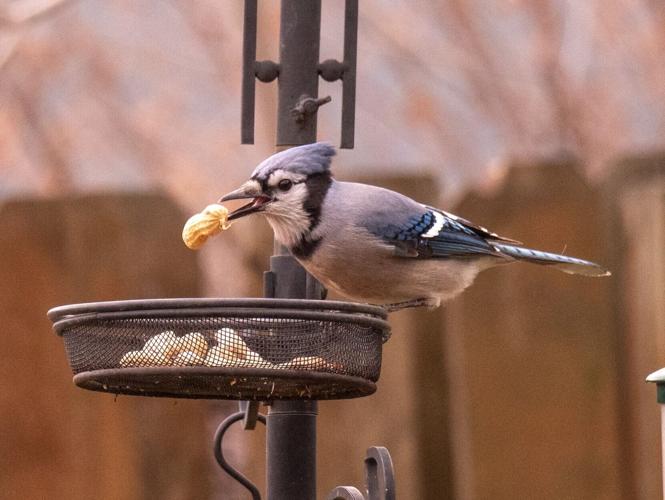
There is also a chance a rare species will visit. We’ve had both a blue jay and a rose-breasted grosbeak in past winters. These are few and far between, but they are the treasures in the treasure hunt that is birding. Visits by less rare feeder birds like song sparrows, white-crowned sparrows and spotted towhees also make the morning’s espresso especially tasty.
Project FeederWatch (feederwatch.org/) is the best website for information and data about birds visiting feeders in North America. I always enjoy seeing the Top 25 list for Idaho from the last winter. This is simply a list of the 25 most common birds spotted in or near feeders. The list covers all of Idaho, so we get species on the list that are not very common in southwestern Idaho. This always reminds me how diverse Idaho is, with many different habitats from dry sagebrush steppe to wet forests.
It’s also fascinating to look at the Top 25 species in adjacent states and in the larger Northwest Region. The lists are all different in significant ways. I frequently wonder why species X isn’t more common here or there.
About this time each fall, I talk about the Top 25 in the previous winter. Species on the list always move around a bit, changing their ranks a few spots up or down. But this time I thought I’d just look at the longer-term ranks of the most common feeder visitors. In checking the ranks over the years, you can also see the amount a species has varied over time. The period of interest is from the winter of 2004-2005 to the winter of 2024-2025.
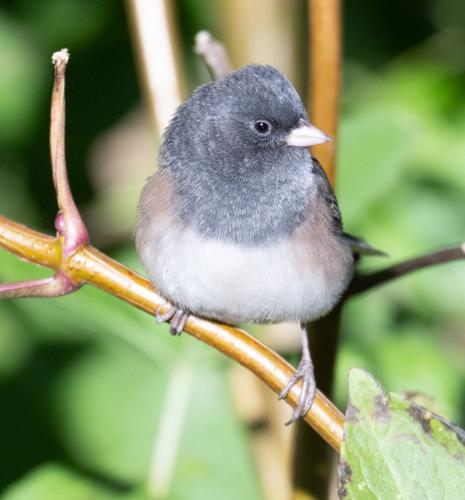
The dark-eyed junco has been the most common species in every one of those winters. I wonder if the No. 2 species — the house finch — will bump the junco from the top spot sometime. It hasn’t happened yet. Data from 2025-2026 will be released soon, and we’ll see what happened last winter. But I know how I’d bet if I were a gambler. According to eBird, the house finch is the most commonly reported bird in Ada and Canyon counties, year-round. So, outside of the feeder setting, house finches are No. 1.
The third-place species surprised me a bit — the northern flicker. I see at least one flicker every day of the year, no matter where we go birding in the morning. And sometimes there are small bunches, especially during the non-breeding seasons. We had 10 at Canyon Hill Cemetery about a week ago. We get only a few in our yard over the year, but they’re obviously visiting a lot of other Idaho yards.
The first three species also reveal different levels of variation from year to year. Juncos are always No. 1 so they show no variation. The house finch is almost always second, but two times it has been in third place. So, it shows a variation in ranks of 1. The flicker has varied from second to eighth for a variation of 6. So, just in the first three species we see rather different levels of variation over time. As with so many facts concerning birds, we don’t know why.
In fourth place is the American goldfinch. I find this most interesting because we get many more lesser goldfinches in our yard. But statewide, lessers are way down at No. 20. I think this is explained by the expansion of lesser goldfinches into Idaho from the south and west. Their increase has been pretty dramatic. We’ll see if they continue to move north, into higher elevations and wetter habitats. Both goldfinches love thistle seeds in feeders and wild sunflower seeds in the countryside.
There are not many birds enjoyed more than the black-capped chickadee — fifth place in FeederWatch in Idaho. Evan on the slowest birding days of the year — typically in August — no matter where you go, you will hear that cheerful chick-a-dee call. They’ve already been visiting our feeders. Chickadees like to grab a single sunflower seed and fly off to a secluded spot to eat it, hammering the seeds open with their beaks. I believe they are wise to Cooper’s hawks.
The American robin comes in at No. 6. This is a good example of a species that doesn’t come to eat seeds or suet but rather visits our yards for other reasons. Robins come to us for water, mountain ash fruits and juniper berries. They typically hit our fruit later in the winter but might visit the bird bath any time. There have already been flocks of hundreds in the mountains.
In seventh place is the house sparrow. I doubt there is a more overlooked or undervalued bird in the U.S. But they have some very nice qualities, which I describe in my column of Feb. 24, 2025. You can’t blame them for being introduced.
Next up is the mourning dove. These doves love to eat seeds on the ground and on platform feeders. This presents a problem in the battle against rats because those sorts of sites are readily available to all mammals, day and night.
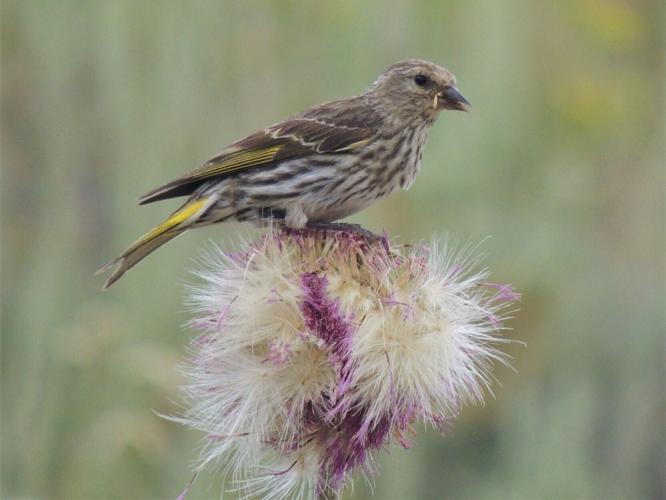
The pine siskin is the ninth most common. It is also the species that varies the most over the years. They’ve been as common as No. 2 and as scarce as No. 22. Other birds of the boreal forest also show large population fluctuations due to boom-and-bust cycles in foods like conifer seeds and birch catkins. These include the red crossbill, white-winged crossbill, redpoll, pine grosbeak and evening grosbeak.
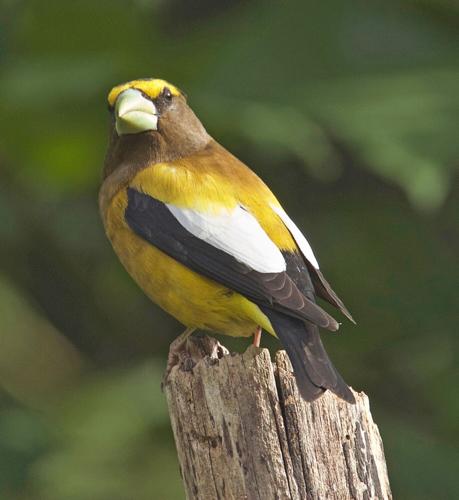
People have already seen unusual numbers of evening grosbeaks in the mountains in September. Although they are very rare on feeders in southwestern Idaho, they’ve been on the Top 25 list for the state in eight different winters since winter 2004-2005. Maybe this winter will be a good one for this gorgeous bird. If we get grosbeaks, lots of robins and snow for skiing, it will be a very good winter indeed!



(0) comments
Welcome to the discussion.
Log In