

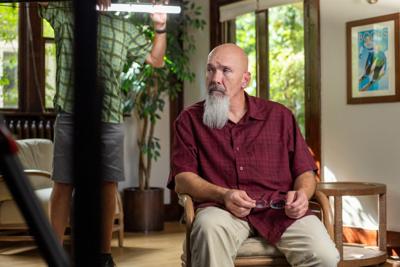

In February 2024, the Idaho Legislature debated a bill that would’ve probably repealed Medicaid expansion.
Without the program — which expanded the public assistance program to more low-income earners — John Barnes told lawmakers, “I may not be here.”
Only parts of that bill eventually made it into a sweeping Medicaid cost control law that passed this year.
But with all the cuts coming to Idaho Medicaid, Barnes said he still worries he’ll lose Medicaid.
“When I do have chest pain or something, and go to the ER, and then I worry, ‘Is this gonna be the time they send me a bill that I can’t pay?’” he told the Idaho Capital Sun in an interview.
In the coming weeks and years, a slew of cuts will hit Idaho Medicaid and health care: to doctor pay cuts, reforms from a state law this year, federal cuts from the “One Big Beautiful Bill Act,” and potentially expiring insurance subsidies.
And many advocates say everyone will be affected, not just the nearly 346,000 Idahoans on Medicaid.
Advocates for hospitals, nursing homes and Medicaid patients paint a similar picture. The cuts, they say, will create a ripple effect that strains the state’s health care system — predicting more people will become uninsured, some medical providers might close, and private insurance rates will rise as hospitals try to offset the costs of caring for uninsured people.
“All of these cuts are creating this perfect storm,” said Idaho Voices for Children Senior Policy Associate Hillarie Matlock. “We’re going to see that access to care for every Idahoan go down.”
The ‘One Big Beautiful Bill Act’ paved the way for Medicaid cuts Idaho wants
For years, Idaho Republican state lawmakers have wanted to control Medicaid’s rising budget, which is now at nearly $5 billion in mostly federal funds.
In March, all 90 Republicans in the Idaho Legislature and Gov. Brad Little approved House Bill 345. The law proposed sweeping policy changes to rein in Medicaid’s costs — calling for work requirements for able-bodied adults on Medicaid expansion, private companies running benefits, and much more.
But Idaho needs federal approval for many of those changes. In the past, the state didn’t succeed.
Months later, Republicans in Congress and President Donald Trump paved the way with the “One Big Beautiful Bill Act,” signed into law in July.
The federal law overlapped with some of the Medicaid policies Idaho wanted, like work requirements and more frequent eligibility checks. But it prevents Idaho from paying providers as much for Medicaid services as state lawmakers had hoped to.
It’s also the biggest Medicaid cut in the program’s history, according to the Center on Budget and Policy Priorities. The law also created a $50 billion five-year rural health fund.
AS FEDERAL CUTS BUILD ON IDAHO, DOCTOR SAYS ‘PEOPLE WILL DIE’
Over the next decade, the “One Big Beautiful Bill Act” is expected to cut federal funds for Idaho Medicaid by $4.3 billion and reduce Idaho Medicaid’s enrollment by as much as 40,000 people, estimates from the group Manatt show. Another 58,000 Idahoans are at risk of losing Medicaid expansion coverage because of the bill’s work requirements, Idaho Voices for Children estimates.
“The bottom line is, people will die. And I can’t stand for that,” said Dr. Angela Bangs, a family doctor in Boise.
After she finished speaking at last week’s protest of the federal health cuts near the Idaho State Capitol, she joined a small crowd sitting in front of 80 numbered fake tombstones. The graves were meant to represent the number of Idahoans who will die each year from the cuts, based on a 2014 study of how health insurance access prevents deaths.
The protest echoed what doctors said about the stakes of expanding Medicaid, and repealing it.
Barnes, who told state lawmakers he would be dead without Medicaid, has been on Medicaid expansion since 2021, soon after he got out of prison.
He still lives in a sobriety house in Boise. He works 16 hours a week, based on advice he said his doctor gave him.
Lately, he’s had chest pains, shortness of breath, and his stomach hasn’t been digesting food well. He’s planning to go in for screenings, and probably an MRI.
“Are these procedures gonna be paid for?” Barnes said. “I gotta be able to afford it. I’m just scared that I’m not gonna be able to get the treatment.”
Idaho will cut doctor Medicaid pay rates in weeks, which could prompt providers to close
In August, another cut came to Idaho Medicaid.
As the state’s tax revenues lagged, Gov. Little ordered budget cuts across state government, prompting Idaho Medicaid to cut provider pay rates by 4%.
Those cuts could last until at least June 2027, as Little permanently extended state budget cuts.
In the coming weeks, Idaho is planning to officially claw back those 4% pay cuts from payments, Idaho Department of Health and Welfare spokesperson AJ McWhorter told the Idaho Capital Sun in an email.
Some health leaders worry the pay cuts will push providers to close.
“I’ve never been concerned that one of our hospitals was going to close,” said Idaho Hospital Association Vice President for Government Relations Toni Lawson. “And I’m very nervous right now.”
Providers aren’t breaking even on many Medicaid treatments, hospital leader says
Medicaid, which insures around one-fifth of all Americans, already pays less than what it costs health care providers to give out services.
Because providers are constantly not breaking even when they treat Medicaid patients, they’re often shifting the costs onto private insurance companies, Idaho Hospital Association CEO Brian Whitlock said.
“Our health care system is built on a system of patches to address this issue of our starting point of an under-reimbursement; a reimbursement that doesn’t cover the cost to deliver that care,” he said, pointing to complicated state and federal financial structures to pay hospitals more than Medicaid reimburses.
“You don’t fix it by cutting more,” Whitlock said. “But that’s exactly the position that we find ourselves in.”
Idaho long-term care facilities can’t cut staff pay, because they are already losing workers, Idaho Health Care Association Executive Director Robert Vande Merwe said. Their only way to offset the cuts is to cut staff, he said, and some rural facilities might close.
That means people will probably be stuck at the hospital for longer, he said, because there’ll be less long-term care beds available.
“When people stack up at the hospital and the hospital doesn’t get paid for weeks or months, we with insurance all pay for it. Because they will have to increase their private pay charges,” Vande Merwe said.
That “just shows the fragility of our health care system,” he said.
One of the first cuts coming is an end to 24/7 kids care
With all the Medicaid cuts coming, Dr. Brian Birch said he can’t grow his children’s health clinic.
In January, an Idaho Medicaid program that paid doctor’s offices to be available 24/7 to help consult kids about health issues will end.
The program, called Healthy Connections, was meant to avoid unnecessary trips to the emergency room. The state’s Medicaid cost reform law cut it.
He hopes the Legislature will restore the program next year. But for now, he’s playing it safe.
“I can’t grow an organization with this much uncertainty and with these payment cuts because it puts us at extreme risk of going out of business,” Birch, who leads the Treasure Valley Children’s Clinic in Meridian, said in an interview.
Some doctor’s offices are more worried.
Many might have to limit how many Medicaid patients they treat, and some may stop taking Medicaid altogether, according to a survey by the American Academy of Pediatrics’ Idaho chapter. At least two are “assessing the viability of remaining in business,” the survey found.

(1) comment
The ACA Exchange is designed to serve that demographic. Able bodied adults up to 400% the poverty level. Expansion is buying votes.
Welcome to the discussion.
Log In