



BOISE — A new data center project has been proposed on federal public land holdings south of Boise in what would be the largest development of its kind in the state. Though in a preliminary stage, the project drew a response Wednesday from Boise’s mayor, who called for improved protections of public resources in the state.
The response arrives after the Washington Sun reported Friday the Bureau of Land Management was reviewing several data center proposals across six western states including Idaho. The outlet reported the Trump administration was considering at least 12 projects to be built on federal public lands that were either data centers or infrastructure related to data centers.
In Idaho’s case, the new data center is located several miles south of Boise and comes from Rhea Data, a subsidiary of Nevada-based solar project developer Arevia Power.
The Washington Sun reported the proposal includes a 4 million-square-foot data center on 3,226 acres of public lands as well as “a natural gas power generation facility and electrical facilities to connect to the Idaho Power Company.”
The proposals discovered are part of right-of-way (ROW) applications, which seek authorization to use parcels of public lands for a specified period of time. These applications only represent a preliminary stage in the planning process and have not yet received approval or undertaken required outreach to the public and impacted agencies.
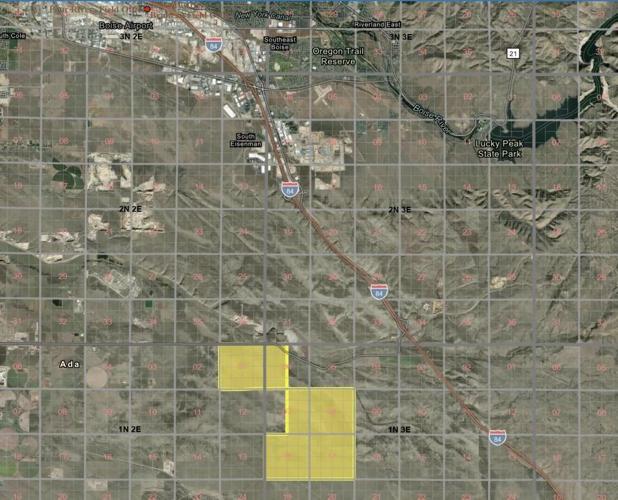
A spokesperson for the Bureau of Land Management’s (BLM’s) Boise Field Office said the proposed site is located in Ada County near the Black Creek Road Exit on Interstate 84, which lies several miles south of Boise. A map of the proposed site indicates it is located south of the Blacks Creek Bird Reserve, off Kuna More Road.

A map of Bureau of Land Management holdings in the state show the site location of the proposed data center and associated facilities. The location is several miles from Boise, south of the Blacks Creek Bird Reserve.
Proposal pushback
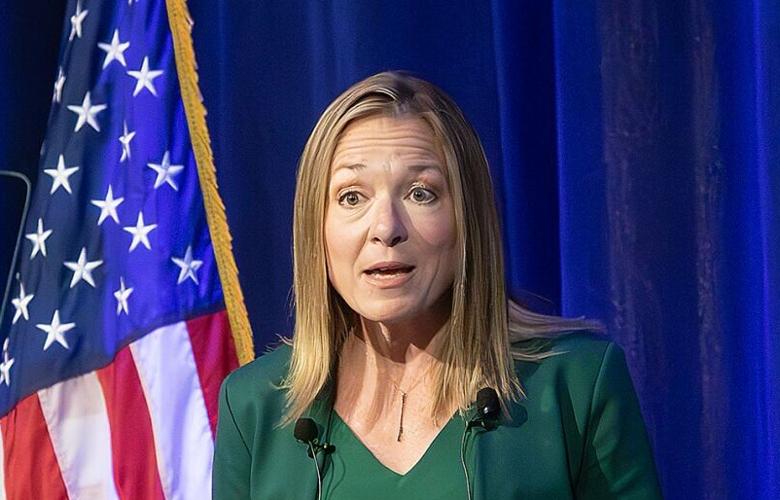
The proposal has drawn resistance from Boise Mayor Lauren McLean, who issued a statement Wednesday calling for a “statewide framework” to protect natural resources from data center development:
“America’s public lands have created a legacy unlike any in the world. They are held in trust for each of us, for our kids and their kids. Nearly every Boisean will tell you that easy access to open space is one of the most special things about living here. Sell offs of public lands to build mega data centers is shortsighted. Boiseans and Idahoans know that public lands should stay in public hands. And to be clear, no data center of this size should be considered anywhere until there is a statewide framework in place that protects Boiseans, Idahoans, and our precious natural resources from the devastating consequences these mega data centers can bring.”
The Idaho Chapter of the Sierra Club, an environmental organization, also issued a statement opposing the project. Idaho Chapter Director Lisa Young described the project as “unacceptable” and highlighted energy demands in the area from Micron’s soon-to-arrive semiconductor fabrication plants and the Meta data center in Kuna. “An additional data center with its own gas plant would wreck our local air quality and climate, not to mention the countless other impacts from a project like this,” she stated.
“Our public lands in Idaho are not playgrounds for out-of-state tech companies,” Vienne Aberle, communications coordinator for Idaho Sierra Club, stated, “they are for wildlife, clean water, and for public recreation. The lack of transparency from the Trump Administration is a clear attempt to block the public from engaging in the process, likely because of how unpopular public lands sell-offs are. Idahoans will not stand silently by, especially once the required environmental review processes begin.”
The Idaho Press could not locate additional information on the proposal in BLM’s National Environmental Policy Act (NEPA) Register or the Mineral & Land Records System (MLRS). A spokesperson for BLM’s Boise Field office said, due to the preliminary nature of the proposal, it remains in a pre-NEPA phase and would not yet be listed in the associated database.
As the proposal solidifies and additional information becomes available, it would be shared through the NEPA Register, the spokesperson added.
Natural gas component unclear
It remains unclear how a natural gas power generation facility will be incorporated into the project. Though a map of Idaho’s natural gas lines indicates the project would be located near the Williams Gas Pipeline West, a spokesperson for Williams Companies — which operates the pipeline — said the “proposed project location southeast of Boise may be in proximity to Williams assets” but it “is not one that would be served by our pipeline system.”
Arevia Power did not respond to requests for comment seeking clarification on the scope of the proposed project, including how plans for the power generation facility are anticipated to manifest.
An Idaho Power spokesperson said the utility company was “aware” of the project but, due to the proposal still being preliminary, had not included it in its system load forecast, which projects future electricity demand on Idaho Power resources.
“Idaho Power is aware of the proposed Rhea Data Center project,” the spokesperson said in an emailed statement. “Any project of this size and scope would require review and approval by the Idaho Public Utilities Commission, as well as extensive planning by Idaho Power to ensure we could serve the project safely and reliably without shifting costs to our existing customers.”
Idaho Power currently requires customers exceeding 20 megawatts of power usage to enter into separate agreements to protect other power users, such as residential customers, from the impact large energy users may have on the state’s energy infrastructure. Large energy users are also required to pay upfront for distribution lines, transmission lines and substation upgrades required to serve their facilities, as was previously reported by the Idaho Press.
In the case of the Meta data center, the technology company reached an agreement to sustain 100% of its operation by constructing renewable energy resources connected to the Idaho Power grid.
Idaho data center laws and next steps
Looking to enshrine similar protections, the Idaho Legislature passed House Bill 911 this year, with added requirements for contracts with “new large load” customers.
From July 1, 2026 onward, these high power draw facilities — defined as those drawing 50 megawatts or more over five years — will have to self-fund infrastructure costs associated with transmitting and distributing power to their facilities and demonstrate to the Idaho Public Utility Commission power service quality and reliability is not impacted for other customers, among other requirements.
As for the size of the Rhea Data project, it would represent the largest in the state by a wide margin. At present, the Meta Data Center that came online in Kuna earlier this month is the largest in Idaho at 750,000 square feet, less than a quarter of the 4 million-square-foot proposal.
The Meta Data Center notably cools itself through a closed-loop, a system of water cooling that can reuse and recycle wastewater and freshwater. It remains to be seen whether the Rhea Data Project intends to implement a similar system for cooling, but the project’s options are limited after the Idaho Legislature passed a law impacting new data centers arriving in the state.
House Bill 895 also passed this year to lay out restrictions on how data centers that begin construction on or after July 1, 2026 will be able to consume water. The law specifically bars data centers from using “consumptive” cooling systems, such as those that release water vapor to dissipate heat, unless the water is supplied by a municipal, water district or water and sewer district system.
Closed loop systems are deemed “non-consumptive” under the law and do not face such restrictions.
The BLM Boise spokesperson said the agency anticipated publishing a notice of intent for the project by the end of this year. This would represent a formal announcement to the public that the agency plans to prepare an Environmental Impact Statement (EIS) or retool a major resource management plan for a proposed project, BLM’s website states.
This step would only be the first stage of public notification in a wider process that includes looking at environmental impacts, considering alternatives and coordinating with other local, state and federal agencies.
If plans for the Rhea Data project were to advance, the wider land-use approval process for the project would be, at minimum, several months in duration and include several rounds of draft plans, a 90-day period for public comment, a subsequent “30-day protest period” and a 60-day review by the governor, according to BLM standard procedure.


(0) comments
Welcome to the discussion.
Log In