



POCATELLO — Buck Swaney believes there’s only one viable economic development tool available to help builders bringing significant projects to the Gate City finance costly public infrastructure.
Swaney, a Utah builder with Millennial Development Partners, will make his company’s case during a 6 p.m. public hearing Thursday at City Hall that a tax increment financing district is needed to support the planned Northgate development in northeast Pocatello.
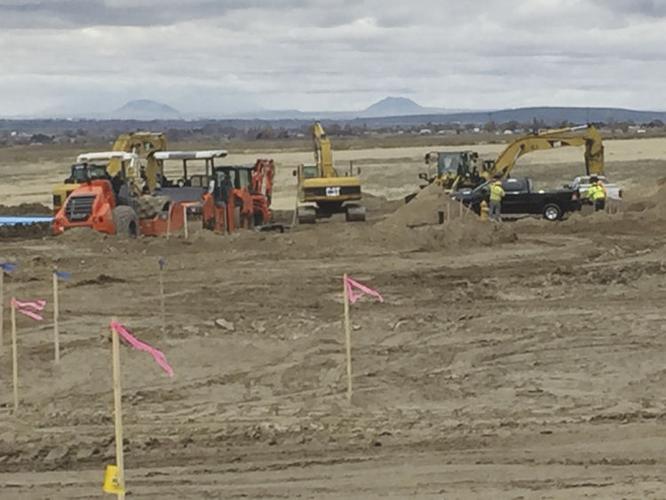
When complete, backers say Northgate will be a pedestrian-friendly district with a Portneuf Health Trust medical campus, thousands of homes with commercial retailers interspersed, a Class A business park and a gated community for seniors.
Skeptics of a Northgate TIF district, including a Pocatello City Councilman and a former candidate for Bannock County Commission, argue the impacts of the project on the city as a whole haven’t been adequately studied. Furthermore, they fear the city would be left to provide services to the development for years without getting its full share of tax revenue.
Swaney, however, emphasized that his company has cooperated with the city, Bannock County and Pocatello Development Authority, which administers local TIF districts, from the initial planning stages. He noted revenue from the TIF would be invested directly in addressing systems bottlenecks that must be overcome for the city to realize its growth potential.
“The choices are pretty simple,” Swaney said. “The developers build community infrastructure and get reimbursed for it reasonably or else they don’t build community infrastructure, and nothing changes.”
The Northgate TIF district would freeze property values for the general tax roles at pre-development levels and divert taxes on the additional property value resulting from growth — called an increment — to cover infrastructure within a specified area.
No bonds are proposed toward infrastructure: The city’s sole investment thus far has been a contribution toward a public-private partnership to build a Northgate interchange on Interstate 15.
The developers would pay roughly $60.625 million over several years to build projects such as streets, water and sewer systems and public services supporting both their project and other future growth in that part of town. TIF district funds would reimburse the developers for their public infrastructure investments over the course of 20 years. Once the projects are repaid, the TIF district would be retired and the full value of Northgate would be added to the general tax roles.
In most cities, Swaney explained Millennial pays impact fees on every unit sold, ensuring new growth helps cover the added demand for city services. Developers, in turn, may tap those funds to cover needed public infrastructure, such as sewer lines and bridges.
Pocatello, however, has no impact fees on the books, leaving TIF districts as the sole mechanism at developers’ disposal — a fact Swaney believes has stymied the city’s growth.
“The growth curves in other Southeast Idaho communities have been tremendous,” Swaney said. “Pocatello has not been growing at a pace that keeps up with any of its neighbors.”
City Councilman Roger Bray said he supports the concept, but as a steward of taxpayer dollars, he’d like the city to conduct a thorough analysis of how a TIF district might affect other aspects of city government.
He noted PDA invested thousands of dollars to study the viability of the TIF: The study found the Northgate increment would generate nearly $65 million throughout the 20-year period.
“I have to know that the taxpayers are not going to be fueling this by paying for everything else in there for years and years,” Bray said.
Bray believes the city should have studied development impact fees long ago to explore an alternate means of accommodating growth that appears to be working well in other communities.
Christine Stevens, a retired school principal who ran for county commissioner in November, has read through hundreds of pages of public records on the project and still has unanswered questions. She wishes to know specific details about performance goals, how green energy would be incorporated into the project, how it might affect the aquifer and the builders’ timeline for implementing the full project.
Stevens would like the builders to host additional public meetings, where information on several topics would be on display and experts would be nearby to answer questions.
“I hope people will ask enough questions that gradually some real information gets out,” Stevens said.
Stevens believes the new project could also force businesses elsewhere in town to close or relocate, leaving “vacant real estate elsewhere in town.”
The builders, however, say the community’s tight current housing inventory evidences that they’re poised to fill a need. Without Millennial’s investment, Swaney said the city would soon hit a growth road block, due to sewer and water transmission line constraints.
Swaney said the city currently has the sewer and water capacity to support 700 dwellings in the northeast part of the city. He estimates through manageable upgrades, the city could boost its capacity in that area to cover another 2,000 units.
“The city is working now on participating in an intermediate sewer solution, which has broader community benefits,” Swaney said.
Growth beyond 2,700 units will require an investment of $4 million to $5 million to build new transmission lines, he said.
He said the project’s growth will be dictated by what the market can bear at any given time, and he estimates the initial total reimbursable investments at between $12 million and $15 million.
Builders expect to have construction underway on 350 dwellings, the first Portneuf Health Trust medical building and five commercial buildings before the year’s end.

(0) comments
Welcome to the discussion.
Log In