










BOISE — A bill to add work requirements and other restrictions to the Medicaid expansion voters passed in November is headed to the House floor.
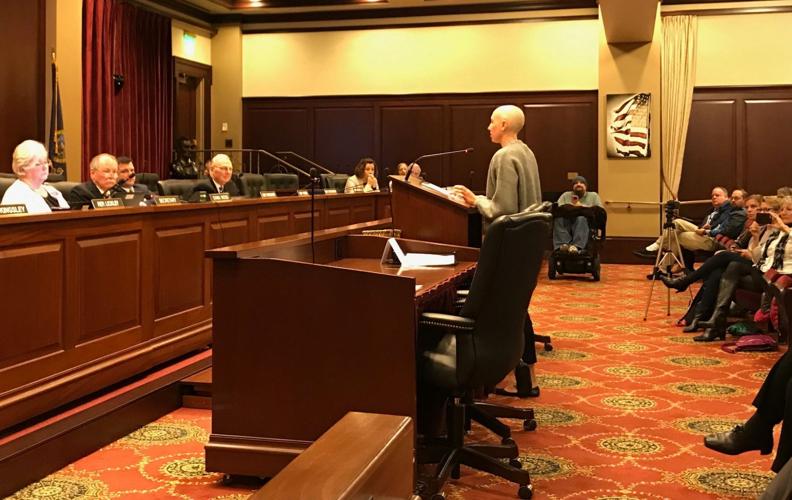
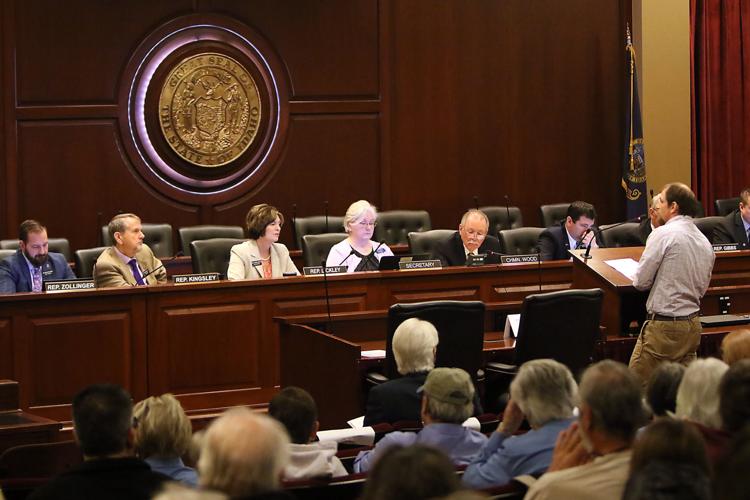
After several hours of public testimony from 58 people, 57 of whom opposed the bill, the House Health and Welfare Committee voted on a party-line voice vote, with the Republicans in favor and the Democrats opposed, to send the bill to the full House without a recommendation as to whether to pass it. That aspect of the vote is a little unusual — if a committee is going to advance a bill, it usually does so with a “do pass” recommendation.
“This is the 11th week, I think, of the session, and we’re about where we were when we started except we’ve talked about a lot of things,” said Rep. Marc Gibbs, R-Grace. “I think it’s time to get a bill on the floor of the House and find out what the will of the body is before we start the process of wrapping (the session) up.”
Gibbs said he might not vote for the bill on the House floor, but “I think we need to take the temperature not only of this committee but the body upstairs, the entire body of the House of Representatives.”
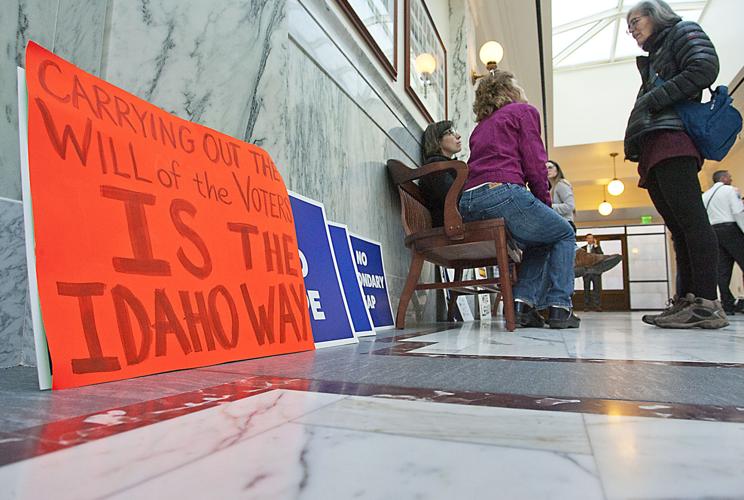
Many Republican lawmakers opposed Medicaid expansion and, since voters passed it, have been discussing ways to put limits on it, saying it is necessary to save money. Democrats and Medicaid expansion advocates have been urging lawmakers to expand Medicaid without any limits.
There are competing proposals to impose various restrictions on Medicaid, but, late in the session, there’s still considerable uncertainty about which could be adopted. As the hearing was starting Wednesday morning, across the hall in the Senate State Affairs Committee Sen. Fred Martin, R-Boise, was introducing a much more limited bill to put some restrictions on Medicaid expansion.
Martin’s bill, which he pitched as a compromise, would create a voluntary job training program for Medicaid expansion recipients, rather than mandatory work requirements like the House bill. And Martin’s bill would insure people making up to 138 percent of the federal poverty level through Medicaid, while the bill in the House would ask for a federal waiver to insure people making from 100 to 138 percent of the poverty level on the Your Health Idaho state exchange instead.
Gov. Brad Little would have the option of vetoing any bill that makes it to his desk. Little, who has committed to implementing Medicaid expansion, said Wednesday he wants a “landing pad” for expansion that doesn’t over-complicate its implementation or result in unnecessary costs.
“If it’s the right work requirement,” he said. “If it doesn’t create a new big gap and it’s not too expensive. Those are my two priorities.”

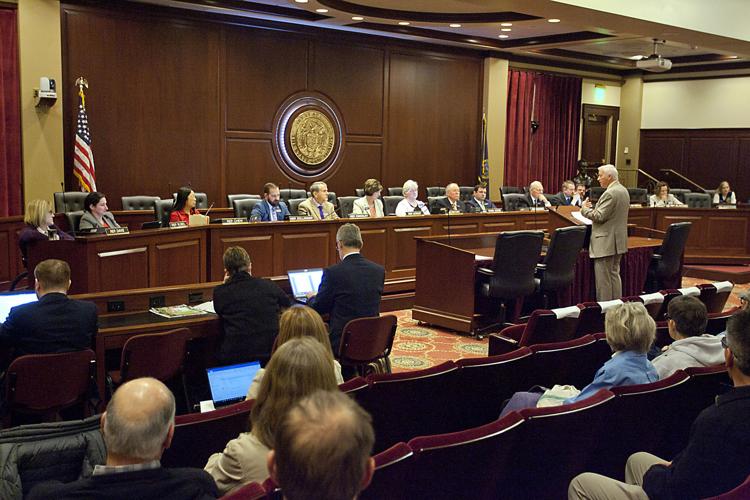
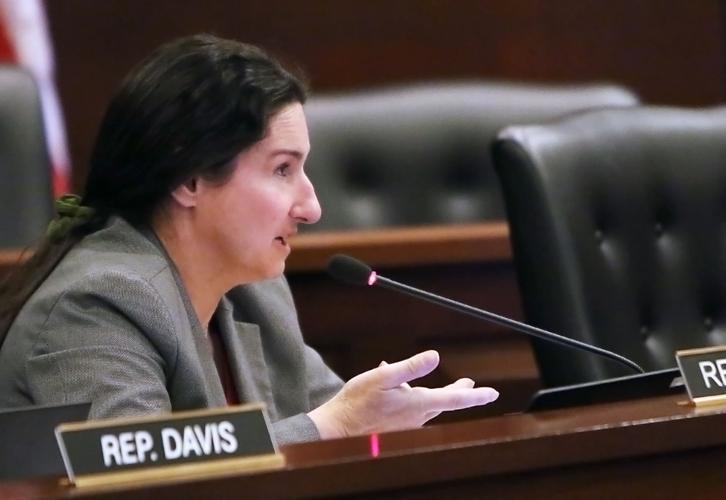
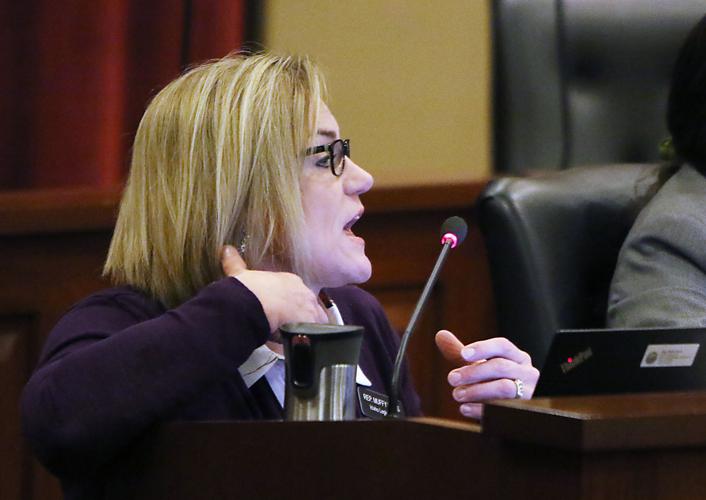
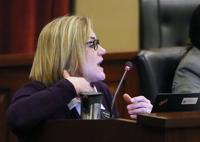
Rep. John Vander Woude, R-Nampa, responds to a question from Rep. Muffy Davis, D-Ketchum, as he speaks in support of HB 277, his latest Medica…
The bill, which is being sponsored by Rep. John Vander Woude, R-Nampa, would apply for a federal waiver requiring Medicaid expansion beneficiaries to work, volunteer or attend job training at least 20 hours a week. People who would be exempt from the requirement include those under 19, over 59, with children under 18 at home, pregnant women and people receiving unemployment insurance. Vander Woude said he would want the work requirements to be as easy to follow as possible.
“It’s not my intention to try to block people from getting the help they need,” he said.
As well as seeking a waiver to cover some people through the exchange, the bill would, if the Legislature doesn’t vote to do otherwise, end Medicaid expansion if the share of the cost covered by the federal government were to fall below 90 percent.
Implementing the work requirements would cost the state $183,650 in one-time costs and $1.9 million yearly in ongoing yearly costs, according to an estimate from the Idaho Department of Health and Welfare. It also would save the state $1.18 million a year. If the waiver to insure people making from 100 to 138 percent of the poverty level were approved, it could save the state $10.9 million a year compared to what Medicaid expansion will cost otherwise, although this could be the least likely of the waivers in the bill to be approved. The Centers for Medicare and Medicaid Services have not approved similar waivers in any other states — this waiver would mean the cost of people’s coverage is borne by the federal government through tax subsidies to buy private insurance.

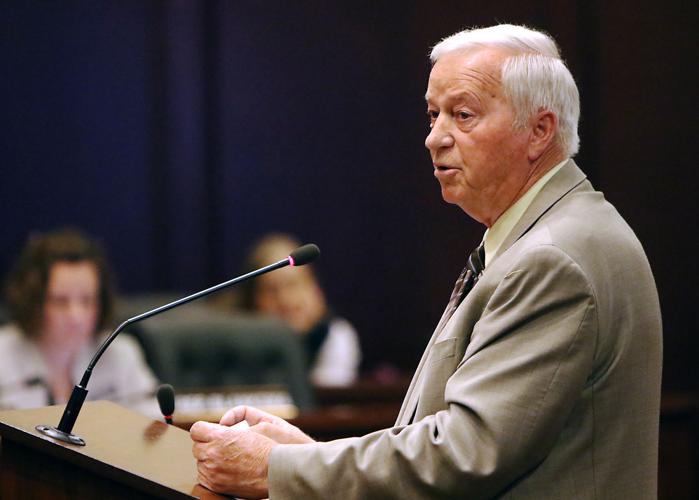
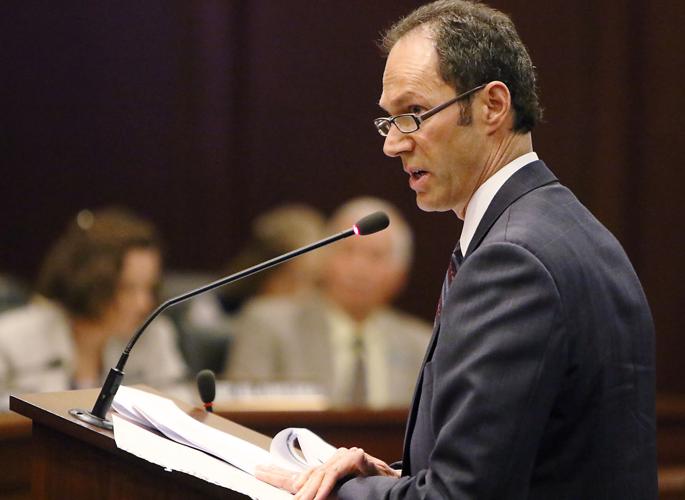
Fred Birnbaum, with the Idaho Freedom Foundation, speaks during a hearing on the HB 277 Medicaid expansion sideboards bill in the Lincoln Audi…
Idaho Freedom Foundation Vice President Fred Birnbaum testified in favor of the bill, calling the work requirements “very generous” and a way to fulfill the goal of President Lyndon Johnson’s “War on Poverty” programs to nudge people toward self-sufficiency.
“I think we all understand that through work we fulfill the American dream,” Birnbaum said.
Everyone else, including numerous doctors, Medicaid expansion advocates, representatives of various medical groups and some people who have experience with lacking health coverage, opposed it.
“I am fighting for Jessica in Salmon,” said Jon Glick, a former Democratic legislative candidate from McCall who helped with the Medicaid expansion drive there. “I am fighting for the wife of the guy in McCall who removes the snow from my driveway. I am fighting for the lady in Challis who works at the library.”
Almost every aspect of the bill came in for criticism at some point. Jim Baugh, the executive director of Disability Rights Idaho, said the coverage for mental health conditions is more limited in many exchange policies than under Medicaid. And, he said the work requirement as worded would mean many people with conditions such as schizophrenia and depression would be required to work and then likely lose their coverage when they were unable to meet the requirements.
“This exemption does not cover people with mental illnesses who have serious and persistent conditions,” he said.
Some worried people in rural areas or who work seasonal jobs would lose health coverage due to the requirements.
“Under this bill, with every layoff, you can not only lose your income, but you can lose your health care,” said Don Kemper.
Adam Olsen, an Idaho Falls native who lives in Boise now, said he opposed the Affordable Care Act but he supported Proposition 2.
“I voted for Medicaid expansion because I thought it was our state’s responsibility to protect Idaho citizens from a bad federal law,” he said.
Olsen said without Medicaid expansion, counties would keep having to cover the cost of indigent health care.
“I think this bill shifts the cost back to counties that can’t afford it,” he said.

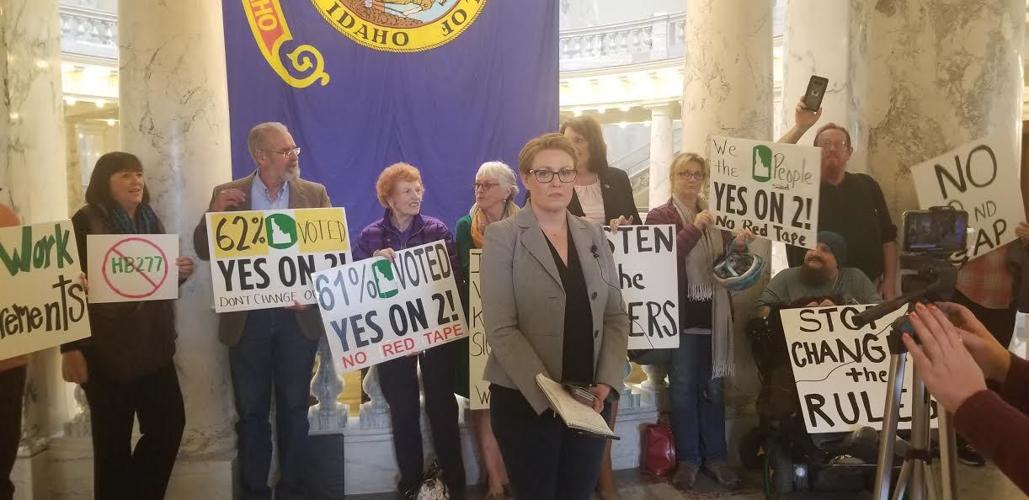
Rebecca Schroeder, executive director of the pro-Medicaid expansion group Reclaim Idaho, speaks at a press conference in the Idaho Capitol rot…
At a news conference after the vote, Reclaim Idaho Executive Director Rebecca Schroeder blasted the bill.
“Paying more and getting less is the opposite of fiscal responsibility and flies in the face of the small government approach that many of our lawmakers say they stand for,” said Schroeder, whose group led the expansion push last year.
Schroeder said she is less opposed to Martin’s bill.
“We would prefer unmodified (Medicaid expansion), but Sen. Martin’s proposed legislation is a bill that we could live with,” she said.
Idaho Press reporters Xavier Ward and Betsy Russell contributed.

(0) comments
Welcome to the discussion.
Log In