

EDITOR’S NOTE: This is part one in our series titled After the Fire: An in-depth look at life at Highland High School following the destructive 2023 blaze. This multi-part Idaho State Journal series will continue weekly with part two to be printed in next Saturday’s newspaper. The series will conclude on April 13.
POCATELLO — The fire that engulfed much of Highland High School last April left many students picking up the fragments of their lives.
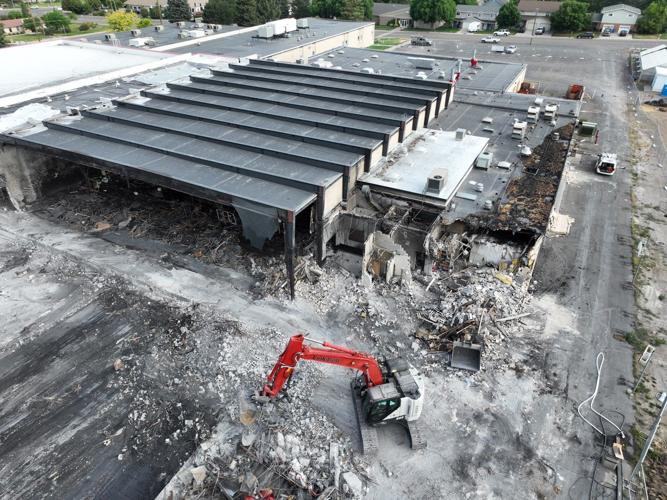
The inferno that gutted Highland’s D Wing also left smoke and water damage and destroyed the school’s cafeteria, band, choir and locker rooms along with its main gym. The destruction of so much of the school sent a wave of uncertainty surrounding the future and fate of Highland.
The students, ever resilient and unshakeable despite the collective upheaval they experienced, rose from the embers and pushed through the adversity. Through the patronage of altruistic souls within the community and with the support of their peers and friends from other area schools, Highland’s students tried to return to normalcy as they came back to the storied halls of their school.
Now, almost a year later, many Highland seniors grapple with the knowledge that they will soon be gone from the school as they prepare for their next level of higher education. The April fire largely reduced the historic memorabilia of those who walked the halls before them to ash. Many of the trophies, vintage uniforms and photographs from bygone eras are now only a memory.
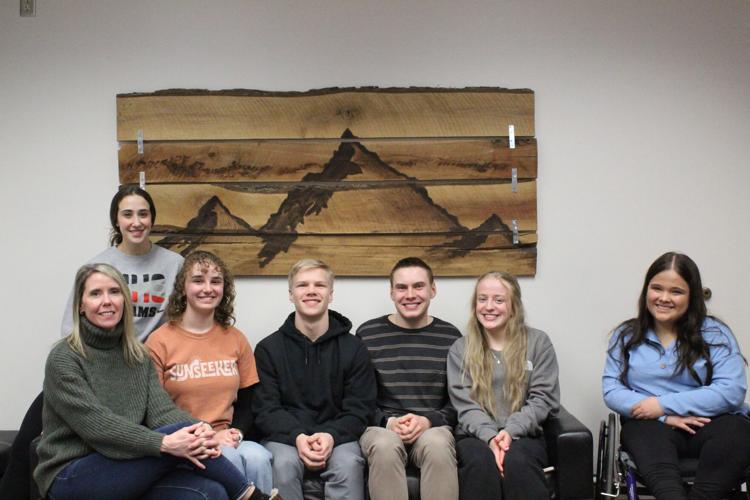
Gathered inside the Highland principal’s office earlier this week, five senior students alongside a dedicated counselor and physical education teacher reflected with the Idaho State Journal on the diminished high school experiences, emotional burdens, sentimental losses and the bonds they forged together to find the strength to carry on following the fire.
Zoe McEwen, Highland’s student body president, spoke first about her experiences in the months following the blaze.
“It’s definitely been different,” McEwen said. “It’s weird to not have everybody in the same building. Specifically with the band and the choir, it’s very strange to not hear them practicing or to (now) have kids that are showing up late to class because they have to commute from Calvary Chapel or wherever (for band practice). That’s definitely been different.”
McEwen continued, “Another thing is we don’t have the opportunity to do assemblies a lot. We had our football team win state and we haven’t had an assembly to celebrate them or some of our other organizations that have done amazing things that should be celebrated. We haven’t had the opportunity to have assemblies because we don’t have the capacity or the space to do so.”
Ella Schrade and Jett Ockey, Highland’s senior class president and vice president, respectively, talked about the adjustments they had to make for choir and cheer by going off campus to places like Franklin Middle School. The commutes cut into practice time, affecting students like student body vice president Gunnar Anderson, who had to travel off-campus for wrestling practice.
The wide range of fire-related adjustments and challenges have impacted every Highland student differently, such as senior class officer Brooklyn Fisher, who must use a wheelchair to navigate the school.
“I feel like we’re all trying our best and the teachers have definitely been super supportive and positive, but it has been hard having people that are going to and from school or the lunchroom or (being required to use) our commons area for more than one thing,” Fisher said. “That’s been a little bit chaotic.”
Fisher continued, “The (area) that burned down, there (had been) a ramp right there, so now I have to take the elevator to class. That’s been an adjustment that’s a little bit scary sometimes. But also, it just feels a lot more congested because I feel like we’re all having to (go in) the same (directions) and so it’s hard not having access to some of the entrances or exits.”
Many other Highland seniors echoed the sentiments of dealing with congestion at Highland, including the desire to see the parking lot expanded to better accommodate the school’s nearly 1,600 students. The current parking lot has only one entrance and exit making the lunch rush and leaving school at the end of the day incredibly difficult to navigate.
Even by the best estimation, Highland’s renovations won’t be completed for another three to four years. While the current class of seniors will simply move on to their next adventure, it’s likely many incoming students who will attend Highland during the next several years will only see the fire-damaged version of the school.
“I have younger siblings,” McEwen said. “Something that’s really important to me is that I don’t want my younger siblings to have the same experience that I’ve had. They deserve so much more than that.”
McEwen continued, “My siblings, they’re in seventh and sixth grade. I want them to have a school that is healthy and safe and is capable of holding home games and having enough classrooms and enough seats for the kids in their classrooms. I want that for them. So, as a senior, it’s hard for me because my high school experience has been very different than the average high school experience, but I want my siblings to have a good high school experience.”
Some annual Highland events like homecoming have faced pitfalls to overcome following the fire. Additionally, events like the school’s Make a Wish program have had issues as they usually hold tryouts in the cafeteria or gym. The students who help run the program have had to consider other ways to assist in fundraising.
“I feel like prom and homecoming are huge ones because we usually hold prom in our cafeteria, but we don’t have one,” Ockey said. “When we were planning homecoming this year, it was kind of hard. We went back and forth on a lot of different ideas. Where can we hold this? What’s the best for everyone? How can we make this as smooth as possible and normal for everyone? I feel like that was kind of a hard one. I feel like it’ll be smoother with prom. We’ve had experience with the snow ball and homecoming, but that was kind of tricky at the beginning of the year.”
In November of last year, a $45 million bond that would have provided funding for renovations and enhancements at Highland along with additions and improvements to Century High School’s gym facilities failed to meet the supermajority needed for approval among School District 25 voters.
For Highland students like Ella Schrade, the bond’s failure wasn’t all that impactful because she would have graduated before any of the bond-funded renovations at the school would have been completed. The ripples the bond’s failure sent through Highland’s teachers and staff were another matter entirely.
“I think the biggest thing was seeing how it impacted our teachers and the office (staff),” Schrade said about the failed bond. “Seeing the mood switch, because they were so hopeful, and to have that be shut down so quickly was really hard on them. It really took all of them to come together and try and get something passed. But they also never really showed it in the classroom. They always had high spirits and high hopes and that rubbed off on all the students to just stay positive and adapt to change.”
But adapting hasn’t been easy. It seems every Highland student lost something in the fire.
Anderson mentioned the loss of all of the school’s wrestling shoes in the blaze.
“After four years of wrestling, (students) would retire the wrestling shoes and hang them up in the room,” Anderson said. “It was cool to walk in and see all the older wrestlers that used to wrestle here, see their shoes and how beat up and how much hard work they put in with those shoes. I didn’t lose that much. But I had wrestling shoes in the wrestling room. I wrestled all three years in those shoes.”
Other losses sustained were bits of history embedded into the choir room walls where the names and years of previous students were scrawled onto the brick.
“We lost all our outfits, all the pianos, guitars, all instruments, the computer that had all of our music, our money, all of it was in there,” Ockey said. “You can’t go back. It’s just the small things that meant the most that were so hard and the memories that we made there.”
That sense of Highland history being lost forever to the inferno was hard for many at the school to cope with and took a toll on school spirit at Highland, said school counselor Tricia Harvala, who gets emotional when talking about the fire and its impact.
“I think that is one of the hardest things because there’s so many of those little things that we do to build tradition and to build community at Highland,” Harvala said. “The things that people don’t even know (about) we’re never going to get those back. We just don’t have the space to begin anew and everything is so temporary, you just don’t want to start some things. It’s that lack of assembly, that lack of being able to create — that is our new experience. The unknown of what the future holds.”
Although no one was seriously injured in the early morning fire, caused by malfunctioning electrical equipment, the challenges and losses have been intense for everyone at Highland, especially considering that the current class of seniors all experienced the COVID-19 pandemic during their freshman year.
Starting their high school careers during a global pandemic meant that the school was at half capacity most days and was a far cry from being normal compared to what previous generations of students had experienced.
Although the pandemic and now the fire have built up a resiliency among Highland’s student body, it’s clear that the students have lost something truly significant.
“Even though we talk so much about how resilient the kids are, we cannot take away from them, even with how amazing they are and being resilient, how painful and hard this has been,” said Highland physical education teacher Camille Long. “I feel like you wouldn’t realize that from an outside perspective, in some ways, because you’re seeing them rally and do all of the things and they’re pulling together. But this is really hard.”
Highland’s students said among the hardest things to accept is that their school won’t return to any semblance of normalcy any time soon.
“We were all really hopeful that (the school) would get repaired soon and it would work out better for us,” McEwen said. “We would maybe get updated facilities or updated equipment. I think it’s been hard for us to realize that hope hasn’t been fulfilled. I think for a lot of us, at least my friends and the people that I know and the people that I’m surrounded with, it’s been really hard for me specifically to see them lose hope.”
McEwen continued, “At the beginning, everybody was fighting for it and everybody was gathered together. We were spending time together. We were working hard to make it better than the situation entailed. It’s been hard for the student body in general to lose that hope because it’s not going to get fixed in many years. It’s hard for us to be hopeful for a better future if we aren’t going to see the immediate effects and see that our school will get fixed and our school will get better and will get updated facilities and will get better opportunities and better chances to grow and to learn (with the) community. It’s been hard to see that fire flicker out. We’re tired. It’s been a hard year. I’m eternally grateful to the people at our school and to the people in our community and to the people who have worked hard to make it as best as possible. But there’s only so much we can do. We need the community’s help and we need whatever we can get to make it the best possible (situation) for us.”

(1) comment
No one lost their life. No one was injured. Things can be replaced. Get over it, make new memories, move on.
Welcome to the discussion.
Log In