

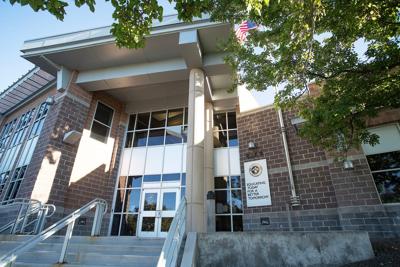
A shrinking student population and aging facilities have led the Boise School District to reevaluate its existing schools.
The district hosted several sessions Tuesday and Wednesday to bring community members into conversations surrounding future difficult decisions. Enrollment is expected to continue dropping and it is likely that the BSD will have to close schools.
BSD consultant and HPM planning services Vice President Tracy Richter said that while the district considers future plans, actual actions to adapt to declining enrollment would take place two to five years from now.
“This isn’t a Boise issue, this is a national issue,” Richter said.
Current projections show that Boise’s enrollment of 20,970 will drop by 3,000 students over the next decade. This comes after a 2,000-student enrollment drop over the past five years.
This trend isn’t unique to Boise schools, or even the Treasure Valley. Richter, who consults in districts across the nation, said he hasn’t seen a single district that isn’t losing students.
The cause is theorized to be a mishmash of different factors including lower birthrates, aging populations and, in Boise’s case, a lack of housing options.
“What we see is that more people are holding on to their homes longer, even as empty nesters,” Richter said.
Without the students needed to fill classrooms, many Boise schools are under capacity. BSD’s schools are currently at under 70% utilization.
“The excess capacity really becomes an issue in this as we decline in enrollment and try to maintain and keep up with the repair costs, utility inefficiencies, that happen,” Richter said.
State-level education funding in Idaho is largely determined by student enrollment. An attendance-based funding model utilizes average daily attendance to determine how much a district receives. These funds go toward staffing, though Deputy Superintendent Nick Smith previously expressed that the state’s funding isn’t enough to cover salaries.
As enrollment shrinks the district is continuing to struggle with a growing backlog of deferred maintenance. Addressed as a statewide issue in 2025, Richter said state funds haven’t been enough for the BSD. In the next five years the BSD is expected to accrue $480 million in deferred maintenance.
“The financial pressures that school districts across Idaho are getting today, including Boise … a lot of times legislators are cutting public school funding, or stagnating it, even though costs are rising,” Richter said.
The compounding issues have led the BSD to tackle which schools may merge in the future. Richter explained that fewer schools meant less maintenance costs, staffing and transportation needs. It also means that students could continue to have a variety of offerings, rather than splitting music teachers between schools or canceling programs at smaller schools.
“We can’t have some high schools at 1,600 and others at 1,000 or below because that won’t offer an equitable delivery model for programs,” Richter said.
The tentative plan is to organize based on attendance areas. The district is divided into quadrants based on the high school that junior high and elementary schools will feed into.
Junior high utilization in the district is at 64% and is projected to drop as low as 35%. The district will likely need to cut down to three junior high schools from its current number of nine.
“Trying to balance this the right way will be important,” Richter said.
An ongoing survey is open for input at boiseschools.org/masterplanning along with additional information.

(0) comments
Welcome to the discussion.
Log In