

A deadly threat to East Idaho’s deer, elk and moose population is knocking at the door.
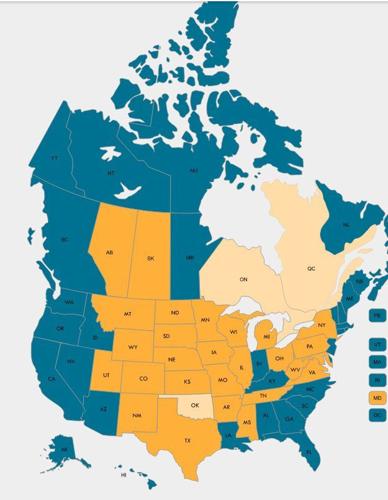
Idaho is on the front lines against incurable, always-fatal chronic wasting disease marching westward, killing deer, elk, moose and caribou. The contagious neurological disease has yet to be found in Idaho, but has been detected along the borders with our neighboring states of Montana, Wyoming and Utah, and in most Midwest and many Eastern states.
Idaho Fish and Game is pleading for help from hunters this fall to present all their harvested big game animals for testing and to carefully follow protocols for transporting animals harvested from other states.
“Probably the biggest weapon we have in our arsenal is early detection,” said James Brower, with Fish and Game Upper Snake Region. “So we’re doing everything we can, but a huge part of that is hunters that are willing to bring their (deer) heads in.”
Because chronic wasting disease has been found in areas of western Montana and western Wyoming bordering North Idaho and East Idaho, Fish and Game is keen on monitoring what hunters are harvesting in those areas.
Last year Fish and Game sampled 1,113 mule deer, white-tailed deer, elk and moose, testing for the disease, and found no positive cases. That testing will continue during fall hunting seasons at hunter check stations and at regional offices.
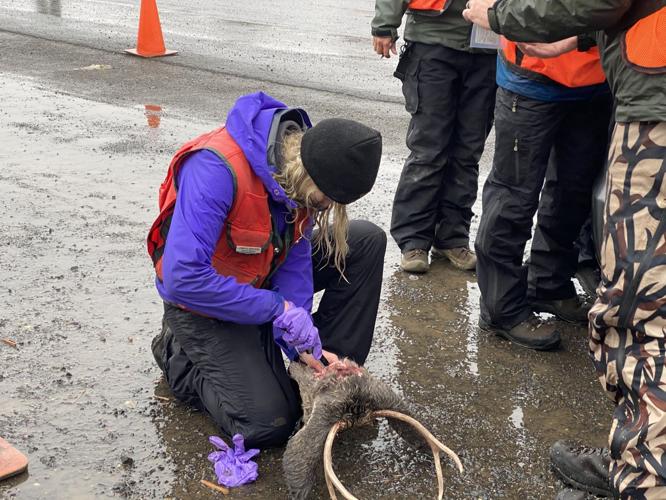
There is no live test or known cure for chronic wasting disease. Fish and Game samples animals’ lymph nodes to check for the disease’s presence. If you don’t have a check station to stop at, you can bring in a sample to a Fish and Game regional office for checking.
“We have a few videos on our website that teach people how to collect those samples,” Brower said. “We need the lymph nodes just below the throat of the animal. We’re just hoping that people will participate as they did last year. We’re urging them to continue to do so.”
Idaho also has specific protocols for hunters bringing big game animals harvested from states known to have infected animals.
“Idaho law does not allow hunters to bring into Idaho a whole carcass, or any part of a wild deer, elk, moose or caribou from any state, Canadian province, or country with a documented case of (chronic wasting disease),” said Roger Phillips, public information supervisor in a recent news release. “Don’t worry, you can still bring the meat and antlers into Idaho.”
Last fall, several East Idaho hunters, including four in Rigby and one in Shelley, were tracked down by Fish and Game for transporting deer from Montana and Nebraska. In the Rigby incident, seven deer were harvested in Nebraska. Both states have herds with deer testing positive for chronic wasting disease.
“We’ve had numerous situations where hunters have transported the heads of mule deer harvested in Montana to northern Idaho taxidermists,” according to Jennifer Jackson, regional communications manager with Fish and Game.
Jackson said the Shelley and Rigby hunters were issued warnings by Fish and Game conservation officers.
“I think some folks are just not aware of the law,” Jackson said. “The onus is still on you as the hunter to know before you go. The officers are allowed to issue a warning or a citation at their discretion. There’s a little education period at the beginning of a new law and then eventually more citations will probably be written.”
Idaho passed a law in 2018 making it illegal to bring any portion of spine, brain and other nervous system tissues of a wild elk, deer, moose or caribou into the state from disease-positive states or provinces in Canada. Fines can range from $25 to $1,000.
The state does allow the transport of meat that is cut and wrapped, deboned meat that does not include brain or spinal tissue, hides without heads, teeth, finished taxidermy, dried antlers, organs that do not include brains, and clean and dried skulls or skull caps.
According to the U.S. Center for Disease Control, there has been no reported cases of chronic wasting disease infecting people. However, CDC recommends that people do not eat meat from an animal that tests positive for the disease.
But what about animals who migrate naturally into the Gem State?
“There’s no Idaho mule deer that stays in one spot. They migrate,” Brower said. “A lot of our animals, especially in this part of the state, have the ability to go in and out of those neighboring states. There are no fences or borders that they respect. There are migration routes between states and that makes us nervous for sure.”
Brower said that biologists expect that the disease will show up in Idaho eventually and that could cause changes in hunting.
“Our action is going to depend on a few things,” Brower said. “One is where it’s detected, how prevalent it is and ultimately it will be up to our commission to take action. We are prepared with strategies and information, so when that happens, we’ll get together and come up with a plan forward.”
Phillips said if hunters see an animal they suspect has chronic wasting disease, they “should accurately document the location of the animal (GPS coordinates if possible) and report the species and gender, if known. Take pictures, if possible, and immediately contact the nearest Fish and Game regional office. Do not attempt to touch, disturb, kill or remove the animal.”
“If nonhunters see a deer that looks emaciated or acting strangely or something’s wrong with it, please call us and let us know and we’ll check it out,” Brower said. “The key to that is doing that as quickly as possible. If they have the ability to take a GPS location, that helps as well.”

(0) comments
Welcome to the discussion.
Log In