

Something exciting is happening in Pocatello, Idaho. In the southeastern part of the gem state, there is an emerging, glittering diamond: a religious gathering facilitated in American Sign Language (ASL).
Encouraged by local baptized individuals of The Church of Jesus Christ of Latter-day Saints who are Deaf, Emma Wood, a Disability Specialist with involvement in the Deaf community, met with President Douglas Alley, a leader in The Church of Jesus Christ of Latter-day Saints, and requested the class. The process took several months, but those attending agree that it has been worth the wait.
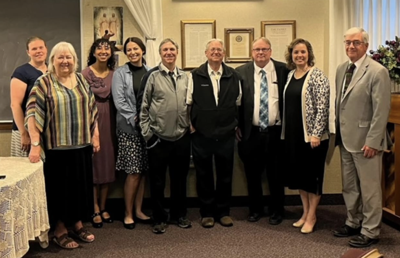
The desired goal of the class, according to Wood, is “to provide an opportunity for rich gospel discussion that is unrestricted in the language of the Deaf members, ASL.” The class is facilitated by four individuals, all of whom are Deaf: Craig and Jill Radford, Jensen Hall, and Priscilla Hensley.
Some Deaf members living in the local area choose to attend worship and fellowship services near their home residences; others travel to forums with accessibility to sign language interpreters. No matter the preference of personal choice, this new class is for anyone who wants to study and discuss Christian religious content in ASL.
Currently, the average of those attending is eight members. Wood said, “This class will continue indefinitely as long as there are at least two individuals coming…” As class attendees meet together every two weeks, a meaningful sense of camaraderie prevails. Participants feel sustaining strength from one another because of tight-knit discussions and a willing vulnerability to ask questions.
Brent Cockrell, hard of hearing, regularly attends the spiritual gatherings. Brent’s mother contracted rubella when she was pregnant with him and his twin brother. As a result, Brent and his brother sustained hearing loss. Although Brent considers himself reserved, he confided, “I feel my testimony has grown since going to the class.”
Facilitator, Priscilla Hensley, shared this insight, “There is nothing better than gathering with friends to discuss scriptures and how to apply the teachings in our life today with no barriers in communication. I have a testimony…I have found that strengthened even more as I share and talk about it…I find that talking about the scriptures brings me joy that I’ve been seeking…It is definitely a blessing for the Deaf saints in this area as we have discussions in the language we understand best.”
Wava Murphy, baptized as a youngster in the First Baptist Church and then as an adult, transferred her records to a Methodist church, faithfully joins the bimonthly religious classes. Though Deaf, Wava most often chooses to frequent a congregation of members of The Church of Jesus Christ of Latter-day Saints on Sundays with her hearing neighbors. However, Wava admits to having found her niche with this ASL class. She said, “…Now with Deaf classes, it’s so upfront and clear.”
Wava is not the only one to take note of the clarity and joy of participating in this spiritual gathering via sign language. Jarom Luker, diagnosed as hard of hearing when eight years old, is
now “nearly totally deaf in [his] right ear, and using [his] left ear gets harder and harder for [him], especially in crowded, noisy environments.” Jarom and his family are learning ASL. While Jarom states his involvement in class constitutes a struggle for him to fully understand, he relayed: “I can see it in the eyes of others in the class how important it is to them to discuss the gospel in ASL.”
Participants attending the class do not have to be Deaf or hard of hearing to attend, but the class is taught solely in ASL without voice interpretation. Wood says the class “is not…intended to teach ASL, rather it is to teach [religious content] through ASL.” She noted, “…Learning happens best when the Holy [Spirit] is the interpreter and there is an opportunity to share one’s testimony without restraint…To participate in a class that has no barriers…brings me a sense of satisfaction that is difficult to express.”
Not only is this religious class providing an environment of fellowship, friendship, and gospel learning, but according to Wood, it is also being used as a “ministering and fellowshipping opportunity to create a place for Deaf people to feel a sense of belonging.”
Because of the rurality of sundry Idaho towns, members and facilitators of the class are concerned about networking and reaching out. They want to find interested individuals in nearby areas who may be open to attending. Such persons need not belong to any particular religion. People of all religious persuasions are welcome to join these gatherings in ASL. Presently, the course of study is the Holy Bible’s New Testament. Curriculum will change yearly. Interested persons may contact Priscilla Hensley at 208-251-0003 (text only) or Emma Wood at 208-220-0728 for location and time details.
For Cockrell, the formation of these meetings is a good start. Though he travels into Pocatello from an adjacent small town to attend, he is happy to make that sacrifice. He admitted, “It’s just small. We need more Deaf people.” Cockrell’s idea to help bolster the momentum is to take the discussion on the road and as a class, travel to adjacent communities on rotating Sundays to make it easier for Deaf people living in those areas to participate.
Hensley added, “We plan to broadcast over Zoom so that those who are further away can participate, too. There are Deaf [people] across this region in rural communities, and having local access to these kinds of resources is harder for them. This will allow them to have the opportunity to learn with their tribe for an hour twice a month.”
Luker remarked that he would “definitely encourage all those who are Deaf or hard of hearing to attend the class.” He further stated, “It is truly an entirely different experience to attending a translated English-speaking class. There is an immersive experience to it. Everyone is signing and the scriptures come alive, even without sound. With my limited comprehension, I am still a witness to the clear excitement in the room that all of the members of the class have to participate and share experiences…in their own lives.”
The obvious enthusiasm and energy connected with the creation of this spiritual gathering is palpable. Truly, it showcases as a shimmering diamond in the rough. With ongoing participation and steady outreach, the hope is that this class will continue to grow in numbers while those who take part will find it fulfilling and rewarding. For those Deaf, hard of hearing, and hearing members who find place and purpose in this gem’s state shimmering diamond, the newly founded religious class taught in ASL in Pocatello, Idaho is quite thrilling.

(0) comments
Welcome to the discussion.
Log In