


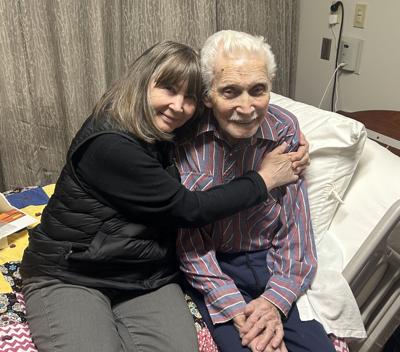
POCATELLO — He was 16 when Pearl Harbor was attacked.
It was the catalyst for the boy who hadn’t yet graduated high school to embark on a journey that eventually put him aboard an amphibious assault ship of the United States Navy where he would witness Japanese aircraft plummet purposely into other U.S. ships.
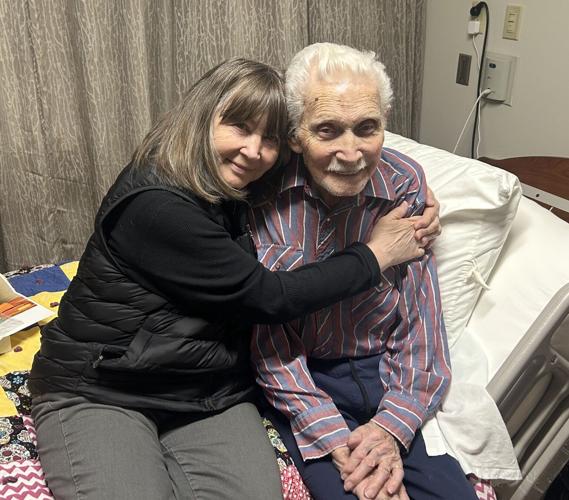
Local World War II veteran Wayne Raymond turned 100 in February and recently sat down with the Idaho State Journal, reflecting on his experience serving overseas during one of the most influential times the world has ever known.
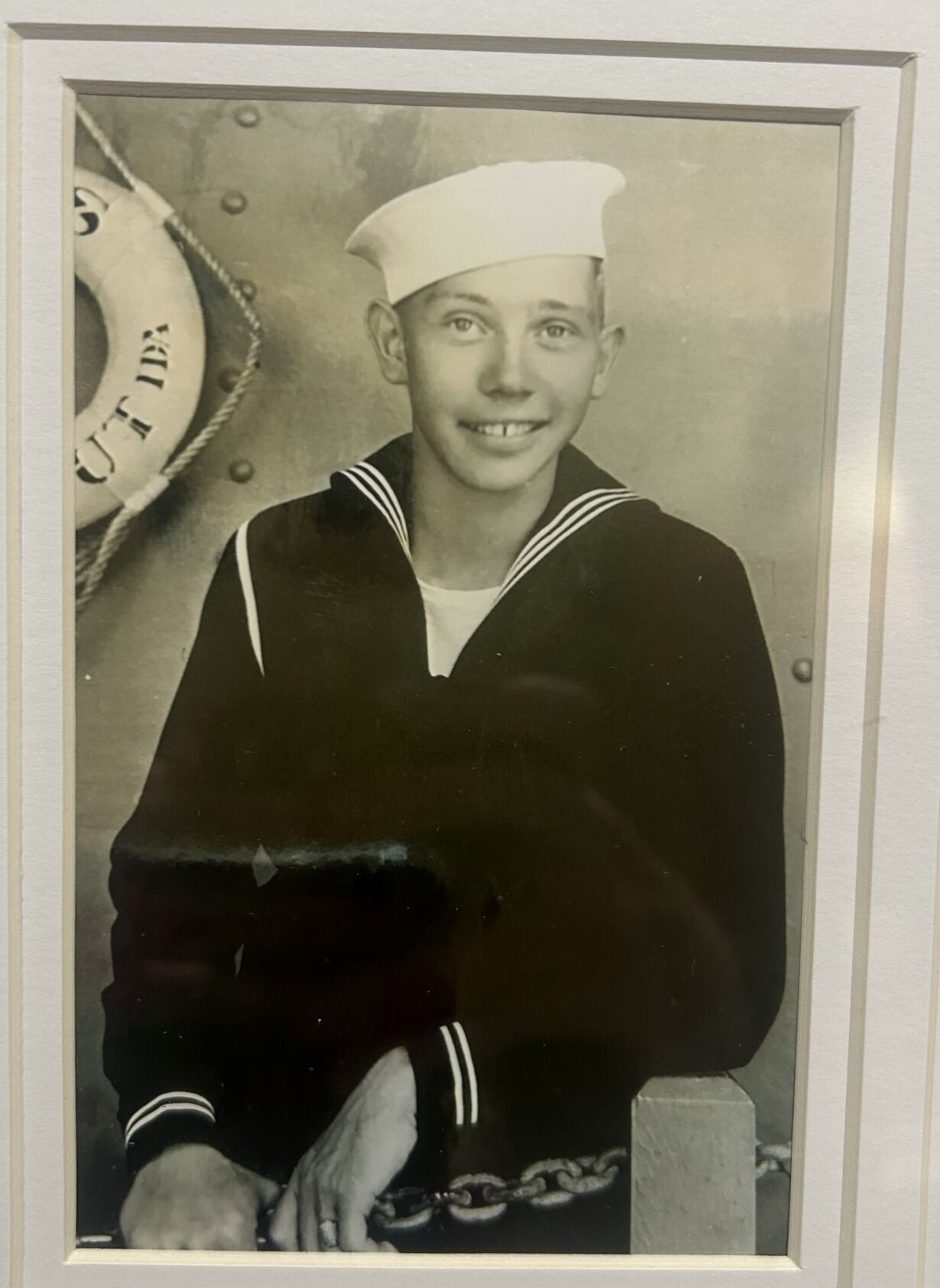
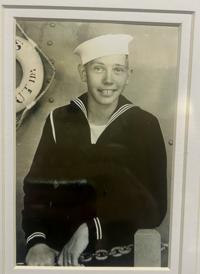
Young Wayne Raymond pictured while serving in the U.S. Navy during World War II
Raymond was raised in Pocatello primarily by his “Grandma Emmons” after his mother passed away when he was young.
After the devastating surprise attack that resulted in the deaths of over 2,400 Americans, Raymond enrolled in a military program for repairing planes at age 17.
“We were geared up, revving up for the war,” Raymond said. “I hadn’t graduated yet, but I wanted to get involved.”
He ended up in Colorado that summer repairing P-38 fighter aircraft. By the time December rolled around, Raymond and his step-brother, Eddie, enlisted in the Navy but were both turned down.
Raymond had a scar from a burst eardrum when he was 13 and Eddie had a heart murmur from a fever he had as a baby, which was all it took for both of them to be declined.
As a result, the pair went back to school, but were later drafted the following summer.
“We ended up in boot camp together,” Raymond said about his step-brother. “Our paths only crossed again once after boot camp.”
Raymond secured an opportunity to pursue school while enlisted. He remembers initially wanting to fly planes, but was persuaded otherwise.
“He asked me where I wanted to go,” Raymond said about a one-on-one review he had with a superior during boot camp. “I told him (I wanted to fly planes) and he said ‘Well, you and about half the guys in here want to do the same thing.’”
Raymond continued, "He told me ‘If you’ll accept something else other than aircraft, I’ll guarantee your school.’ I had to think about that a little bit.”
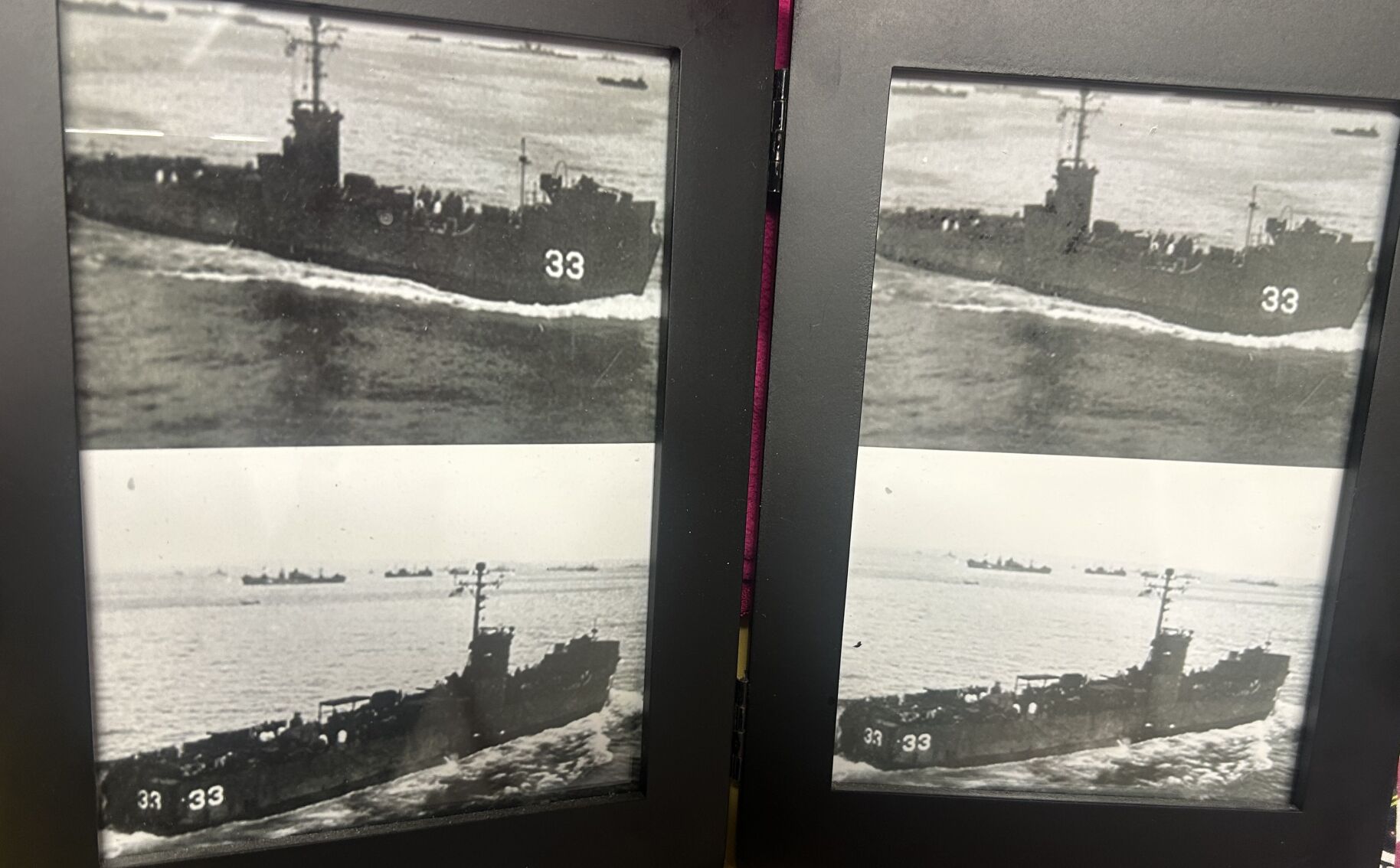
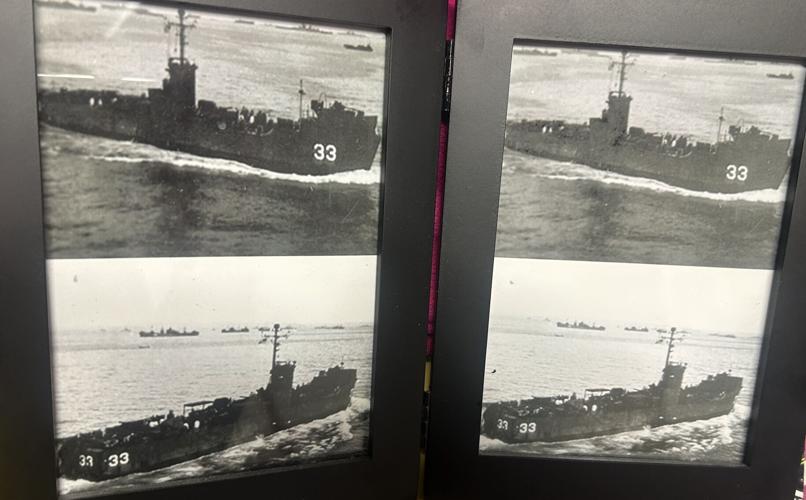
The LSM 33, the ship Wayne Raymond was stationed on during world War II.
Raymond was soon placed on the USS LSM-33, one of the Navy’s amphibious assault ships that took him to the Philippines and Japan.
“We helped General (Douglas) MacArthur take the Philippine Islands back from the Japanese,” Raymond said. “And then I was in Okinawa.”
Raymond didn’t see much action aboard the LSM 33, though he would occasionally see wounded soldiers.
“We never had any casualties on board,” Raymond said. “But we witnessed a number of those kamikaze attacks.”
He recalled his astonishment seeing Japanese aircraft fly into other ships — knowing that’s what Japanese soldiers were trained to do.
“I was discharged on Christmas Day 1945,” Raymond said about his two years of service in WWII. “In the Korean War, I enlisted back into the reserves and made one training trip to Pearl Harbor and back on a destroyer escort.”
By this time, Raymond had started his own family, the two oldest of his seven children witnessing him leave and return from Pearl Harbor.
Eddie died shortly after WW2 ended.
“He took part in Normandy,” Raymond said. “We were only home for about a year and he was killed in a car wreck.”
According to Kay Stacey, Raymond’s oldest daughter, Eddie’s death was especially difficult for Raymond.
“(He) loved having brothers and sisters and they all became very close, especially Eddie and my dad. ” Stacey said. “Eddie’s death was very devastating for my dad.”
Raymond says times have certainly changed since his upbringing, reminiscing on the time he paid only $25 for his first car.
“Three weeks of paychecks and I got some change back,” Raymond said about what it took to purchase the vehicle.
In his youth, Raymond worked with his father who was the maintenance man at a local laundromat.
“Laundry was big business before everybody had washers and dryers like they’ve got now,” Raymond said. “For the first year, I got paid $1 a day — $1 a day.”
Later on he received what he called a “big raise” to $1.50.
He recalls the first time he saw an electric door.
“Six weeks I was stationed in Chicago,” Raymond said. “That was the first time I ever saw an electric door that we all take for granted today…There weren’t very many in those days.”
Raymond says during the war the United States used to be just that — united.
“We had one thing in common, that was to win the war and all our efforts were toward that end,” Raymond said. “What we did was remarkable.”
Raymond says it doesn’t seem to be that way anymore.
“Now we’re so divided,” Raymond said. “We had a common cause, not a divided cause. It’s sad to see your country torn apart the way it is.”
In honor of his longevity, and to commemorate Memorial Day, a time to pay tribute to those who have passed while serving in the Armed Forces, Raymond and his family are decorating graves.
Raymond said he’s happy to have served and hopes his country’s future is bright.
“We don’t have to be that way,” Raymond said about the current state of America. “I’m glad I’m here.”

(1) comment
Thank you for your service, Wayne.
Welcome to the discussion.
Log In