



Trails slice through gold-canopied aspens and blister-red maples. Aid stations are packed with everything from waffles to peanut butter and jelly sandwiches to soups. There are 22,816 feet of climbing elevation, 100 miles to run, and 36 hours to do it.
Welcome to the Bear 100.
Later this month, 350 ultrarunners from across the world will test their endurance and resolve as they hit the scenic but challenging trails of the Bear Lake area to compete in the point-to-point 100-mile course that's been around for more than a quarter of a century.
On Sept. 26 at 6 a.m. sharp, these ultrarunners will start in Logan, Utah, and have until 6 p.m. the following day to complete the course and cross the finish line in Fish Haven, Idaho. In between, they'll crest peaks, pass through mountainous alpine areas and grassy valleys, run through the night with nothing but headlamps for light, and endure a feat that tests the human spirit.
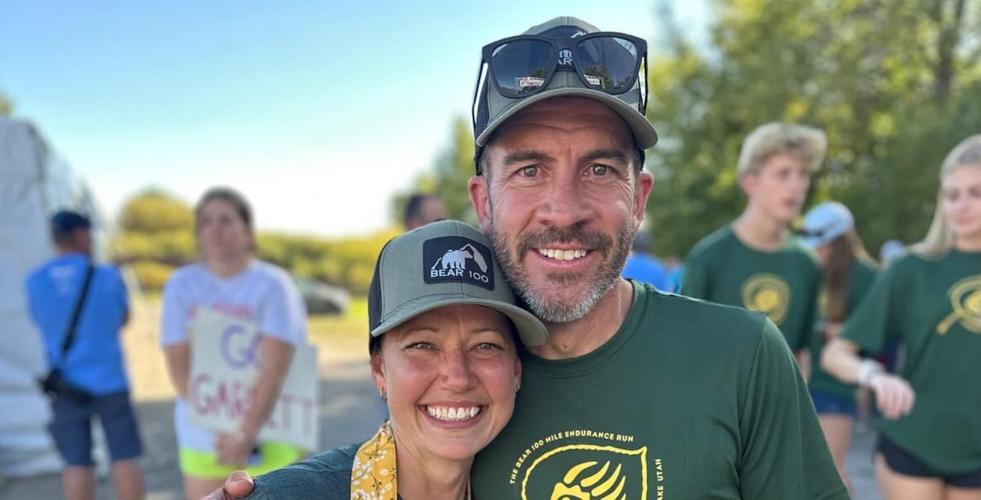
"They just keep going," said Bethany Draper, co-race director of the Bear 100 alongside her husband, Cody. "They stay on their feet as long as possible and then just collapse once they cross the finish line. It's really amazing."
The Drapers first got into trail running in the mid-2000s and it quickly became a passionate hobby for the pair, though neither thought they'd be knee-deep in managing a 100-miler when they first started lacing up their running shoes.
In 2012, Cody decided to give the Bear 100 a try.
"He just fell deeply in love with it and he's been back every single year," Bethany explained.
When the Bear 100's original race director Leland Barker decided to retire around 2021, the Drapers offered to take over.
"(Barker) was the one who originally started the race in 1999, I believe, with 30 runners," Bethany said. "It started really small and it was just people that loved being out in the wilderness and they're like, 'Why not? Let's run 100 miles.'"
Over the years, as the hobby of ultrarunning snowballed globally, the Bear 100 blossomed as well, and the Drapers fell in love with not just the running but also volunteering and spending time alongside the event organizers.
"When Leland decided it was time to retire, Cody stepped in and said 'I would love to take it,'" Bethany said. "So we got super lucky and we feel super privileged to have it."
Over the years, the Bear 100 has exploded in popularity, with runners flying in from countries like China, Germany and England to test themselves on the race's challenging terrain. It's grown so large that the 2025 race filled up within 10 minutes, and the waitlist is longer than the 350-runner cap. Next year, the Drapers plan to transition to a lottery system for registration.
While the race is full, the Bear 100 is still open to volunteers. Those interested in signing up can visit UltraSignup.com and search for the Bear 100.
"We consider it a huge privilege to connect with people from all walks of life, from all over the world, in testing their individual limits of endurance in these extremely rugged mountain conditions," Cody and Bethany Draper said in an email to the Bear Laker newspaper. "This race is more than an event. It is a community of passionate people creating a life-changing experience, volunteers and runners alike."

(0) comments
Welcome to the discussion.
Log In