



More people are seeking a chance to get outdoors today than a decade ago.
While the number of hunters is declining, a broader spectrum of individuals are visiting public lands. People heading outdoors are often seeking novel experiences rather than spending more hours at work. It’s now hard to hike any trail near an urban area or in a National Park without seeing dozens of other people.
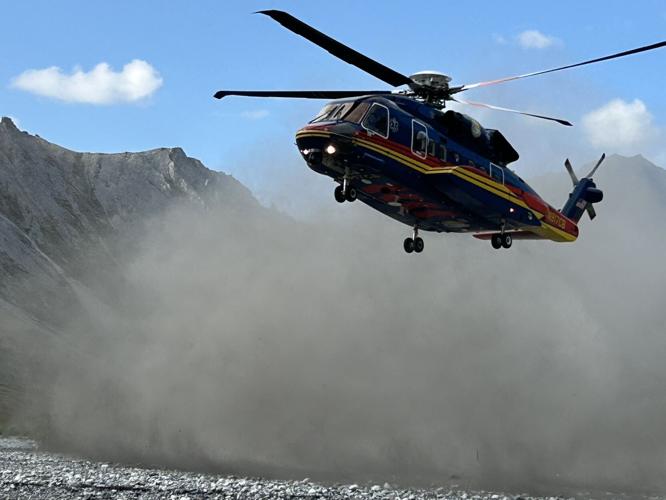
Unlike earlier generations who were more likely to have grown up hiking through the woods, many people heading to the mountains and deserts today have little experience, especially under challenging weather conditions. As a result, more people heading to the backwoods are having trouble getting out of them. The number of search and rescue efforts over the last decade, depending upon where you visit, has increased by 20 to over 100%.
The best way to ensure you don’t have to be rescued is to be prepared to spend some unplanned time in the woods after you leave the trailhead or car. Many hikers do not pay heed to this strategy. A recent study in Colorado found more than a quarter of the surveyed hikers did not carry extra water or food when they headed out for a day hike. Less than half of these hikers had a light source or the ability to start a fire.
Being prepared means that if the sun sets before you complete a hike, you can make it safely down the trail with a good head lamp. In situations where the land is steep or your path home is poorly marked, it’s having the ability to spend the night in the woods huddled around a fire in an extra layer of clothing.
Men and women who spend time outdoors must also plan for the possibility of a medical emergency. For most situations, it is helpful to carry a medical kit consisting of sunscreen, aspirin, painkillers, antihistamines, band-aids, scissors and wraps. While you may never need any more than a pain killer or a band-aid, carrying this gear provides the tools that can begin to address a more serious emergency.
The safest way to hunt, hike or backpack is to go with a companion. Having a friend allows you to divvy up the safety gear and provides redundancy when it comes to technology. It allows someone to help you if you become unconscious or provides a second opinion about which way to the parked car.
The best way to avoid getting lost is to have knowledge of an area. This can be gained on the ground and by studying maps. Possession of a Global Positioning System in the field is even more helpful if you have a general idea of where you are as it can point you towards easy exits from an area. Most smartphones have built in GPS and can access high resolution mapping applications. You need to be careful about relying on these devices as they can fail or run out of battery.
Historically, search and rescue efforts started after a person did not report home by a prearranged time. Over the last couple of decades, multiple additional ways have become available to report one’s location and condition. Satellite messenger devices such as Spot or Garmin inReach can be used to message family and friends, provide your location and reach out for emergency services. These are helpful devices but come with a monthly subscription cost. More cell phones are getting the capacity to text via satellite. The drawbacks with phones are you should understand how to use their capability before an emergency occurs. and they are less durable than satellite messenger systems. Both communication devices can help keep your family from worrying if conditions result in you spending more time in the woods than planned.
The decision to summon a search and rescue crew is an act tied to personal responsibility. It starts by reducing the chance you get lost or run short of resources before you leave your truck. By contrast, medical issues and accidents can happen regardless of how well you plan.
Signaling a need for assistance should reflect a true need rather than convenience. That means if you think someone’s life is endangered, reach out immediately. Don’t wait and hope things get better. On the other hand, in situations where you have food, water and health, greater effort should be made to get out of the back country on your own. A problem with search and rescue teams is that they’re a limited resource. If they are out looking for you, they may not have the bandwidth to search for someone else whose life may be at greater risk.

(0) comments
Welcome to the discussion.
Log In