

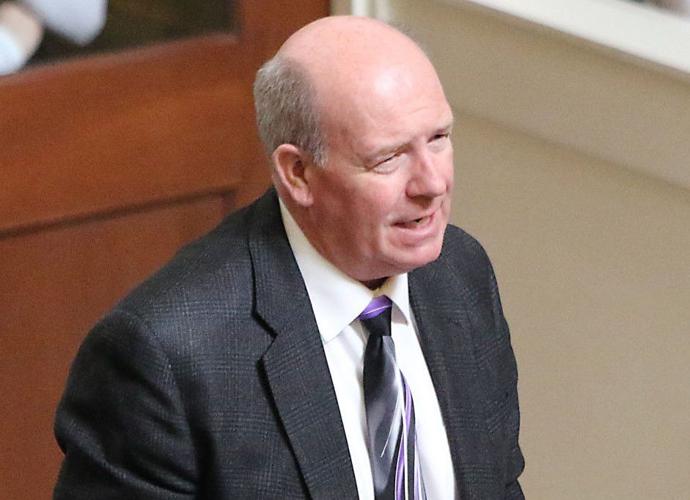
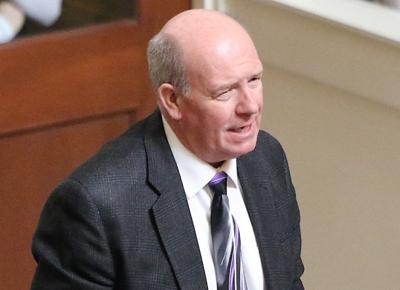
BOISE — House Majority Leader Mike Moyle’s latest bill aimed at limiting local government budgets in times of fast growth, with the aim of property tax relief, cleared the House tax committee Tuesday over the objections of Idaho cities and counties.
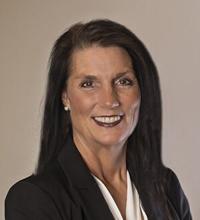
“We strongly oppose it,” Kelley Packer, executive director of the Association of Idaho Cities, said after the committee approved the bill on a party-line vote. “It’s just going to exacerbate the cities not having enough funds to meet their current service needs, let alone additional needs when there’s growth.”
The bill would tap part of the revenue sharing that local taxing districts, from cities and counties to highway or fire districts, now get from state sales tax revenue; that comes from an 11.5% share of part of the amount collected statewide. Moyle, R-Star, said because sales tax revenues currently are increasing by large amounts each year, HB 648 would order local governments to deduct half the increase they get in those funds each year from their base budget.
“I’m not trying to hurt them — it’s new money,” he said after the vote.
Packer said she tried to sign up to testify against the bill, but wasn’t called on to speak.
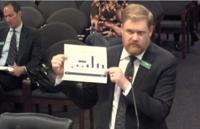
Idaho Association of Counties Executive Director Seth Grigg testified against the bill in the House Revenue and Taxation Committee on Tuesday, saying he believed it would actually do the opposite of what’s intended, by giving counties an incentive to increase their property tax collections each year by the full 3% that’s allowed.
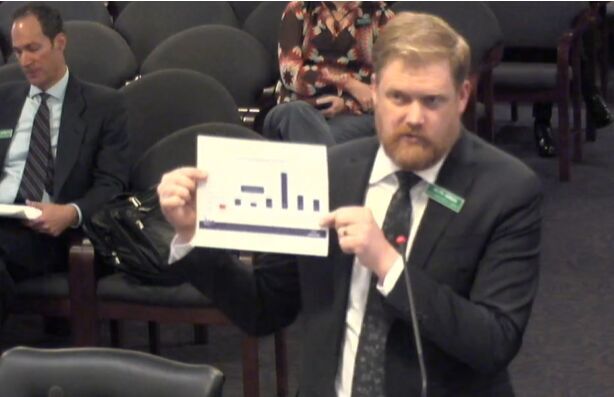
Seth Grigg, executive director of the Idaho Association of Counties, displays a chart to the House Revenue and Taxation Committee as he argues…
Grigg explained that many Idaho counties haven’t been taking that full 3%, in part because their revenue sharing funds have risen. “They’ve left property tax money on the table, they just have not budgeted it,” Grigg said, including both Canyon and Ada counties. “The reason for that is because of the revenue sharing that’s coming in. Now, if they’re instructed by statute to divert half of that revenue sharing to property tax relief and they’re already doing that, the effect of that for the counties will be to take the 3%.”
He said, “We empower local elected officials to make local decisions, and we have seen in many of our counties that they have chosen to do this on their own.”
Grigg also said the current big increases from year to year won’t last. “We’re dealing with unprecedented times right now,” he said, including big federal stimulus payments to Idahoans.
Moyle told the committee, “I want to make sure you understand, this only happens if the revenue exceeds what they got the year before.”
“It does take away some of their local control,” he said.
Grigg noted, “The way this bill is structured, it doesn’t matter if you’ve gone into a recession and there’s a decline in revenues.” Counties or cities still would lose half the gain each year as the economy recovered, even if they’re still below where they started before the recession.
Rep. Lauren Necochea, D-Boise, said, “I have some serious concerns about this. … When the revenue sharing goes up, that’s in part because of inflation and population growth. And then our local taxing districts have to deal with inflation and population growth as they provide services. I think this is kind of a sledgehammer approach to their budgets.”
“I think we can trust them to make those critical budget decisions locally,” she said, “and what I don’t want to do is sit here in Boise and force service cuts on local taxing districts when I don’t have adequate information.”
She added, “It only goes in one direction. It just cuts and cuts and cuts your budget capacity, and I think that’s really risky. I’d rather let local government entities make these decisions.”
Two GOP committee members, Reps. Linda Hartgen, R-Twin Falls, and Dustin Manwaring, R-Pocatello, said they also were concerned about how the bill would impact local control and its long-term implications, and said they’d support advancing the bill but reserve their right to change their votes in the full House.
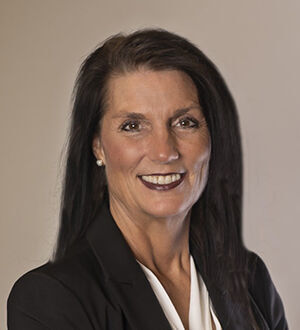
Kelly Packer
Packer said growth is currently posing huge problems for small Idaho cities that can’t keep up with the increased cost of providing services, given current budget limits, including those enacted by the Legislature last year in HB 389, which Moyle sponsored. She said one small city, Notus, is currently weighing whether to turn its city streets back to gravel because it can’t afford to maintain the pavement.
“So often, legislators make statewide policy based on these large urban areas,” Packer said, creating big problems for Idaho’s many small cities.
To become law, HB 648 still would need to pass the full House, clear a Senate committee, pass the full Senate and receive the governor’s signature.


(0) comments
Welcome to the discussion.
Log In