

This is the third and last installment on the top 25 most common feeder birds in Idaho last winter according to Project FeederWatch (feederwatch.org).
No. 20 was Cooper’s hawk. This is the first species on our list not coming to feeders for peanuts and sunflower seeds. They’ve made a living in winter by crashing the suet-and-millet party. Coops were rare in the top 25 in the old days, but I believe they are on the list to stay now. They’ve succeeded not only in winter but year-round. Check my column of Feb. 17, 2021 (Bird Who Eat Birds) for more on this terrific raptor.
Curiously, the species right behind Cooper’s hawk last winter was its cousin, the sharp-shinned hawk. But their patterns of abundance are quite different. While the former is relatively new to the top 25 list, the sharpy has been on it all along. They’ve been as high as rank No. 16 in five past winters. But they have a clear downward trend. The rank of 21 is the lowest they’ve been since the winter of 2007-2008. It seems likely Cooper’s hawks will eat their smaller relative, and they almost certainly intimidate and displace them. So, their population trends might be related.
We leave the raptors behind for No. 22 – the California quail. This was the lowest ranking our most common quail has shown. They’ve been pretty stable over the years, averaging around No. 16. Wildlife management textbooks will tell you the biggest enemies of quail in general are snowy winters, when they can’t get to food on the ground, and wet springs after the young have hatched and are vulnerable to hypothermia. Due to our recent stretch of warm winters, I would have expected quail to be doing better.
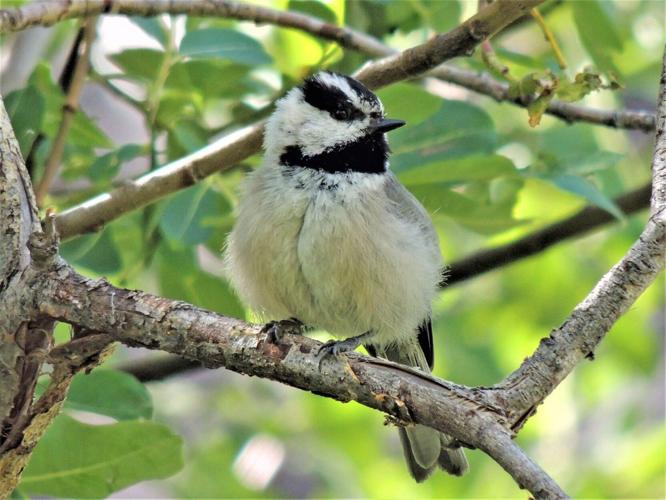
The mountain chickadee was next at No. 23. This is another montane species that has varied quite a bit over the years, being as common as ninth in the winter of 2015-2016. It’s interesting that both dark-eyed juncos and white-crowned sparrows readily bale out of the high elevations in winter while this chickadee is happy to stay put. They don’t forage on the ground like juncos and sparrows, so six feet of snow means little to them. They survive by endlessly gleaning vegetation for a variety of small insects and spiders, as well as some seeds and fruits still clinging to the flower heads. Despite deep snow, most of the forest is still available to them.
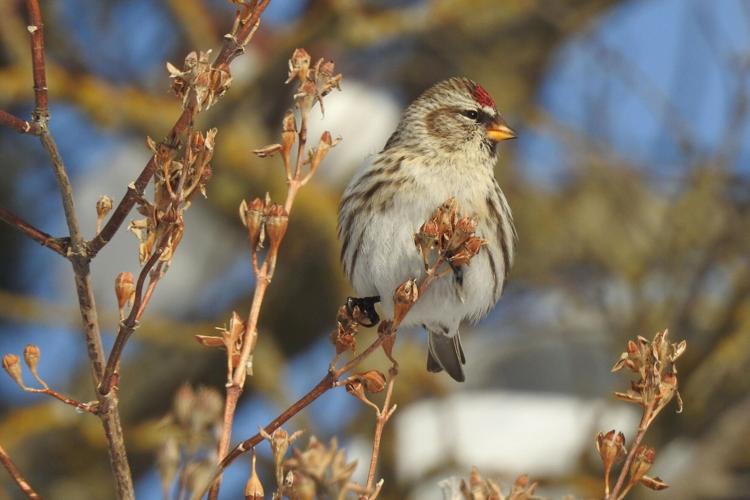
Our next-to-last species is another one that is much more common elsewhere in Idaho. Yet the common redpoll is pretty uncommon altogether, appearing on this list only twice before. I have seen feeders in Colorado absolutely bombed by redpolls, so I know they can be common. Like goldfinches and siskins, they love thistle seeds. Although they look like they could be in the same genus (Spinus), they are actually in Acanthis, which holds just the three species of redpolls – common, hoary and lesser. Watch for the common and hoary redpolls to be combined into a single species in the future.
The last species was the common crow. Crows have never been very common in FeederWatch counts in any winter and don’t even make the list some years. This species seems well adapted to urban environments, but something keeps them from becoming common.
Now that we’ve covered Idaho’s top 25 feeder birds last winter, it’s fun to look around the region and see what other species are showing up just over our borders. FeederWatch not only reports the top species for each state, but also for each of six regions in the U.S. and Canada. We fall into the Northwest Region, which also includes Oregon, Washington, Montana, Wyoming, British Colombia, and Alberta.
This region is incredibly heterogeneous. It includes the massive, wet coniferous forests of the north Pacific coast and the arid grasslands of the western Great Plains. Idaho itself is pretty varied, and this region just expands on that. I would point out again the data in FeederWatch depends on where people are watching. Consider the difference in population between Laramie and Seattle. Chances are, those coastal bird feeders and their bird feeders will tilt the species counts towards species in that area.
So, let’s look at species in the top 25 list in the region, but which did not appear on the Idaho list last winter.
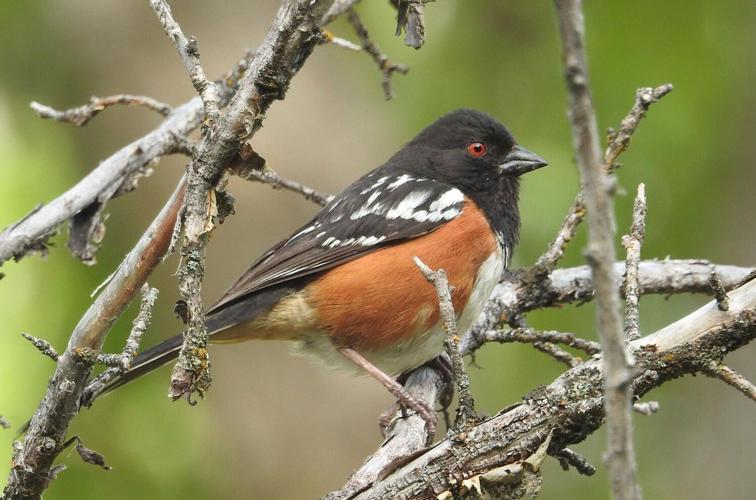
At No. 10 was the spotted towhee. I really, really wish we had more of these birds around here. They are simply beautiful. If you want to see exactly where all these towhees were, you can go to eBird and check the Species Map for December through December. That will show sightings for just that month. The resulting map shows massive numbers of towhees all through western Oregon and Washington, extending to just a bit north of Vancouver, B.C. Like song sparrows, they prefer to feed on the ground. So, don’t mind all those sunflower seeds getting kicked out of your feeders by house finches!
In the next spot was Anna’s hummingbird. It’s no secret this species isn’t on the list because of Wyoming and Montana. Their preferred habitat in winter overlaps that of the spotted towhee. In fact, you’d be hard pressed to distinguish between the eBird towhee map, just described, and the one for Anna’s. Of course, we’re now talking hummingbird feeders, not seed feeders.
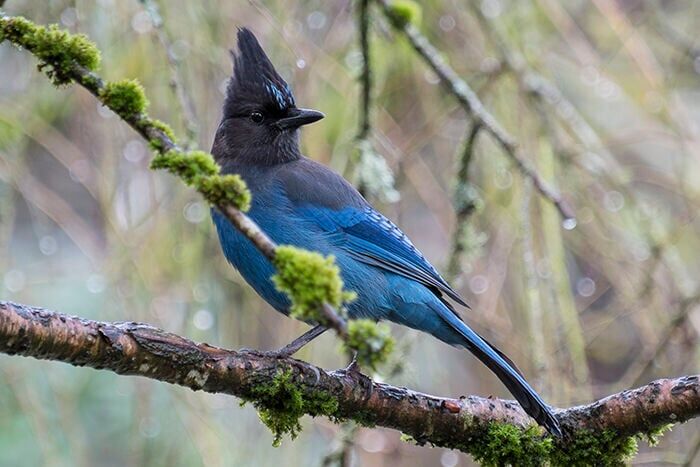
Next up was Steller’s jay at No. 12 in the Northwest Region. This jay is more common along the Rocky Mountains in December than are spotted towhees or Anna’s hummingbirds. But like the last two species, they are really common in western Oregon and Washington.
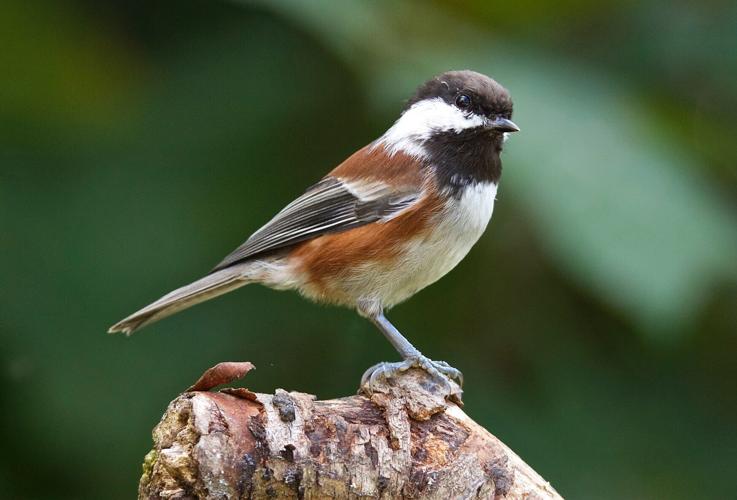
The rest of the species tell the same story: chestnut-backed chickadee (No. 13), bushtit (No. 19), varied thrush (No. 20), golden-crowned sparrow (No. 21), hairy woodpecker (No. 22), and fox sparrow (No. 24). For all of these species, that part of the region simply has a lot more of their preferred habitats than does Idaho, Montana, or Wyoming.
But still, you have to wonder if there were the same number of people along the east side of the Rockies in Montana and Wyoming as there are along the west coast of Oregon and Washington, would some other species show up in the top 25? Despite the obvious habitat influences we’ve looked at so far, we still have to consider the effect of how many people are counting.
We can take a look at this possibility by simply looking at the top 25 lists from Montana and Wyoming. In Montana, some species that don’t show up in Idaho at the same level of commonness include blue jay, white-breasted nuthatch, and Clark’s nutcracker. In Wyoming, we pick up gray-crowned rosy-finch, blue jay, wild turkey, white-breasted nuthatch, and common grackle.
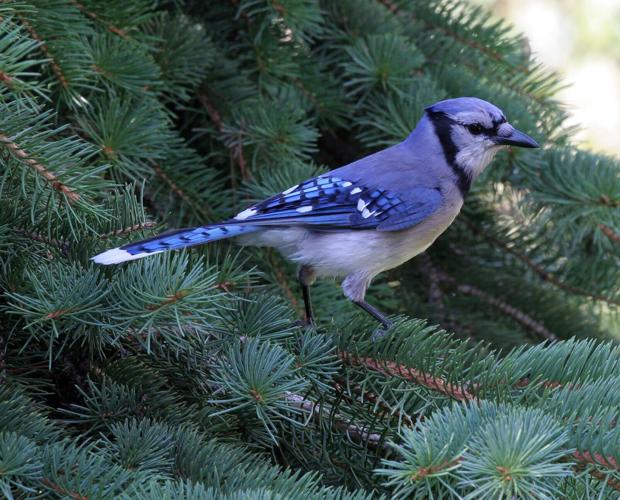
Blue jay? This is an interesting one. They are scattered all over our region in December, but of course in nowhere near the numbers we see over the bulk of their range in eastern North America. West of the Great Plains, Birds of the World classifies them as “scarce” during the non-breeding season. In Wyoming, they’ve varied from 12th to 25th over the last decade. In Montana, they are less common than that.
My wife and I just spent several days along the Kickapoo River in western Wisconsin to catch the spectacular fall color in the hill country of the region. Blue jays were by far the most common species, routinely appearing in towns and out in the country basically everywhere we went. They seem super well pre-adapted for range expansion. Keep an eye on blue jays in Idaho over future years.
You can reach Terry at terryrichbrd@gmail.com.



(0) comments
Welcome to the discussion.
Log In