

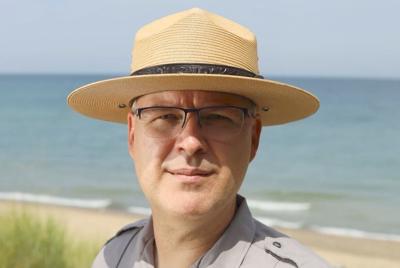

Jason Taylor, who has served as acting superintendent of the North Cascades National Park Service Complex since May, will take on the role permanently later this month.
He has taken on the position at a time when the park is still recovering from December 2025 flooding, working through a Skagit River dam relicensing agreement and experiencing increasing visitation numbers.
Taylor, who began his career at the U.S. Bureau of Land Management, has spent about 20 years working for the federal government in public lands management.
He previously served as superintendent of Klondike Gold Rush National Historical Park in Skagway, Alaska, and as superintendent of Indiana Dunes National Park.
“Across all parks, there’s one National Park mission. Whether you’re in Indiana or you’re in Washington, we all wear the green and gray, we all have an arrowhead on our sleeve,” Taylor said. “We are serving one mission to protect these treasures and share them with the American public.”
He earned a bachelor’s degree in biology from the University of Michigan-Flint, and a doctorate and master’s degree in natural resources and environment from the University of Michigan.
The mountains were one of the draws of taking the job in the North Cascades.
Taylor said returning to them felt like “coming back home,” citing John Muir’s line that “the mountains are calling and I must go” as deeply resonant.
Taylor had visited the North Cascades National Park once before for wilderness stewardship training, and said the park struck him as “stunning.”
“It’s welcoming and kind of raw and powerful at the same time,” Taylor said. “In some ways terrifying, but in all ways beautiful. I think about it as a place you feel as much as you see.”
Taylor sees the park’s increasing visitation numbers as both its biggest challenge and biggest opportunity. The numbers are increasing, and the visiting season is starting earlier and ending later.
“We want people enjoying the parks, but it is a challenge,” Taylor said. “Trying to be responsible stewards of a park with ever-growing visitation is something we’re continuously learning from.”
Two immediate priorities are recovery from the Stehekin floods and fish passage work tied to the relicensing of the Skagit River dams.
A December 2025 atmospheric river caused the Stehekin River’s second largest flood on record. A levee failure washed out a road and wastewater treatment plant, and recovery is ongoing.
Three dams along the Skagit River are operated by Seattle City Light, whose license expired in 2025 after 30 years.
After years of negotiations with tribes and state, federal and county agencies, Seattle City Light signed a settlement earlier this year committing almost $1 billion to fish passage and $200 million to habitat restoration and water quality monitoring as part of new 50-year license expected to be issued in about 2030.
“Outside of specific projects, I’m new, so it’s a big priority for me just to learn,” Taylor said.
He said much of his first year will go toward building relationships with tribes, gateway communities and park staff, and getting out into the park rather than working from behind a desk.
Taylor said he’s already learned plenty about what makes the park worth protecting.
“There are 300 glaciers, jagged mountains, alpine meadows, great ancient trees, five species of salmon and 10,000 years of human habitation,” Taylor said. “It’s just wonder filled. It’s an amazing place. Those are some of the things I’ve learned so far, and there’s a lot more to learn.”

(0) comments
Welcome to the discussion.
Log In