



About this time every year, I start to watch the weekly weather forecast with a keen eye on the temperature. Sometimes, it happens faster than others, but it’s usually about now when Mother Nature strings together a few 70-degree days.
Two is good. Three is excellent. More than that, and it’s go-time.
For some, a series of warm, sunny spring days might mean it’s time to start combing the cottonwood forests for morels. Or maybe, for turkey hunters, these bluebird days that stack together, one after the other, is a sign that the toms will be especially jittery and on the prowl.
For me, it’s all about the carp.
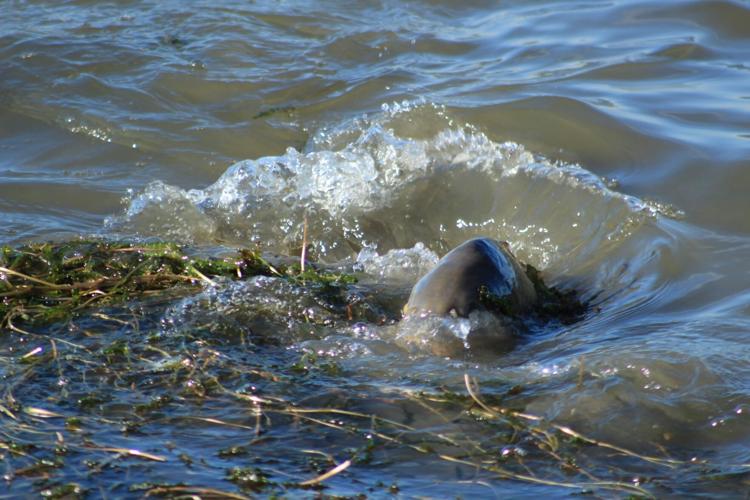
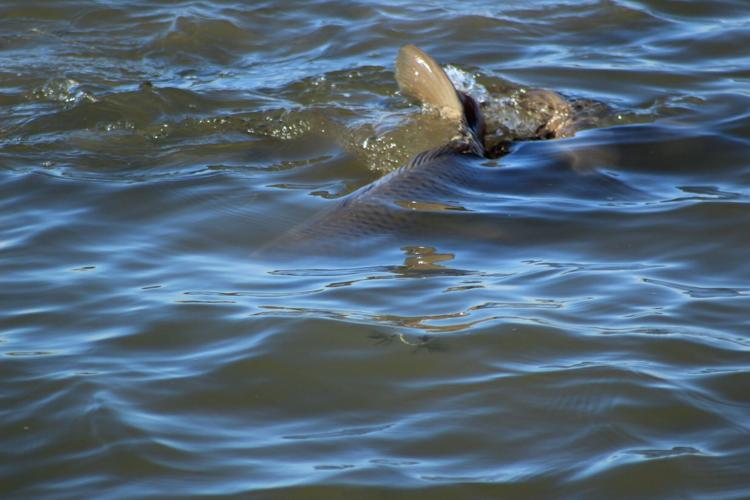
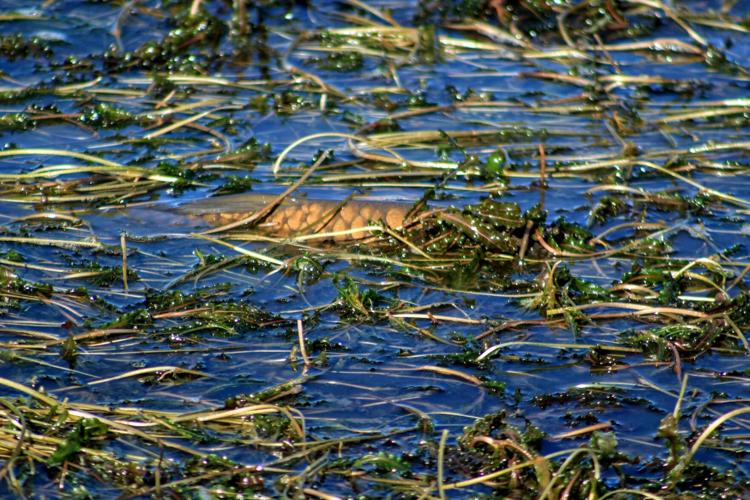
When the warm April sun hits the shallow bays and froggy flats of the storied Snake River between American Falls and Grandview, the river’s rangy carp migrate from the depths, where they’ve laid dormant over the winter. They feast. They frolic. And, in time, they’ll engage in one of nature’s most impressive reproductive efforts — the carp spawn is viewed by many, myself included, with sickening fascination.
It’s a broadcast event where big, egg-laden females squirt out thousands of sticky, gelatinous globes, and where smaller males blindly spill milt in the wake of the big “egg-splosion.” It’s hard not to appreciate the random efficiency of it all. But when the fish turn perfectly clear water the color of glacial runoff, it’s also easy to see why these fish can seem so repugnant.
The big, exotic “trash” fish have forever altered the western waterscape, and there’s likely no truly effective way to remove them from the equation. So, some 20 years ago, I hopped aboard the carp bandwagon. If you can’t beat ‘em, join ‘em.
For anglers, the annual carp migration means these notoriously challenging fish are within reach of a fly cast. And, with high-country trout streams still locked in snow and ice, and western reservoirs on the verge of “turning over” for the season, carp provide a very unique angling opportunity.
But, to best take advantage of it, the average angler needs to know a few things. Here are five tips to help convert the untainted fly fisher into a carp aficionado. Because, once you catch one, you’ll never be quite the same.
The castIf you can cast a fly 40 feet, you can catch carp. But if you can double-haul and throw 80 feet of fly line into the springtime wind of the Snake River Plain, you can be a carp hero.
This fact was just reinforced to me, as I stood with the tropical wind at my back on a permit flat just off the coast of Roatan. As I spent my days potting, stalking, and casting long lines to permit, I remember thinking to myself, “This will get me ready for carp season back home.”
Twisted, right? Who on earth would consider the wily permit a warm-up act for chasing barbel-mouthed omnivores on a blustery desert day in southern Idaho?
If you’ve caught carp before, this is where you sheepishly raise your hand.
Take some time and practice your carp cast. Go to the local park and hope for some wind. Let out some line and punch it. The more distance you can get, the more carp you’ll be able to reach. Simple as that.
Know the food baseWhere I fish on the Snake River, the carpy diet is pretty diverse. From cottonwood seed pods to damselfly nymphs, the river’s carp have lots of choices. But, as the weather warms, the Snake’s ample population of crayfish becomes more active, and this is the preferred prey from about late April all the way into June some years.
Knowing that, I’ll add some wiggly rubber legs to a brown or olive Woolly Bugger, and I may not change flies all season. But early in the season, just as the fish are starting to show up on the backwaters, an olive swimming damsel nymph is a good go-to fly. For the impressionistic fly tyers out there, consider a size 10 Stayner Ducktail, particularly if you’re fishing close to cattails or other in-water vegetation.
Regardless, put some time into your potential carp destination. On some western impoundments, as the big fish move into the shallows, they’ll target whatever is most readily available. Put in some time and do the research. Then, offer the fish what they’re after.
Be patientSome days, I’ll show up to my favorite “carp flat” and I’ll be there all by myself. On seemingly perfect spring days, the fish just don’t show up.
Here in eastern Idaho, there’s a dedicated group of dirtbag carp cultists, and, when the weather triggers whatever it is deep within our psyches that says, “Hey, dummy, it’s time to go fishing,” we’ll often gather in a few prime locations. Some days, when we arrive and the fish are there, it’s a celebratory event. On others, when the fish don’t seem to be around, we wait.
Some of us wait longer than others. And those who wait the longest are usually rewarded. Years ago, when I had a full-time gig with a local newspaper and a family at home that required my presence on occasion, I’d have to bug out early. Invariably, I’d get a call or a text from the retiree or the buddy who actually took a vacation day to chase carp, and it would generally read
something like this: “Should have stayed. Carp showed up an hour after you left and my arms are so tired I can barely hold this phone to text you.”
These days, I’ve gamed the system. I’ll take my fully loaded camper down to the carp flat and park it. With a zippy, 5G cell signal and a generator, I can work from the dining room table of the RV and, when the carp show up, I’m there.
The lesson, even when the fish are primed for a spring crawfish feast and a good, old-fashioned piscine love session, they’re unpredictable. Do whatever you have to do to be there when they show up.
Be a flats fisherThe first time I ever chased bonefish, some 15 years ago on the flats of Long Island in the Bahamas, I was out of my comfort zone. I didn’t have the first clue what I was doing on the flats, and it showed. But, I was told, I did possess one skill set that first-time flats anglers often lacked.
I was stealthy. And I learned how to be stealthy on the “flats” of the Snake River.
As one guide explained to me, if you can hear yourself walking and moving water when you wade the flats, you’re being too loud. It’s good advice for wading carp anglers. Stealth is paramount. Eventually, you’ll be spotted by a cruising carp, and it will freak out and zip across the shallows, taking every fish with it on a short-lived, panicky run. There’s no avoiding it.
Unless you’re deathly still and very quiet. Even then, as the big cyprinids approach, there’s a chance you’ll be spotted. But, by standing still and moving very slowly, you’ll lessen the likelihood that you’ll be seen before you have a chance to put a fly in front of a few fish.
Respect the fishThis is a tough one for some of my carp-fishing buddies, and I completely understand. For years, I detested the notion that the carp were in the river at all, and I was guilty of knocking them on the head and leaving them high and dry on the bank for the coyotes or the raccoons.
In time, though, I realized two things:
First, my zealous personal attempt at eliminating carp from the Snake River system was futile. Heck, we could all go out to the river and catch and kill 100 carp and nobody would notice. Carp, where they are successful, likely make up the largest percentage of the biomass in any given body of water and killing a few here and there is just that. There’s very little conservation benefit and there’s probably not much that’s “noble” about unnecessarily taking a life.
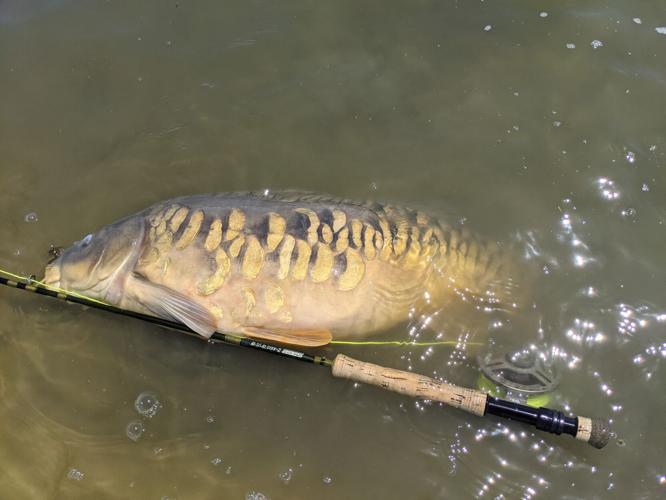
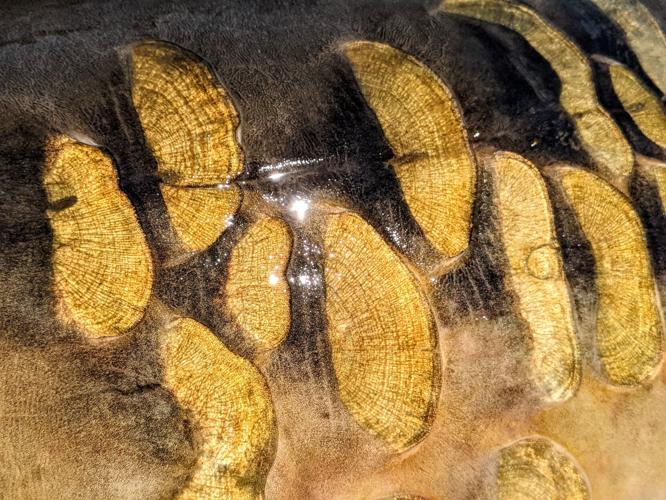
Second, I came to admire the fish. In time, I came to find the fish to be quite beautiful. In the Snake, common carp and mirror carp swim side by side — and I’m quite certain, in the obnoxious rush to spill eggs and milt every spring, the two fish share their genetics. Having
caught hundreds of common carp over the years, I’ve come to recognize their perfection. Their broad and muscular frames are perfectly suited to the lives they lead, and the flawlessly bronze and impenetrable scales give them an almost robotic appeal, not unlike the heralded tarpon, the silver king of the flats.
Certainly, carp are not tarpon, but I’ve watched daisy chains of cruising carp behave very similarly to the heralded game fish. And, pound-for-pound, I might put carp ahead of tarpon when it comes to sheer, raw fighting power.
And mirror carp? With their glimmering, random, misshapen scale patterns? Call me silly, but I find them absolutely stunning. Add in their resilience and the ability to tolerate all kinds of environmental stressors, and I dare say that carp might be the perfect fish.
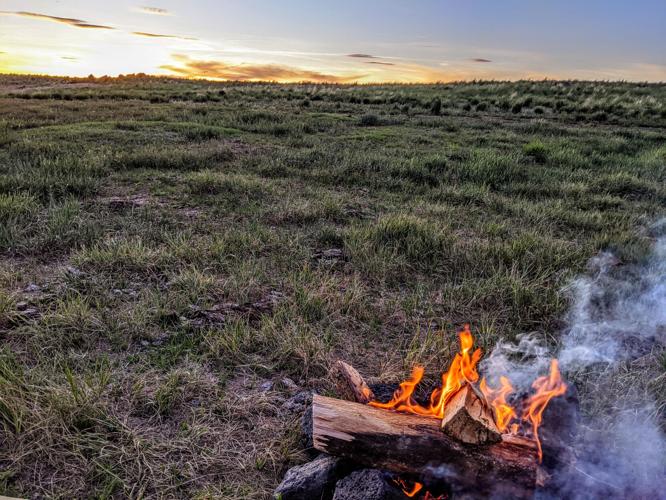
Final thoughtsIt’s OK if carp aren’t for you. I’m fine being the only guy I know who’ll spend a week in a camper, parked in the sage of the desert, just so I can chase these incredible fish for a few hours every day. I’m good sitting in my camp chair around a small cow-dung campfire, singing with the coyotes as I rub the sting out of sore shoulders and flex my tired forearms and wrists.
But if you’re carp-curious, or, for some reason, you’ve stayed away for a while as other commitments have taken precedence, there’s always room on the carp flat, and there’s room for another camp chair around the fire.
Just make sure you know what you’re in for, and that you come prepared to do battle with the strongest fish in the river. Bring a stout 8-weight that can cast into the wind, and bring a healthy dose of fishing optimism.
Carp isn’t for the faint of heart… for the angling dilettante. Come committed, or don’t bother. At the very least, the fish deserve that.

(0) comments
Welcome to the discussion.
Log In