



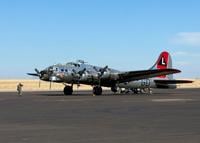


In the spring of 1945, the Boeing B-17 Flying Fortress that would become the “Yankee Lady” was delivered to the U.S. Army Air Corps just as World War II was coming to an end.
The aircraft would never see combat action but would be used by the United States Coast Guard in various capacities for over a decade. From the early 1960’s until the mid 1980’s, Yankee Lady was under private ownership where it performed aerial surveys and was used as a tanker to apply pesticides on crops and trees. The craft was even used to fight forest fighters in places like Idaho, Oregon and Arizona.
Around 1986, the B-17 would make its way to the Yankee Air Museum, also known as the Michigan Flight Museum, where it remained until this year.
Grant Schwartz, a volunteer at the Michigan Flight Museum for almost 40 years who has played an integral part in the plane’s restoration and has been flying the B-17 since 1995, reflected on the Yankee Lady’s legacy after it touched down at Pocatello Regional Airport earlier this week.
“(During 1986) a whole bunch of volunteers started undertaking cleaning the airplane, breaking down the various components and starting the restoration effort,” Schwartz said. “It was a nine-year effort. We completely went through the airframe for mechanical airworthiness defects. The airplane was very dirty and needed a lot of cleaning and painting. On the inside, every inch of wire was taken out of the airplane and completely rewired to the original factory wiring diagrams and that really brought it back to life and it made air worthy.”
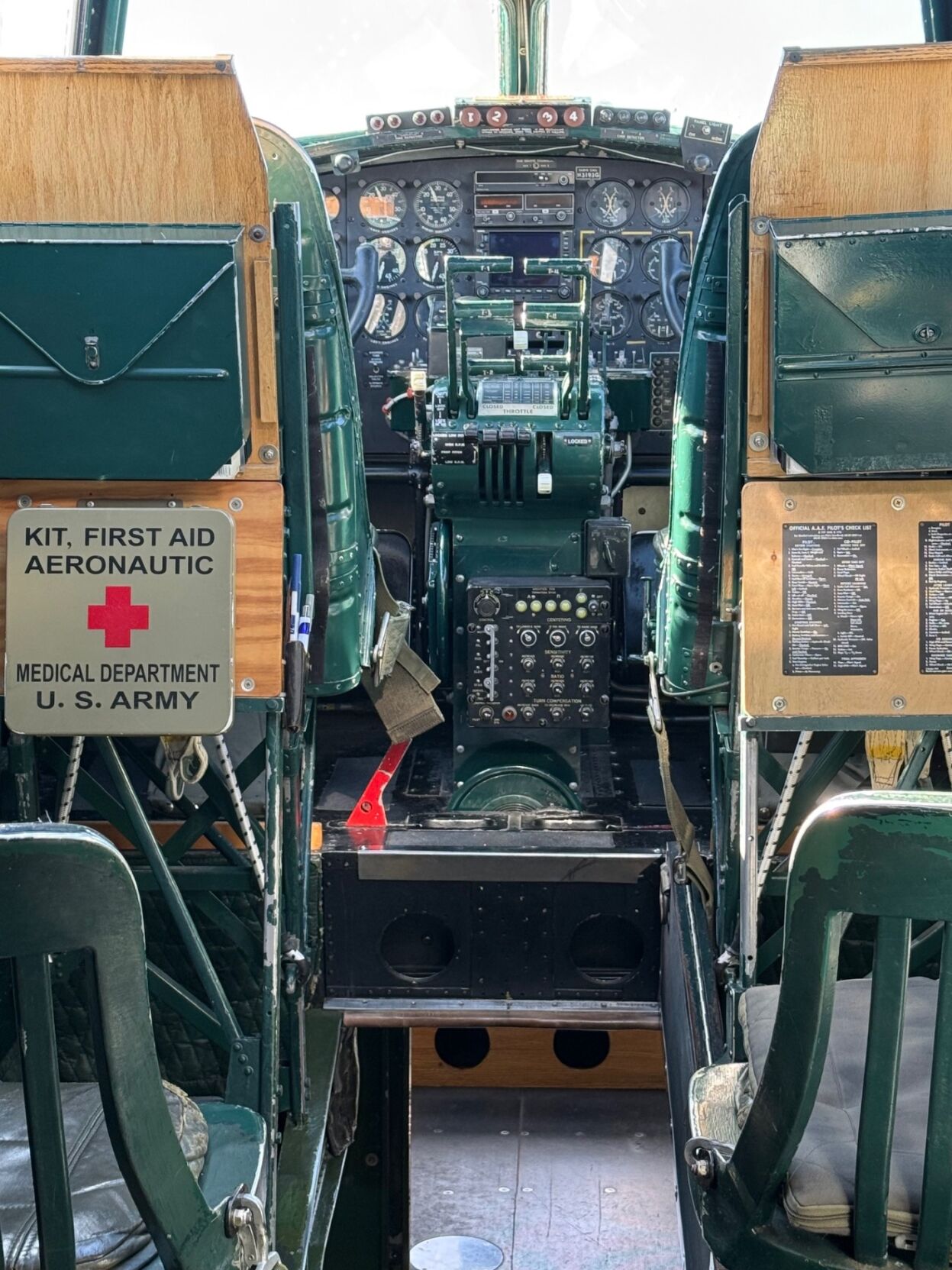
The cockpit of the B-17 “Yankee Lady” that touched down at Pocatello Regional Airport earlier this week.
Before his time with the museum, Schwartz was a professional pilot for a living with little exposure to vintage airplanes. Thanks to an alignment that saw him volunteering just as the B-17 had arrived, he joined the museum crew using his expertise in mechanics and interest in restoration.
“A year later, I was invited to start flying the museum’s C-47 which is the military equivalent of the civilian (Douglas) DC-3, which they were flying already at that point,” Schwartz said. “I got involved in flying that. Later on, when we acquired a B-25 I was involved with that. But throughout all this time period, I was heavily involved in restoration work on the B-17.”
Schwartz continued, “When we started flying nine years after the restoration began, I was one of the first pilots and the only surviving pilot of the original crew that grew to fly the airplane and continue to do so, off and on over the years. To this day, I was current in both the B-17 and the C-47 aircraft, which I now function as the chief pilot for.”

The B-17 “Yankee Lady” pictured at the Pocatello Regional Airport earlier this week.
Over the last two years, the airplane management at the Michigan Flight Museum decided that the airplane was going to become an increasingly costly financial burden, which was the catalyst that drove the sale of the plane to a private collector.
“Something transpired going back as far as last winter and the volunteers, crew and members of the museum became aware of the fact that they had signed a sales contract on the airplane,” Schwartz said. “We became aware of this in the spring of this year and it took a while to get to consummate the sale as we needed to finish a few maintenance tasks.”
One of those tasks was a propeller that was out for inspection that took months to get back to the museum. Once they secured its return, the maintenance staff signed off on the Federal Aviation Administration required inspection of the plane and could move forward with the transaction.
“At that point, the airplane met one of the requirements of the sales contract and the sale was completed,” Schwartz said. “A crew of five of the volunteers, consisting of three pilots who are also licensed mechanics, myself being one of them and two other high experienced restoration maintenance volunteers — were in the process of delivering the airplane to the location the new owner had asked it to be delivered to. (We travelled over) the course of four days and 14 hours of flying, including a pass through in Pocatello that just happened to be convenient along the path between Michigan and where we were asked to deliver the airplane in Madras, Oregon.”
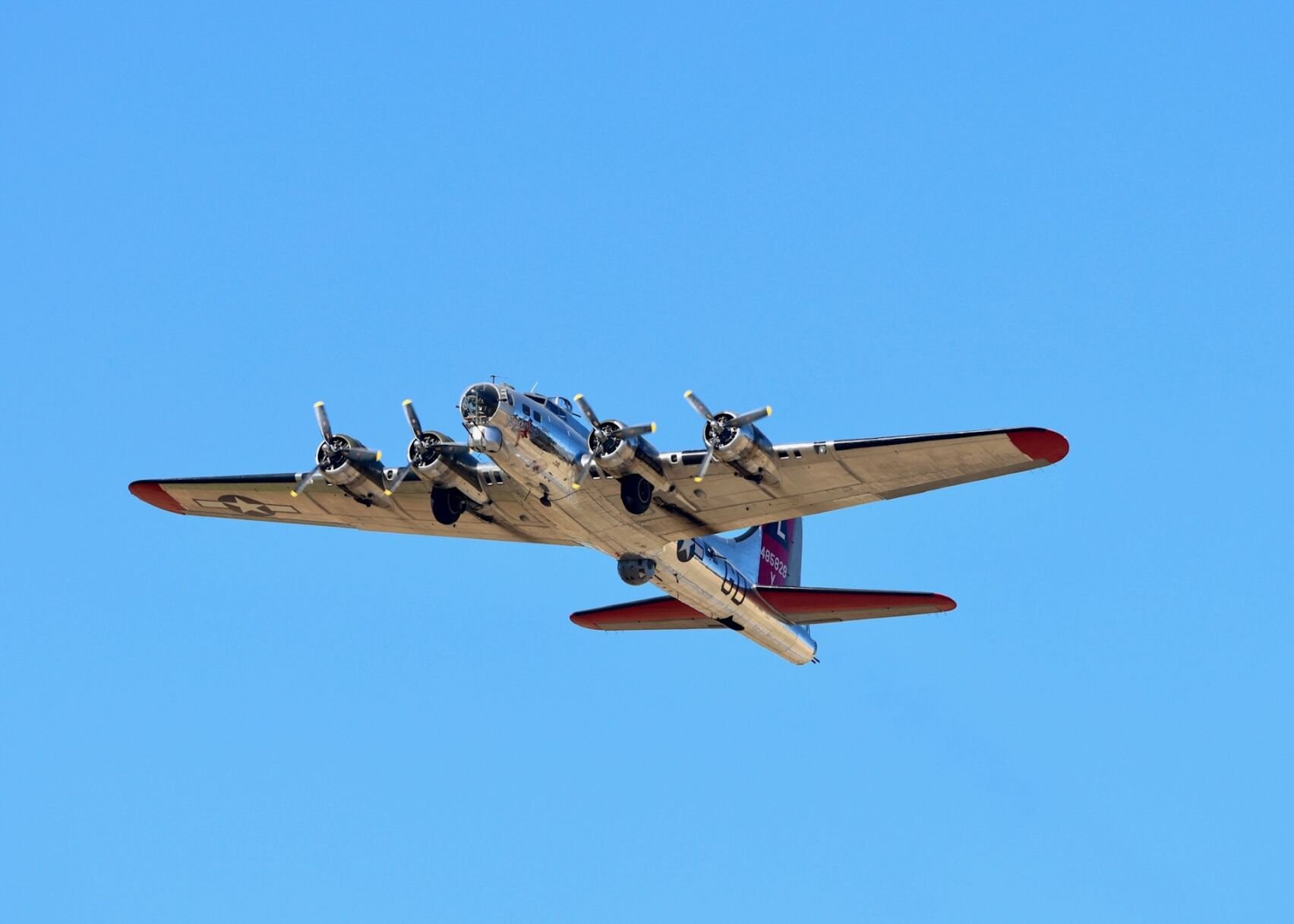
The B-17 “Yankee Lady” takes flight after touching down at Pocatello Regional Airport earlier this week.
A lifetime with this special Yankee Lady certainly didn’t make its final delivery any easier. Schwartz spent decades of hours restoring it to its former glory and grew a personal connection many pilots won’t ever get to experience by flying the iconic bomber over the grand vistas of the United States. This parting goodbye may be the last time the Yankee Lady takes flight for years.
“This whole thing has been very bittersweet,” Schwartz said. “We had a wonderful flight out across the country to Oregon and got to experience something that a lot of people never get to see. We flew over all the mountain west terrain at a fairly low altitude, because we had an airplane where it was safe to do that, having four engines on it. We just got to see some incredible stuff. But on the other hand, I said to my other members of the crew yesterday as we’re en route on the airline, coming back home to Michigan from Oregon, that I kind of feel like a pallbearer coming back home from church right now. Because 38 years to be involved in one airplane is a long time. Basically, handing it off to new people and knowing that you’re never going to have a lot of direct involvement with it again.”
Schwartz continued, “It’s a lot of commitment, dedication and involvement with these airplanes my entire adult life. (There’s been) a lot of friends over the years and a lot of mentors that have since passed on. It’s been a very emotional time now, letting go of this airplane, not just for me, but for hundreds of other people involved at the museum.”

(0) comments
Welcome to the discussion.
Log In