

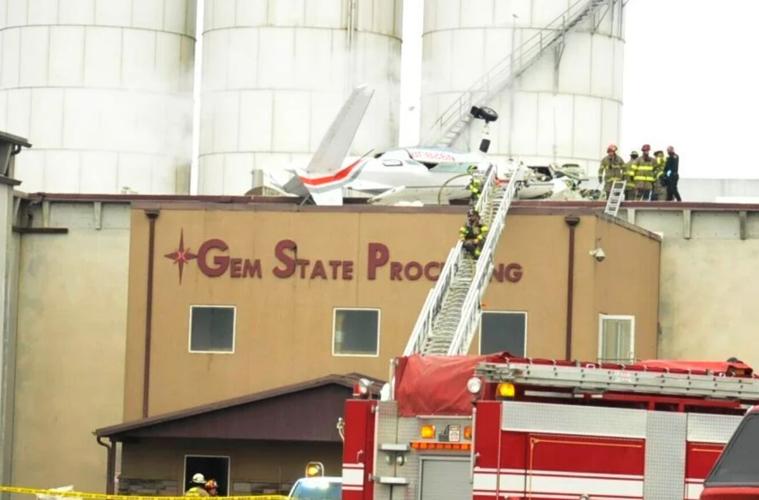

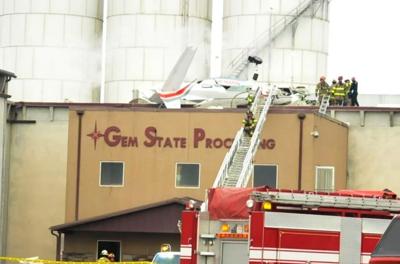
The family of a pilot who died when her plane collided with Gem State Processing exhaust stacks as she attempted to land at the Burley Airport on April 13, 2022, filed a wrongful death lawsuit on Monday.
Chelsea Brittney Infanger 30, of Salmon, had flown the Cessna 208B Grand Caravan from Salt Lake City delivering UPS packages when the crash occurred.
Colorado-based attorney Bruce A. Lampert, who specializes in aeronautics law, filed the suit in federal court in Ada County against the city of Burley, the city of Heyburn, Gem State Processing, Burley Park L.C. and the Idaho Department of Transportation’s Division of Aeronautics.
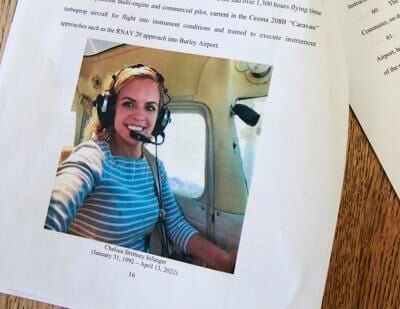
A photo of pilot Chelsea Brittney Infanger, who died when her plane collided with Gem State Processing exhaust stacks in 2022, is included in paperwork for a wrongful-death lawsuit filed by her family.
A jury trial is requested and the plaintiff seeks damages in excess of the jurisdictional threshold with special damages to be determined at trial.
Lampert provided the court documents to the Times-News but said he could not comment on the case due to Idaho law that prevents attorneys from making public comment that may influence the case’s outcome.
A phone call from the Times-News was not returned from Burley attorney David Shirley.
Heyburn City Attorney Paul Ross said the city had not received the lawsuit on Tuesday.
“I am not aware that a lawsuit had been filed,” Ross said.
According to the court documents, on the day of the crash, Infanger’s plane was approaching the Burley airport, located across the Snake River from the processing plant. She reported a missed approach and according to a witness descended out of the clouds and went into a steam cloud produced from the six stacks located on the plant’s roof.
In the court filing’s preliminary statement, Lampert wrote, “…The crash occurred due to the bureaucratic disregard, inaction and recklessness of several government entities, corporate indifference of an out-of-state food processor, Gem State, combined with the City of Burley and its real estate partner, Burley park L.C. and its tenant placing their economic returns above the lives of pilots using the Burley airport.”
According to Times-News archives, after the Simplot potato processing plant closed, the company gave Burley the Heyburn plant and 278 acres of property across the Snake River from the Burley airport.
Burley began leasing the buildings and one of its current tenants is Gem State Processing.
Burley had begun a quest to move the municipal airport in 1995.
In 2013, Burley officials said the airport needed to move due to safety concerns and the city hired an engineering firm to conduct a master plan.
In 2014, the airport failed to meet Federal Aviation Administration (FAA) standards and was informed that unless the airport was moved or a runway shortened, which would prevent the airport’s use by bigger aircraft, including UPS delivery planes — it would lose FAA funding.
In 2016, the city identified two airport replacement sites.
Also in 2016, Gem State began putting up exhaust stacks across the river from the airport, which, according to the lawsuit, affected Runway 20 and departure from Runway 02 and reduced visibility at the airport.
The lawsuit alleges that Burley violated its duties as an airport owner and sponsor and as a landlord of the old Simplot property.
The breaches include not improving, closing or relocating the airport, not warning pilots of obstructions, allowing obstructions to be built on the centerline of the Runway 20 approach, not enforcing tenant lease terms, knowledge of intermittent smokestack steam and not telling pilots, among others.
The lawsuit alleges that Heyburn was negligent because the city has jurisdiction over the property where Gem State is located and was responsible for zoning ordinances, which protect airport environments.
Heyburn allowed the plant to be constructed and later modified in a manner that presented a danger to aircraft using the runway, the lawsuit says.
Gem State was negligent for putting up and operating the stacks, failing to give proper notification of the construction, failing to comply with federal air regulations, not painting or lighting the stacks, failing to consider that the exhaust would be carried by the wind into the path of airport-bound aircraft and failing to warn pilots of the dangerous conditions it created, the lawsuit said.
Burley Park L.C. was negligent because it had a duty to ensure sub-lessees did not build or modify the property in a way that presented a danger to the public, among other points outlined in the lawsuit.
The state Division of Aeronautics was negligent as the administrative agency because inspections were not done and state and federal airport facility directories were not properly updated for the airport.
The agency abdicated responsibilities under Idaho law and let a dangerous airport and approach continue to operate despite clear obstacles to the approach and it failed to evaluate the effects of superheated steam on aircraft approaching the runway, the lawsuit said.


(0) comments
Welcome to the discussion.
Log In