

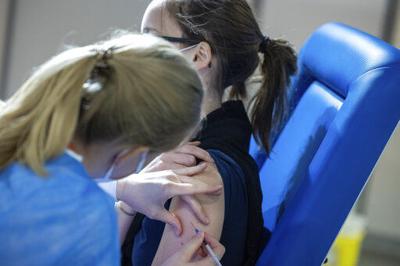
Most Idaho adults say they would receive the COVID-19 vaccine if offered, but a high rate of vaccine-hesitant Republicans may make achieving herd immunity more difficult, according to a report commissioned by the state health department.
The survey collected responses from 500 likely Idaho voters of varying ages between Jan. 25 and Jan. 27. It has a 4.6% margin of error.
In sum, the poll finds that 79% of Idahoans “would either get the vaccine initially or can be persuaded in the future.” Vaccination thresholds to reach herd immunity aren’t yet known, but most experts estimate 80% or more of the population will need to be vaccinated.
Republican voters in Idaho, a GOP stronghold, accounted for most people reluctant to get the COVID-19 vaccine.
The poll suggests that around half of nearly two-fifths of people reluctant to accept COVID-19 vaccinations say they’re willing to get vaccinated under certain conditions. Many are waiting to see safety demonstrated among vaccinated family, friends and doctors for shots produced at record speeds. Forty-six percent of people taking the “wait and see” approach said they plan to wait a year or more.
Asked whether they’d accept the COVID-19 vaccine immediately if offered, a combined 60% of poll respondents said they’d either “definitely” or “probably” get vaccinated, while a total of 37% said they would “definitely” or “probably” decline a shot.
Even accounting for the sizeable margin of error, the findings underscore the breadth of mistrust in COVID-19 vaccines that have been the subject of a range of wild myths. The challenges create a difficult path to achieving herd immunity, or the condition where the virus is no longer spreading uncontrollably. State public health leaders are using the survey results to help guide public information campaigns to address vaccine skepticism.
“Broadly speaking, Idahoans understand the impact vaccines have had on other disease and overwhelmingly report vaccinating themselves for common diseases,” reads a survey summary, which the Post Register obtained from the Idaho Department of Health and Welfare. “... While most view the (COVID-19) vaccine as safe, many Idahoans think side effects will be common. For that reason, any messaging will need to speak to medical supervision and the large number who receive those vaccines with no issues.”
Concerns about vaccine safety were top of mind for Idahoans surveyed.
Ninety-three percent said they agreed that vaccines have eradicated diseases. Just 34% listed effectiveness as their largest concern for the COVID-19 vaccine; 52% said safety matters more.
More than three-quarters (77%) of all surveyed Idahoans said they believed the COVID-19 vaccine was safe. Forty-four percent said they think significant side effects are common.
Likely voters who identified with the Republican party were almost evenly split on whether they’d receive the COVID-19 vaccine; 50% said they would, while 47% said they wouldn’t. Roughly equal shares of likely GOP voters said they definitely would (38%) or definitely would not (37%) get a shot. Seventy-six percent of Democrats polled said they would definitely get the shot immediately if offered.
Most people said they trusted doctors to provide credible vaccine information, and that they are most willing to be vaccinated at doctor offices and hospitals compared to pharmacies or large drive-up clinics.
“Communicating the medical supervision of vaccine dispensation and rigorous approval process can assuage safety concerns with key audiences,” the report summary said.
The report lists Boise-based research and consulting firm GS Strategy group as presenters.
No COVID-19 vaccines are yet approved for all children, who make up a quarter of Idaho’s 1.8 million population.

(0) comments
Welcome to the discussion.
Log In