





Federal laws “ensuring that children with disabilities have opportunities to develop their talents, share their gifts, and contribute to their communities” have been on the books for nearly 50 years.
President Gerald Ford signed into law the Education for All Handicapped Children Act on Nov. 29, 1975. The law, now known as the Individuals with Disabilities Education Act (IDEA), “guaranteed access to a free appropriate public education (FAPE) in the least restrictive environment (LRE) to every child with a disability,” according to the U.S. Department of Education website.
Among the law’s requirements, it states that students with disabilities should be educated alongside children who are not disabled, as much as that is possible, according to an Association for Supervision and Curriculum Development article.
But in searching for the right educational fit for their daughter, one family encountered practices at a local middle school that they felt didn’t live up to those standards. They are taking action to correct that and to bring awareness to the issue.
Ryan Bezzant began looking for middle school special education programs for his daughter last May.
His daughter, who has autism spectrum disorder, attended Discovery Elementary School in Bonneville Joint School District 93 beginning in 2019. Bezzant thought Discovery’s program was phenomenal.
The Bezzant family moved from state to state while Ryan was active in the military. He has come across inadequate special education programs for years. But District 93 seemed to be different. He had confidence in the programs the district offered. That was until he toured the Rocky Mountain Middle School special education program.
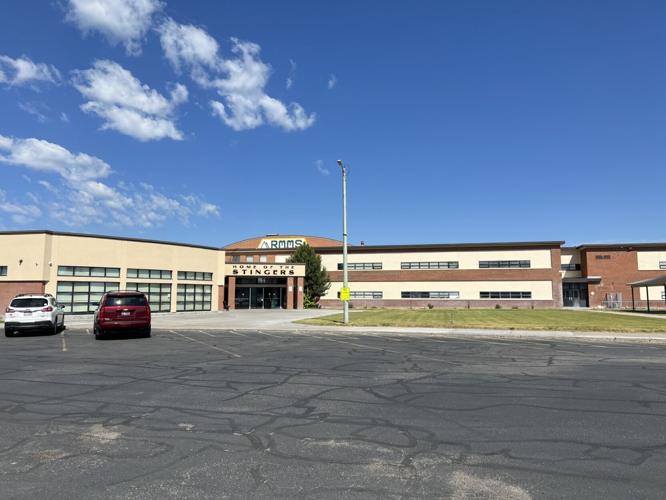
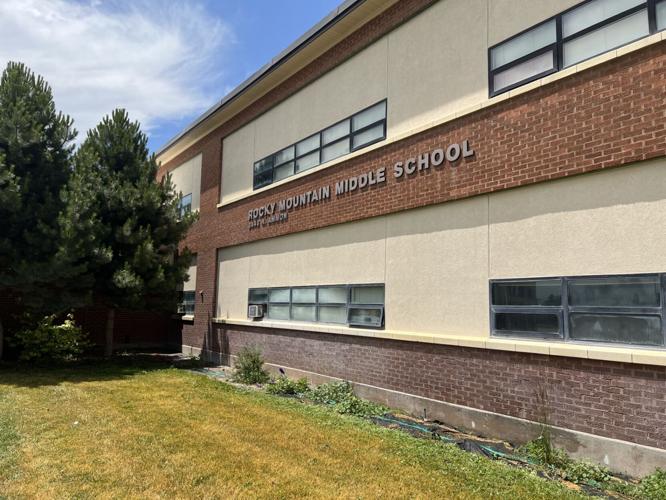
In December, Ryan and his wife, Kiersten, walked through Rocky Mountain’s hallways. They were soon overcome by disgust and disbelief over how the school’s special education students were being treated.
When the Bezzants first toured the middle school, they witnessed special education students lining the cafeteria, rags and spray bottles in hand, like indentured servants. They wiped down the tables as general education students ate their lunch.
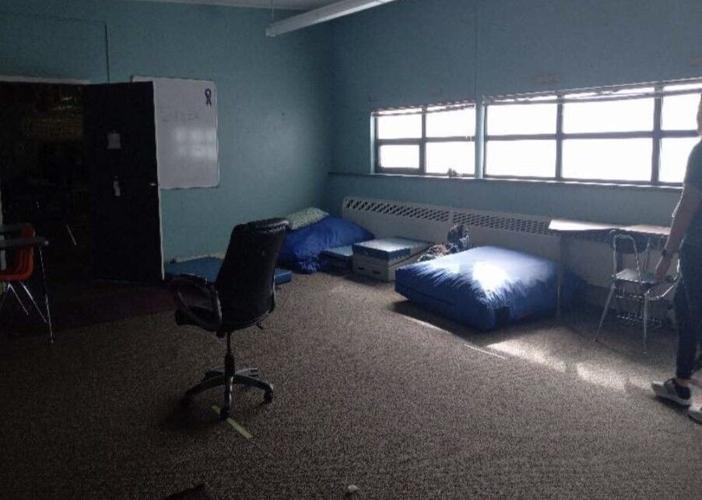
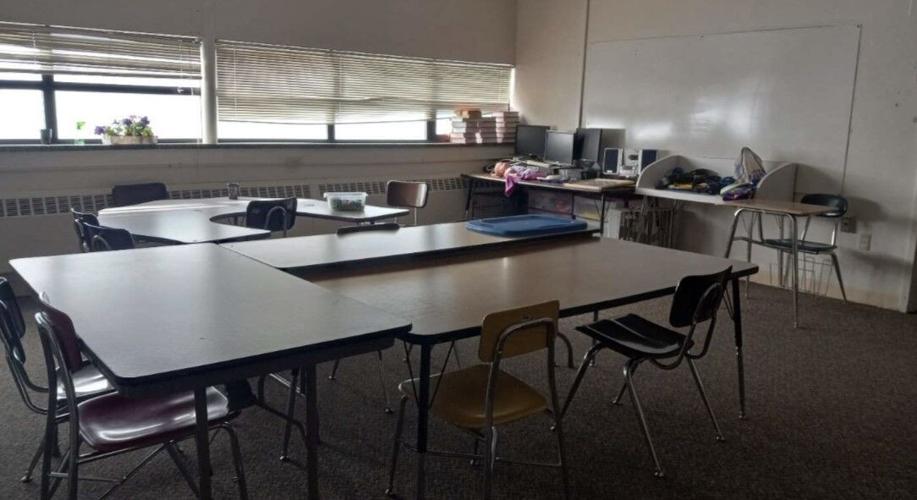
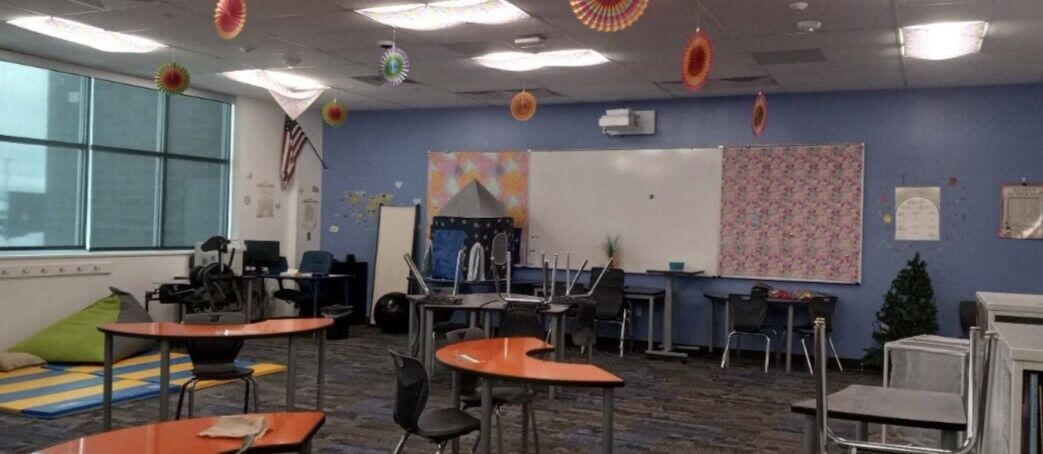
Rocky Mountain Middle School’s special education room seemed to be hidden, contained and segregated from the rest of the school. Bezzant said there weren’t any visible books in the classroom. There was no visible educational technology and very limited furniture.
But there was a washer and dryer in the corner for the special needs students to wash and fold the rags they used to wipe down the lunch tables.
In the corner of the room, a pile of toothbrushes lined the counter. Special needs students were required to brush their teeth when they entered the classroom each morning.
The janitorial duties were labeled as “life skills” the special needs students needed to learn. Bezzant said that the special education teacher, JoAnna Owens, told him that because many of the students will end up living at home with their parents or in group homes, the program’s goal is to make them “be as useful as possible.”
In an email to District Superintendent Scott Woolstenhulme, Kiersten Bezzant wrote, “I believe it is my job as a parent to teach my child how to fold laundry and perform proper hygiene …”
Ryan Bezzant said he believed Owens was doing the best she could with what she had, she didn’t seem to have much support from administration. That wasn’t good enough for the Bezzants.
“It’s not their job to determine what is useful or not for this child. It’s their job to educate them (in) reading, writing and arithmetic to the maximum extent and to the maximum potential of their ability,” Bezzant said.
On the December tour, Bezzant noticed that the special needs kids were not integrated in to any general education classes, such as music, art and physical education, “which are classes that they could easily participate in with reasonable assistance,” in violation of the Individuals with Disabilities Education Act.
Bonneville Joint School District 93’s Director of Instruction and Learning Jason Lords disputed that claim.
“It all depends on the student’s goals. They will take electives like P.E. or music,” Lords said.
However, Bezzant said he witnessed the reality firsthand.
“They (special needs students) were segregated. They were at the bottom of the barrel,” Bezzant said.
After his tour in December, Bezzant filed a complaint against Rocky Mountain with the U.S. Department of Education Office for Civil Rights.
The severity of the condition of the program led Bezzant to immediately file a complaint with the Office for Civil Rights instead of approaching the administration, he said.
“They were in violation of several federal laws. When I saw the condition, I had no confidence the principal would correct it,” Bezzant said. “I felt like they needed some accountability.”
The federal investigation began in December. Bezzant said the investigator told him that there was “a lot wrong” with the school’s program and that the investigation would take “a long time.”
A U.S. Department of Education spokesperson said in an email to the Post Register, “The case you are referring to is in monitoring. OCR (Office for Civil Rights) cannot discuss any case-specific information, including OCR’s monitoring activities, the implementation of the agreement or the district’s actions.”
After Bezzant initiated the investigation, he said Lords confronted him about it at church. Bezzant said he felt the interaction was unprofessional and that it violated his daughter’s right to privacy regarding special education accommodation.
“There were several hundred people there. It was an incredible violation of privacy and not appropriate. The whole conversation was just patronizing me,” Bezzant said. “(He was saying) that I don’t understand special education requirements. He said people file complaints with the state all the time and it comes back that they’re (Rocky Mountain) doing the right thing.”
Lords had a different take on the situation.
“I live and work in the district with all the families that attend the school. I’ll see them in the neighborhood or stop them in church and ask a question,” Lords said.
Lords said he stopped Bezzant only to ask if he had “figured anything out with the situation.”
He said that he had known Bezzant for three years and thought he had a good enough relationship to approach him at church.
“Ryan filed a complaint which is great. He can do that. We never want to keep a parent from doing that,” Lords said.
During the same time period, Bezzant had applied for open enrollment for his daughter at Sandcreek Middle School and Black Canyon Middle School. They were immediately rejected.
Bezzant said that a school has to hold an Individualized Education Program meeting with the parents before considering rejection. The Bezzants did not get that.
Through the help of Yvonne Thurber, the district’s director of special education, Bezzant found out that his daughter was rejected for open enrollment when there was availability.
Bezzant threatened to file a lawsuit against the district. Two weeks later, Black Canyon admitted his daughter.
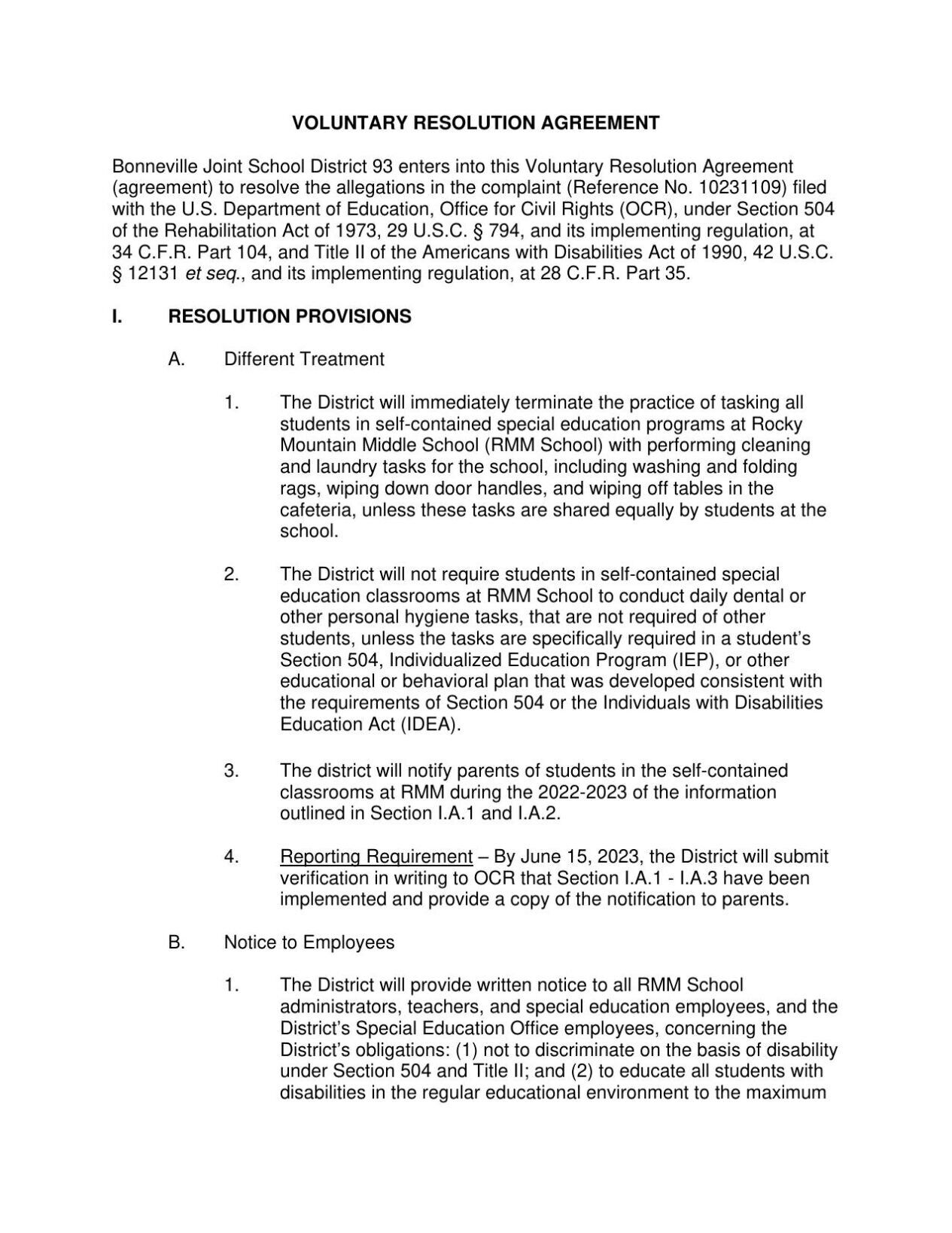
After a six-month investigation, the Office for Civil Rights sent Rocky Mountain a resolution agreement. Woolstenhulme signed it June 24.
The investigation revealed that four special needs students were not supposed to be participating in hygiene routines according to their IEPs. However, the school still required all eight special needs students to brush their teeth.
Bezzant described it as a “one-size-fits-all” program.
“It was just to help the students learn the life skills they need,” Lords said. “In all reality, it was done with the best intentions.”
Moving forward the practice of requiring all special education students to brush their teeth and perform cleaning duties will end.
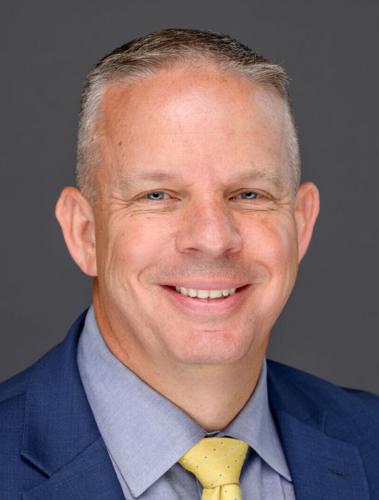
“In this agreement, we have agreed to only require students to learn and perform the hygiene routines at school if it is included in their IEP or 504 plan and that we will also stop having students perform custodial tasks at the school to help them develop life skills unless all students at Rocky Mountain share the same responsibility,” Woolstenhulme said in an email to the Post Register.
“The resolution also requires us to notify parents in the program and all instructional staff at RMMS of the resolution and to provide additional training to them. We are also required to review each child’s IEP as a team and evaluate if their placement in the program at Rocky Mountain Middle School was their least restrictive environment, a key provision of IDEA. We will do this through each child’s IEP meeting next school year.”
Woolstenhulme continued in the email saying, “We are very supportive of this resolution and it aligns with what we would have done as a District if the individual had brought the concerns to us directly.”
The resolution will be implemented starting in the 2023-2024 school year.
The Bezzants are glad to see the district is working to fix the issues.
“We have found out very quickly that you have to advocate. If you don’t, they (special needs students) will get put in a corner and provided the minimum,” Bezzant said.
The Bezzants are looking to start a Facebook support page for eastern Idaho parents of special needs children. They hope it can be an avenue for parents to network and share resources and experiences.
“We woke some people up. There are consequences for not doing what they (D93) are being paid to do,” Bezzant said.



(0) comments
Welcome to the discussion.
Log In