

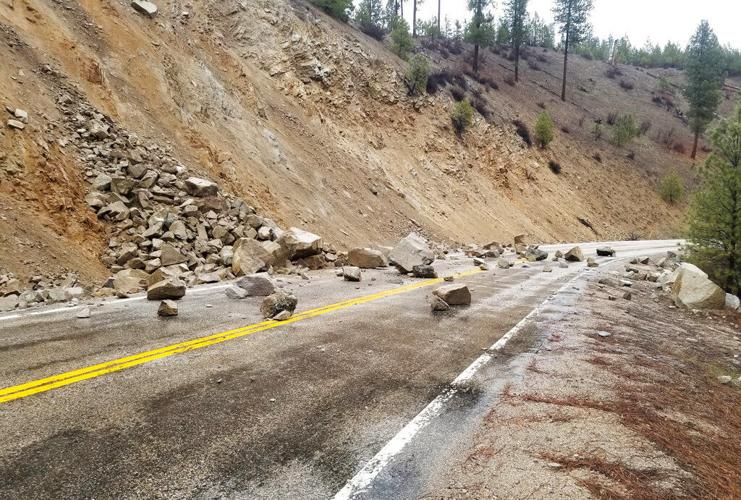
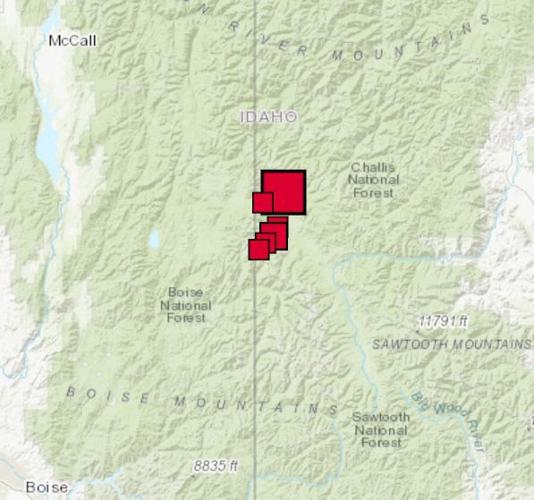

BOISE — Tuesday night’s 6.5 magnitude earthquake that shook southwestern Idaho and surrounding states might have been a nasty surprise for everyone who expects the earth to stay still under your feet, but geological incidents in Idaho are pretty common.
The 23.5-second quake hit at 5:52 p.m. 19 miles northwest of Stanley. Authorities near the epicenter say there have been no reports of significant damage or injuries, the Associated Press reports.
It’s been five years since a more than 5.0 magnitude earthquake hit within 60 miles of Tuesday’s quake, according to the U.S. Geological Service.
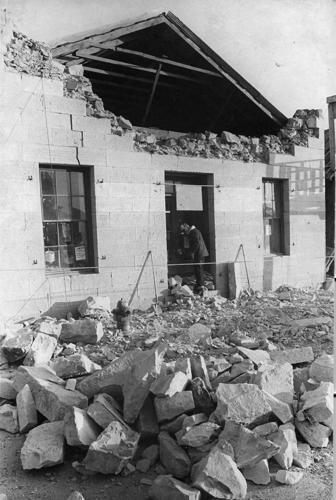
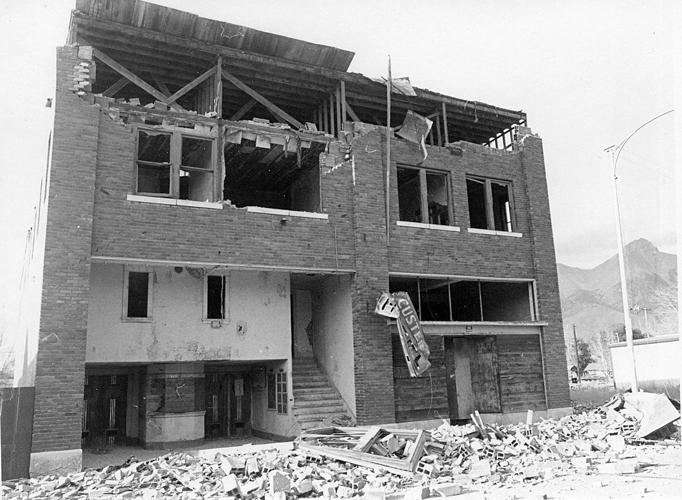
The state’s largest and most damaging quake struck the morning of Oct. 28, 1983. A 6.9 magnitude earthquake with an epicenter 10 miles below Borah Peak rolled the towns of Challis and Mackay for about a minute and moved the Lost River Mountains and Thousand Springs Valley away from each other by almost 14 feet in some spots.
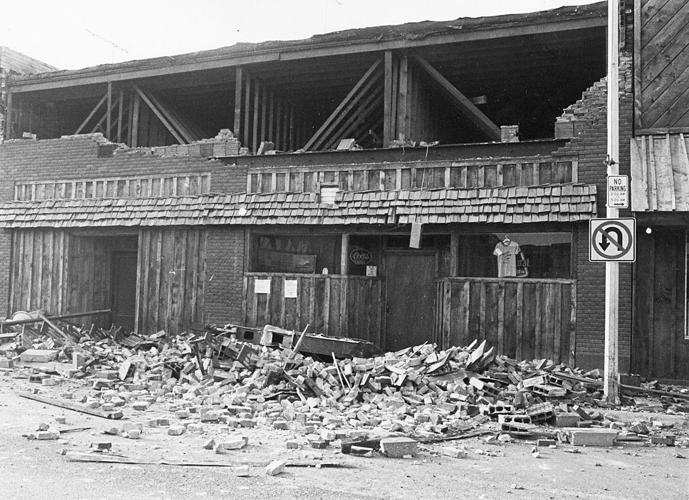
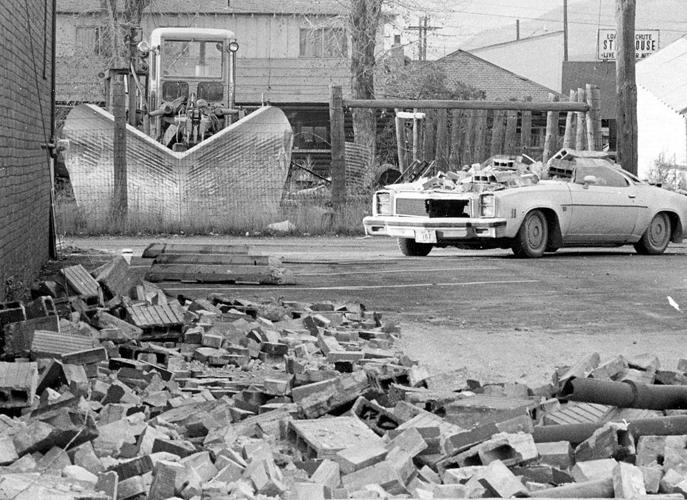
Unlike Tuesday’s quake, the Borah Peak event caused a massive amount of damage in the state. Two schoolchildren, Tara Leadon, 7, and Travis Franck, 6, were killed when a storefront collapsed on them in Challis. Another woman’s car was crushed by falling bricks, and she narrowly escaped death. Over $12 million in damage was reported at the time, but then Gov. John Evans told reporters that eight of Mackay’s 10 buildings would need to be replaced, the Deseret News reported.
Some Challis houses were damaged by rockfall, while a chimney on the Beaverhead County, Montana, courthouse and the brick walls of the Ravalli Republic newspaper office in Hamilton, Montana, were cracked. Students in a Boise State University dorm at the time were shaken by the event, though some thought it was a prank at first. The school evacuated all buildings until they could check for structural damage, although none was found and classes resumed shortly. And the Idaho National Engineering Laboratory’s reactors to automatically shut down because of the disturbance.
That earthquake caused a butte to start spouting water that some residents feared could cause the Mackay Reservoir to overfill, an odd addition to the damage in Mackay and the shaking felt throughout much of the American West and as far away as British Columbia, Canada.
According to the Idaho Office of Emergency Management, the Borah Peak earthquake was the biggest and most damaging in Idaho history, with then-President Ronald Reagan declaring the event a major disaster on Nov. 18, 1983.
The 1983 earthquake came 24 years after another incident which had its epicenter near Hebgen Lake, Montana. While on the other side of the state line, that 7.2 magnitude earthquake was the biggest and deadliest recorded in the Mountain West.
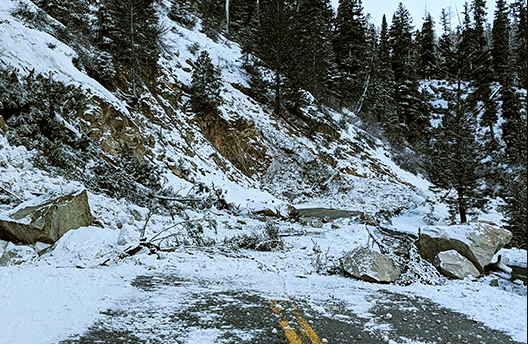
According to the Billings Gazette, that earthquake killed 28 people and caused the largest recorded earthquake-triggered landslide in North America, with 90 million tons of rock and debris coming free from the Madison Canyon’s north wall and forming a natural dam that created the now famous Earthquake Lake.


(0) comments
Welcome to the discussion.
Log In