


What do Bannau Brycheiniog, Wales, Choquequirao, Peru, Paris and Singapore have in common with Craters of the Moon National Monument and Preserve?
They are all on the New York Times’ list of “52 places to go in 2024,” an interactive feature released this month on its website, which has nearly 10 million subscribers.
May 2 marks the 100th anniversary of President Calvin Coolidge’s signing of a proclamation creating Craters of the Moon National Monument.
The Times reports that “for its centennial, Craters of the Moon will unveil new and rehabilitated trails, wayside exhibits developed in partnership with Shoshone-Bannock tribal elders, and a packed calendar of events.”
What’s now known as Craters of the Moon was formed beginning about 15,000 years ago, when “molten basalt erupted from fissures in the earth’s crust creating this landscape of black and raw lava flows that undulates like a quiet sea,” according to the monument’s Historic Context Statements booklet. “Cinder cones, craters, and myriad volcanic formations line the fissures, or Great Rift, for some sixty miles from north to south, and rise above a surface swirling with frozen eddies and cascading blocks of lava foam. It is a landscape of overwhelming desolation, one in which the collection of administrative buildings, campground, roads, and trails are otherwise dwarfed by the vast expanse of volcanic terrain stretching to the horizon.”
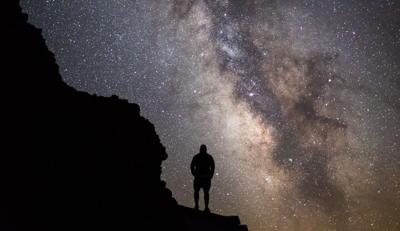
The park is located 86 miles west of Idaho Falls. Its remoteness makes it an ideal spot for stargazing. In 2017 it became an International Dark Sky Park, one of about 40 in the United States.
The Times’ article noted that while Craters of the Moon is about the size of Yosemite National Park it receives just 6% of the visitors.
Craters wasn’t alone among the geologic wonders to make the Times’ list. Joining it, among others, was Salar de Uyuni in Bolivia. It is is the world’s largest salt flat and also is an excellent spot for watching the stars, the article said.
“Dozens of white pyramid-shaped mounds sit on a vast reflective surface, on which the blue and pink sky is reflected, giving the entire scene an otherworldly aura,” the Times wrote.
And the aforementioned Bannau Brycheiniog, a 520-square-mile park, formerly known as Brecon Beacons, in Wales, puts an “emphasis on the relationship between nature and local culture,” the Times wrote.
The article also included man-made wonders such as Choquequirao in Peru, which, like Machu Picchu, is a “spectacular Incan citadel.” Choquequirao currently sees fewer than 10,000 visitors a year because “it’s a three- to four-day trek to get there.” That will soon change though.
“The government last year announced a $200 million investment in the site, with a plan to build a cable car and improve trails to boost tourism,” the Times wrote.
While many Times’ readers — or Post Register readers for that matter — haven’t previously heard of many locations on the list, the 52 destinations also included world-famous sights such as Paris and Singapore.
To see the entire list, go to nytimes.com/interactive/2024/travel/places-to-travel-destinations-2024.html.


(0) comments
Welcome to the discussion.
Log In