



A full Harvest Moon rises behind life-size giraffe statues atop Traders World Flea Market on Saturday, Sept. 26, 2026, in Lebanon, Ohio. (AP Photo/Carolyn Kaster)


A full Harvest Moon rises behind life-size giraffe statues atop Traders World Flea Market on Saturday, Sept. 26, 2026, in Lebanon, Ohio. (AP Photo/Carolyn Kaster)


Perhaps one of the most contentious words in the American political lexicon is the A word… Abortion. The word elicits strong emotions across t…


The fall equinox is Tuesday, when light and darkness split the day evenly. It marks the start of astronomical fall in the Northern Hemisphere and spring in the Southern Hemisphere. The Earth’s axis is tilted at an angle as it travels around the sun, so for most of the year, daytime is either longer or shorter than nighttime. During the equinox, the Northern and Southern hemispheres get an equal amount of sunlight. The sun rises almost exactly due east and it sets almost exactly due west. At 8:05 p.m. Eastern time Tuesday, the sun will be directly overhead at the equator.


As I prepare to leave Idaho, and particularly Pocatello, I have been borderline maudlin. It is time to go, and new adventures are calling, but…

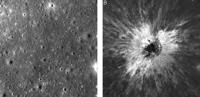
Scientists have discovered a crater on the moon that's bigger than the Roman Colosseum, the result of a powerful impact two years ago. Researchers reported Wednesday that it's the solar system's biggest known impact crater carved out in recent times. They say such a large-scale event is estimated to occur only once every 132 years, making this a treasure trove of information as NASA prepares to build a base for astronauts on the moon. NASA's Lunar Reconnaissance Orbiter spotted the crater after it was formed by a comet or asteroid fragment.


Wednesday, Sept. 16The popular Edson Fichter Nature Talks series is returning to Pocatello on Wednesdays in September. This week’s topic is “B…


I couldn’t tell you what I had for dinner last night, but I remember September 11, 2001.

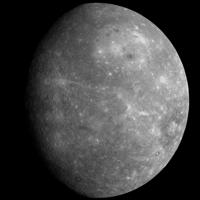
A new study shows that little, wrinkly Mercury may be shrinking faster than expected. Scientists from the German Aerospace Center reported Thursday that Mercury's shrinkage may be 30% greater than previously believed. They say that represents a loss in diameter of as much as 14 miles, significant for a planet that is barely 3,000 miles across. Mercury has been shrinking ever since its formation 4.5 billion years ago because of internal cooling, which is tightening the surface like a girdle to fit its new slimmer self.


Wednesday-Saturday, Sept. 9-12The Eastern Idaho State Fair will take place from 8 a.m. to 10 p.m. daily Wednesday, Sept. 9, to Saturday, Sept.…
